
What Is Rainbow Jelly Boba? Ingredients, Taste & Uses
Bubble tea toppings often look straightforward on a menu, but rainbow jelly is one of the most misunderstood: depending on the brand, it can be a chewy konjac-based gel blend or colourful fruit-flavoured nata de coco strips. That ingredient difference completely changes its texture, calorie count, and dietary profile.
Quick answer: What is rainbow jelly boba? It is a colourful, chewy bubble tea topping sold in mixed fruit flavours. There is no single standard recipe. Many commercial versions use konjac with plant-based gelling agents such as agar or carrageenan. Some rainbow jelly products are based on nata de coco. [1][2][3][4]
Rainbow jelly is usually served in small strips or cubes and added to fruit tea, milk tea, slushes and desserts. It gives a firmer bite than popping boba and a different chew from tapioca pearls.
The deep research report treats rainbow jelly as a konjac, alginate and nata de coco composite. Current supplier labels show a wider category, so this final page does not present one formula as universal. [1][2][3][4]
For readers, the useful questions are simple: what is it made from, does it contain gelatin, how does it taste, how many calories does it have, and which drinks work well with it?
What is rainbow jelly boba?
Rainbow jelly boba is a prepared topping used in bubble tea and other cold drinks. The word boba is used loosely here. Rainbow jelly is not the same food as the round tapioca pearls often called boba.
Its colour, flavour and texture depend on the manufacturer. One product may use a konjac gel blend. Another may use nata de coco, which is a chewy bacterial-cellulose gel made through fermentation in coconut water. [5][6]
This variation matters because ingredient, allergy, vegan and nutrition claims cannot be applied to every rainbow jelly product.
What is rainbow jelly made of?
There is no single ingredient list for rainbow jelly. Current commercial labels show 2 common styles.
Konjac-based rainbow jelly
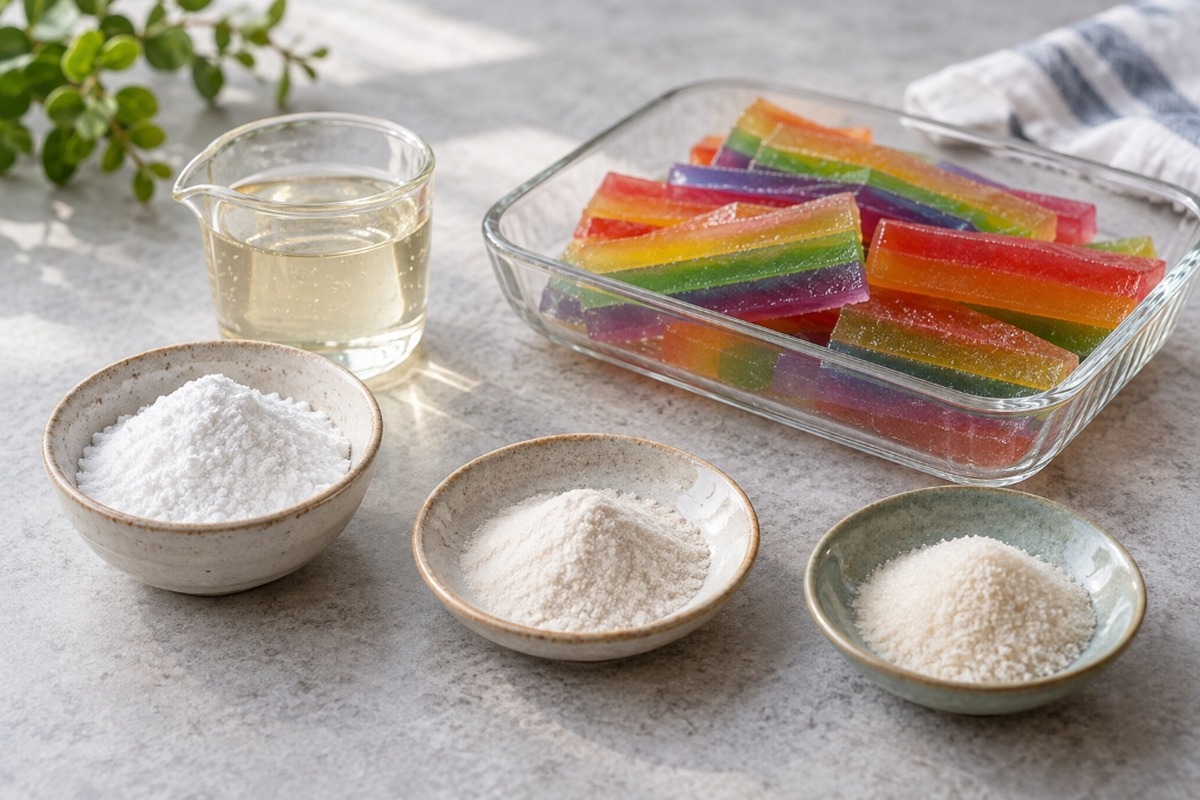
Konjac-based products can contain water, sugar or fructose, konjac and other plant-based gelling or thickening ingredients. Current supplier labels include combinations of agar, carrageenan, locust bean gum and cellulose-based stabilisers. [2][3][4]
Konjac glucomannan is a polysaccharide from the konjac plant. Food-science reviews show that alkali and heat treatment can change its structure and create a firm gel that does not melt in the same way as gelatin. [5]
Nata de coco-style rainbow jelly
Some rainbow jelly products use nata de coco or mixed coconut jelly pieces. Nata de coco is bacterial cellulose produced by fermentation, commonly using coconut water as the growth medium. It has a firm, fibrous chew. [6]
A shop may also sell a mixed topping that combines several coloured jelly types. That is why the package label is more reliable than a broad category definition.
Does rainbow jelly boba contain gelatin?
Many commercial rainbow jellies are made without animal gelatin. Konjac, agar and carrageenan can create a jelly texture without it. Current product listings include gelatin-free formulas based on those ingredients. [2][3][4]
Do not assume every product is gelatin-free. Recipes differ by supplier, so check the ingredient list if this matters for your diet.
Is rainbow jelly vegan?
Some rainbow jelly products are sold as vegan, but vegan status is not universal. A product can contain a plant-based gel system and still include another ingredient that does not meet a vegan diet. Check the exact label or supplier specification before making a vegan claim. [2][3][4]
Does rainbow jelly contain coconut?
Sometimes. Nata de coco-style rainbow jelly is linked to coconut-water fermentation, while many konjac-based rainbow jelly products do not list nata de coco at all. [2][6]
If coconut matters because of taste, dietary preference or allergy concerns, use the product label rather than the colour or name as your guide.
How rainbow jelly gets its chewy texture
The texture depends on the gel system. Konjac glucomannan can form a firm, springy gel after alkali and heat treatment. Agar and carrageenan can also change firmness and bite. [5]
Nata de coco gets its chew from bacterial cellulose. That material forms a fibrous network, which gives it a firmer bite than a soft dessert jelly. [6]
Commercial rainbow jelly often combines several stabilisers, so the final texture reflects the whole formula rather than one ingredient alone. [2][3][4]
What does rainbow jelly taste like?
Rainbow jelly is usually mildly sweet and fruity. The flavour depends on the product. Common commercial descriptions include pineapple, tropical fruit and mixed fruit profiles. [2][3][4]
The texture is often more noticeable than the flavour. Konjac-based pieces tend to feel firm and springy, while nata de coco has a more fibrous chew.
How rainbow jelly gets its colours
Colour systems vary by manufacturer. Current labels show that some products use carotenoid colours such as beta-carotene and beta-apo-8-carotenal. Other formulas may use different approved food colours. [2][3][4]
For this reason, a consumer page should not promise that all rainbow jelly uses natural plant colours. Check the product specification if colour source matters to your audience.
Rainbow jelly bubble tea
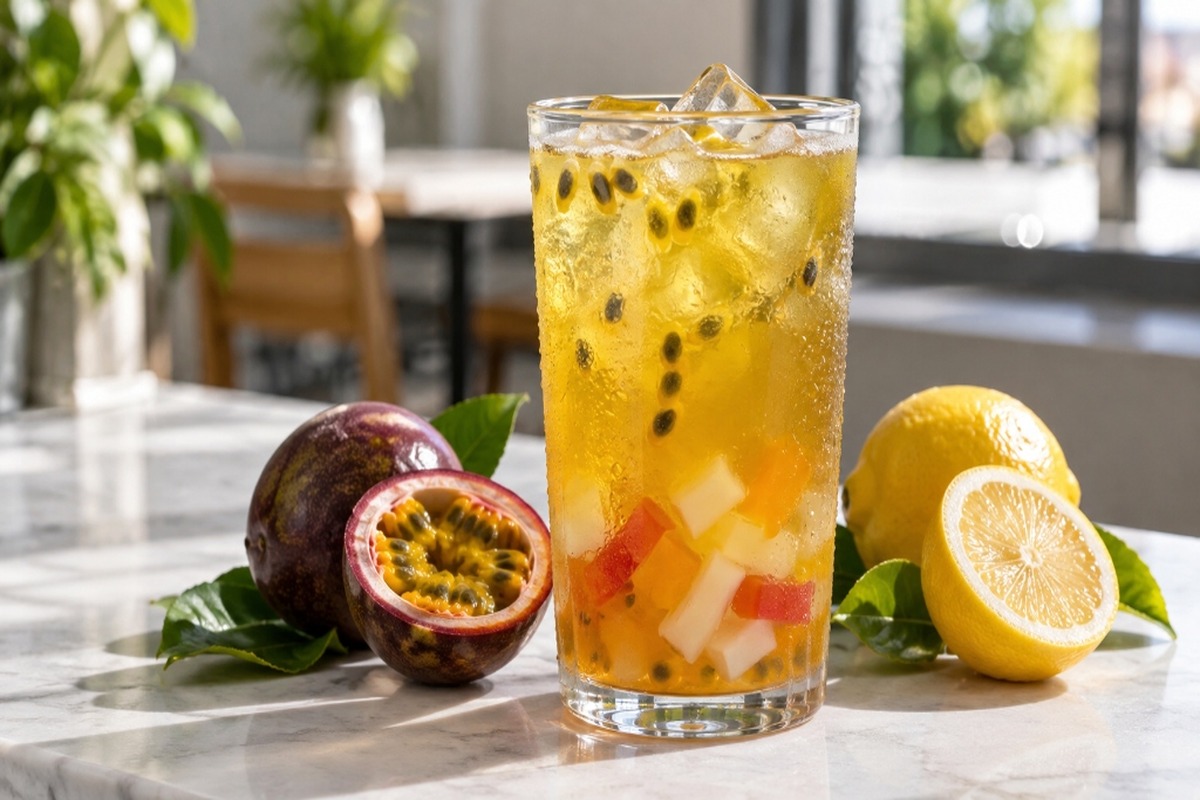
Rainbow jelly works well in drinks where its colour and texture remain easy to see. Fruit tea is the clearest fit, especially passion fruit, mango, lychee and citrus drinks. The deep research report also recommends these flavour directions. [1]
A simple rainbow jelly bubble tea can use chilled green tea, fruit syrup or juice, ice and a spoonful of rainbow jelly. Keep the topping amount moderate so the drink still passes easily through a wide straw.
Rainbow jelly vs boba
| Comparison Point | Rainbow Jelly Boba | Traditional Tapioca Pearls |
|---|---|---|
| Main base | Varies: often konjac gel or nata de coco | Cassava tapioca starch |
| Shape | Usually rectangular strips or small cubes | Spherical round pearls |
| Texture | Firm, springy or fibrous | Dense, elastic and chewy |
| Flavour | Usually fruit-flavoured and sweetened | Mild until steeped in brown sugar/syrup |
| Nutrition & Calories | Varies widely by formula and soaking syrup | Varies by cooking method and sweetener |
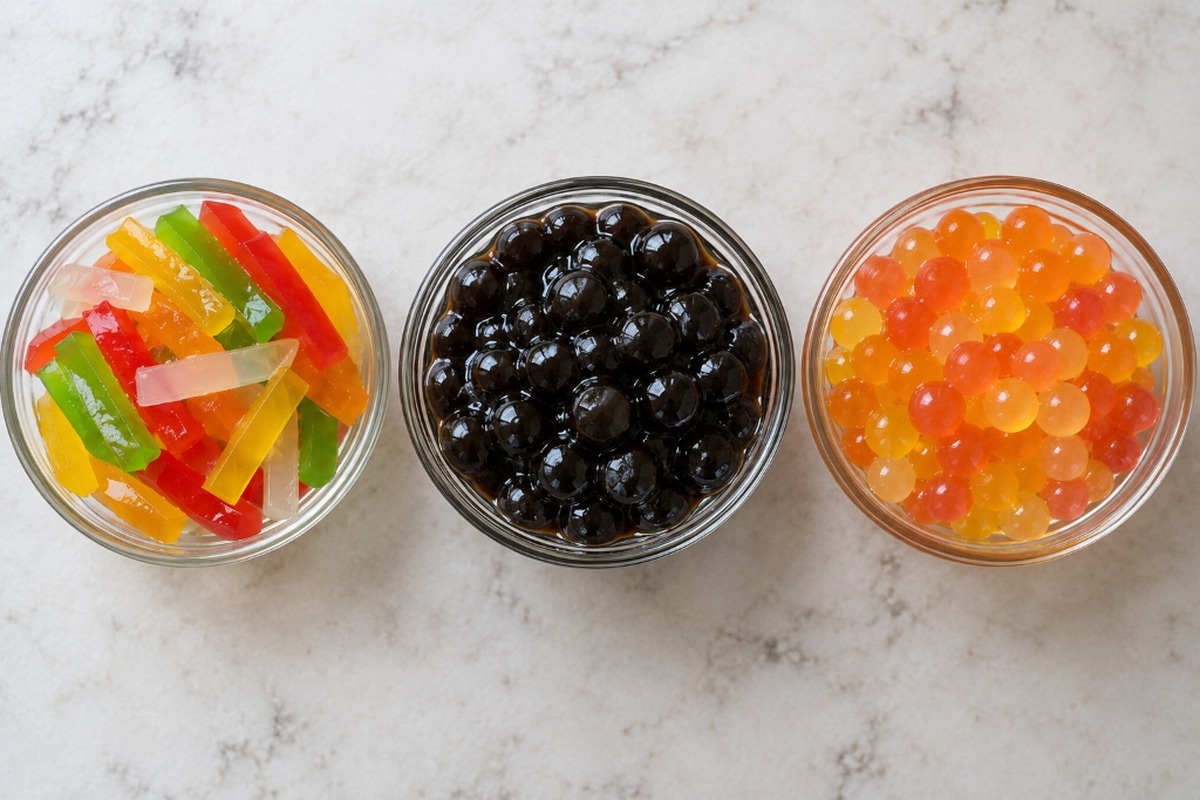
The report gives one fixed calorie comparison, but current rainbow jelly labels do not support a single category-wide number. Supplier data varies enough that a universal lower-calorie claim would be misleading. [1][2][3][4]
For a Bobalicious page, compare ingredients and texture first. Use calorie numbers only if they come from the exact product specification you sell or serve.
Rainbow jelly vs popping boba
Rainbow jelly is a solid gel topping. Popping boba has a thin outer shell with liquid inside, so it bursts when bitten. The eating experience is very different even though both can add fruit flavour to tea.
Rainbow jelly gives a sustained chew. Popping boba gives a quick burst of liquid. Readers who want a wider topping guide can continue to our pillar guide on What Is Boba?.
Rainbow jelly calories and sugar
There is no reliable universal calorie figure for rainbow jelly. Current supplier labels show clear differences in serving size, calories, sugar and fibre. [2][3][4]
The biggest reason is simple: the gel base may be low in calories, while sugar, fructose and syrup can add much of the final energy content. Portion size also changes the result.
For nutrition copy, use the label from the exact rainbow jelly product. Avoid claims such as 60% fewer calories than tapioca unless your own product data supports that comparison.
How is rainbow jelly made?
Manufacturing depends on the formula. A konjac-based jelly normally starts by dispersing the gelling ingredients in water, then using heat and, in some recipes, alkaline treatment to form a stable gel. The mixture is flavoured, coloured, set, cut and packed in syrup. [5]
Nata de coco follows a different process. Bacteria produce cellulose during fermentation, often in coconut water. The resulting gel is cleaned, cut, sweetened and flavoured for food use. [6]
The deep research report includes an exact konjac, alginate and nata de coco formula. That formula is useful as a technical example, but current commercial labels show that it should not be presented as the standard recipe for the whole category. [1][2][3][4]
Allergens and dietary checks
Rainbow jelly recipes vary enough that broad allergy claims are unsafe. Check the product label for milk ingredients, coconut, preservatives, colour additives and any factory cross-contact statement.
The same rule applies to gluten-free, dairy-free and vegan claims. Use the certification or supplier specification for the exact product rather than assuming from the words rainbow jelly.
Best drinks for rainbow jelly
Rainbow jelly pairs exceptionally well with vibrant fruit-forward drinks:
- Passion fruit green tea: Tangy tropical acids highlight the sweet jelly strips. Pair with our Passion Fruit Bubble Tea.
- Mango green tea: Sweet tropical profile that matches colourful strips.
- Lychee fruit tea: Floral fruit sweetness.
- Lemon or citrus tea: Sharp, refreshing citrus drink base.
- Jasmine green tea with fruit syrup: Clear, light tea base that makes the rainbow colours pop visually.
Rainbow jelly, nata de coco and aiyu jelly
These toppings can all appear in tea drinks, but they are different foods. Rainbow jelly is a broad commercial category. Nata de coco is fermented bacterial cellulose. Aiyu jelly is made through a separate pectin-based setting process.
Explore our comprehensive topping guides to What Is Nata de Coco? and What Is Aiyu Jelly? to compare their scientific gelation mechanisms, texture profiles, and best drink pairings.
Frequently asked questions
What is rainbow jelly boba?
Rainbow jelly boba is a colourful, chewy topping used in bubble tea. Recipes vary. Many commercial versions use konjac with other plant-based gelling agents, while some use nata de coco. [2][3][4]
What is rainbow jelly made of?
There is no single recipe. Common commercial ingredients include water, sugar or fructose, konjac, agar, carrageenan, locust bean gum, flavouring, colour and stabilisers. Some products use nata de coco. [2][3][4]
Does rainbow jelly boba have gelatin?
Many commercial versions are made without animal gelatin, but the formula is supplier-specific. Check the ingredient label before making a dietary claim. [2][3][4]
Is rainbow jelly vegan?
Some products are sold as vegan. Vegan status still needs to be checked on the exact product label or supplier specification.
Does rainbow jelly contain coconut?
Some versions do, especially nata de coco-style products. Many konjac-based formulas do not list nata de coco. [2][6]
What does rainbow jelly taste like?
It is usually mildly sweet and fruity. The exact flavour depends on the syrup and flavouring used by the manufacturer.
Is rainbow jelly healthier than tapioca boba?
There is no universal answer. Rainbow jelly and tapioca products vary in sugar, portion size and calories. Compare the nutrition labels for the exact products.
How is rainbow jelly different from popping boba?
Rainbow jelly is a solid chewy gel. Popping boba has a thin shell with liquid inside, so it bursts when bitten.
Can rainbow jelly go in milk tea?
Yes. It can be used in milk tea, fruit tea, slushes and desserts. Fruit tea is a common choice because the colours and fruit flavours stay noticeable.
Does rainbow jelly contain caffeine?
The jelly itself usually does not rely on tea or coffee as its base, but the finished drink may contain caffeine. Check both the topping label and the drink recipe.
Sources and research notes
This guide references ingredient specifications, polysaccharide hydrogel literature, and food safety standards from the following authorities:
- Trends in Food Science & Technology: Gelation mechanisms of alkali-induced heat-set konjac glucomannan hydrogels.
- Food Bioscience: Production and characterisation of bacterial cellulose matrices in fermented food products.
- Commercial Product Specifications: Ingredient formulations, stabiliser systems, and nutrition disclosures from Bossen, Bubble Panda, and Boba Lab UK.
- Yoast & Google Search Central: SEO keyphrase distribution and helpful, reliable people-first content standards.


 Badge-157x140.png)
Comments