
Ready-to-Drink vs Fresh Bubble Tea: Cost and Quality
Ready-to-drink and fresh bubble tea serve different customers and sales channels. Fresh shops prepare drinks after an order and can change the sweetness, ice, milk and toppings. Ready-to-drink products arrive sealed in cans, bottles or cups for fast retail sale.
Fresh bubble tea usually gives customers more choice and a softer, warmer tapioca texture. RTD bubble tea gives retailers consistent portions, longer distribution time and faster checkout.
Neither format guarantees a better business. Sales, rent, production volume, waste, product quality and customer demand decide the result.
Quick answer: Fresh bubble tea suits made-to-order service, custom sweetness and traditional cooked tapioca. Ready-to-drink bubble tea suits grocery, convenience, vending and grab-and-go sales. Fresh drinks may earn a higher selling price, while RTD products can reduce in-store preparation and reach more locations.
Ready to drink vs fresh bubble tea at a glance
| Decision Point | Fresh Made-to-Order Bubble Tea | Ready-to-Drink (RTD) Bubble Tea |
|---|---|---|
| Preparation Method | Brewed, mixed and assembled after customer places order | Manufactured, sealed and commercially sterilized off-site |
| Customer Customisation | Full control over sweetness (0-100%), ice, milk type & toppings | Fixed formulation per SKU and pack size |
| Boba Texture | Warm, soft and chewy fresh cassava starch pearls | Heat-tolerant, snappy konjac pearls, popping boba or jellies |
| Service Speed | 3 to 5 minutes per order (longer during peak queues) | Instant grab-and-go (seconds at retail register) |
| In-Store Operations | Continuous tea brewing, pearl boiling, syrup pumping & sanitisation | Cooler stocking, FIFO rotation and temperature logging |
| Product Shelf Life | 4 to 6 hours for pearls; same-day consumption | 12 to 18 months ambient (retort cans); 30-45 days (HPP chilled) |
| Primary Sales Channels | Dedicated boba cafés, mall kiosks, delivery apps & food stalls | Supermarkets, c-stores, vending machines, campuses & wholesale |
| Packaging Type | PET / PP cups with heat-sealed film or dome lids | Aluminium cans, wide-mouth PET bottles, or glass |
| Primary Advantage | Premium experiential pricing and authentic craft texture | Mass retail scalability, low store labour and zero line buildout |
| Primary Operational Risk | High labour overhead, ingredient spoilage & queue bottlenecks | Production MOQs, retail listing fees & distributor margin splits |
The table above outlines the operational differences between the two models. Exact economics, recipes, and margins depend on your business strategy and market channel.
What is fresh bubble tea?
Fresh bubble tea is handcrafted to order in a dedicated café, dessert shop, or mobile concession. Baristas brew loose-leaf teas in small batches, boil fresh tapioca pearls throughout the day, dispense flavoured syrups, combine dairy or plant milks, vigorously shake the blend with ice, and heat-seal the cup.
Customers can personalize every attribute of their drink:
- Tea Foundation: Black tea, green jasmine tea, roasted oolong, or herbal tisanes
- Flavor & Milk: Fresh dairy milk, oat milk, condensed milk, taro, brown sugar, or fruit purees
- Sweetness Level: 0%, 30%, 50%, 70%, or 100% sugar levels
- Ice Proportion: No ice, light ice, regular ice, or warm/hot preparations
- Inclusion Options: Cassava tapioca pearls, popping boba, egg pudding, grass jelly, or cheese foam
This high level of personal customization commands premium retail pricing ($5.50 to $8.50+ per cup) but requires significant kitchen equipment, staff training, and ongoing preparation labor.
What is ready-to-drink bubble tea?
Ready-to-drink (RTD) bubble tea is formulated, packaged, and hermetically sealed in a licensed commercial beverage manufacturing facility before entering retail distribution. Consumers purchase a finished single-serve can, bottle, or sealed cup.
Depending on the processing technology deployed (retort sterilization, aseptic bottling, or high-pressure processing), RTD beverages can be distributed either at room temperature or through refrigerated cold chains. Commercial labels display complete nutritional panels, allergen warnings, lot codes, and expiration dates, enabling distribution through third-party retail channels where on-site food preparation is impossible.
Canned boba vs fresh boba
The most distinctive sensory difference between canned and fresh bubble tea lies in the topping texture and tea aromatics.
Taste and aroma
Fresh cafés brew tea leaves in small hourly batches, delivering delicate volatile floral and roasted tea aromatics. In contrast, RTD beverages undergo thermal processing (such as retorting at 121°C) to ensure commercial sterility. This thermal load slightly softens top-note tea aromatics, which beverage formulators balance by utilizing concentrated tea extracts and robust creamer bases.
Texture
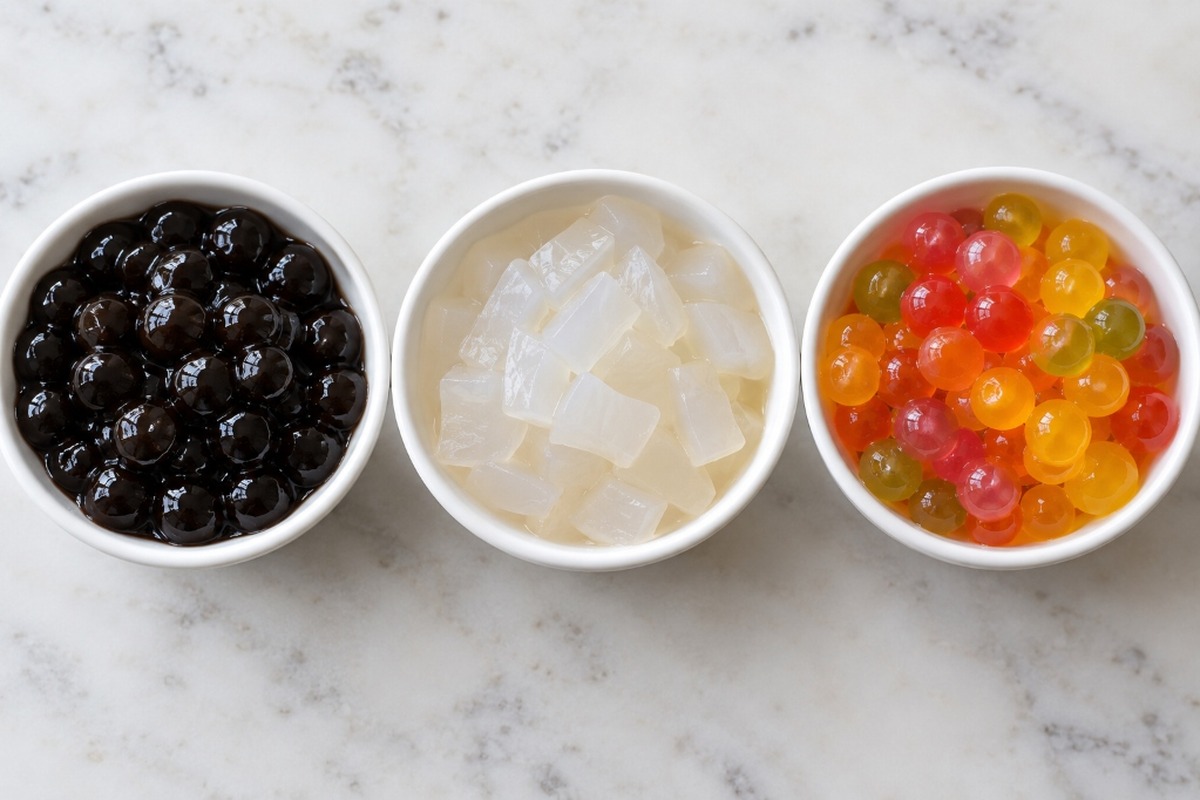
Freshly cooked cassava pearls deliver the prized "QQ" texture—soft on the exterior with a springy, elastic chew in the center. However, cassava starch cannot survive commercial canning. RTD manufacturers formulate with plant-derived konjac glucomannan pearls or calcium-alginate popping boba, which maintain a crisp, bouncy bite across multi-month shelf lives without dissolving.
Sweetness and recipe consistency
While fresh shops allow custom sweetness per cup, RTD products provide 100% standardized taste, Brix level, and mouthfeel across every single can produced.
Why fresh tapioca changes texture
Cassava root starch consists of two primary glucose polymers: linear amylose and highly branched amylopectin. During cooking in boiling water, starch granules absorb liquid, swell, and gelatinize, yielding a tender, springy texture.
However, as cooked pearls cool below 50°C, linear amylose chains realign and re-associate into dense, crystalline structures. This physical process, known as starch retrogradation, squeezes out water (syneresis) and causes the pearls to become tough, rubbery, and chalky within 4 to 6 hours.
Does FDA require a 4-hour tapioca discard?
A common industry myth is that the US FDA specifically mandates a 4-hour discard rule for bubble tea pearls. In reality, the FDA Food Code (Section 3-501.19) provides a general "Time as a Public Health Control" provision. If a food establishment holds temperature-controlled foods without active hot holding (≥ 57°C) or cold holding (≤ 5°C), it must maintain a written procedure, clearly mark the 4-hour expiration from the time of preparation, and discard any remaining food when the 4 hours elapse.
In practice, sensory quality degrades before bacterial safety limits are reached: tapioca pearls typically lose their ideal chewy texture within 3 to 4 hours, making smaller batch cooking essential for café quality.
Why RTD bubble tea uses different inclusions
Under industrial retort conditions (121.1°C at 15 psi), the intense heat completely disintegrates cassava starch into a cloudy, gelatinous slurry. Furthermore, prolonged contact with water in a sealed can causes rapid starch retrogradation.
To overcome these chemical limitations, commercial RTD drinks utilize specialized hydrocolloids:
- Konjac Glucomannan (Crystal Boba): De-acetylated konjac fiber forms a rigid, thermo-irreversible 3D gel network that resists retort temperatures and retains its snappy, jelly-like chew for over 18 months. Learn more in our guide on What Is Crystal Boba.
- Popping Boba: Liquid fruit juice encapsulated by a thin calcium alginate membrane created via spherification. Explore our recipe and science guide on How to Make Popping Boba.
- Nata de Coco & Grass Jelly: Fermented coconut cellulose and herbal jelly extracts that remain stable in ambient canned liquid. Read our deep-dives on What Is Nata de Coco and What Is Grass Jelly.
Fresh bubble tea unit economics
A fresh bubble tea café operates on high gross product margins that must support substantial retail labor and store occupancy costs.
Fresh Drink Benchmark Model:
Retail Selling Price: $6.50 – $7.50 | Raw Ingredients (COGS): $1.15 – $1.45 | Direct Store Labour: $1.95 – $2.40 | Ingredient Waste / Shrinkage: $0.25 – $0.35 | Gross Product Margin: 68% – 74%
Opening a brick-and-mortar boba shop typically requires $85,000 to $250,000+ in initial capital for commercial leases, architectural buildouts, ventilation, ice machines, automatic shakers, and cup sealers.
RTD bubble tea unit economics
An RTD business operates as a consumer packaged goods (CPG) brand. While unit gross margins are lower than café sales, operational scalability is vastly greater because production is automated and decoupled from store labor.
Landed RTD Unit Cost = Beverage Liquid + Inclusions + Can/Bottle + Seaming + Retort Labour + Testing + Master Carton + Inbound Freight + Duty + Warehousing
- Landed Manufacturing Cost: $0.65 – $0.85 per can
- Wholesale Price to Distributors: $1.35 – $1.65 per can
- Retail Selling Price (MSRP): $2.99 – $4.49 per can
- Gross Brand Margin: 42% – 48%
Boba waste reduction
Ingredient waste and shrinkage represent a major profit leak in fresh bubble tea operations. Discarded tea pots, expired tapioca batches, and spilled syrups reduce store profitability.
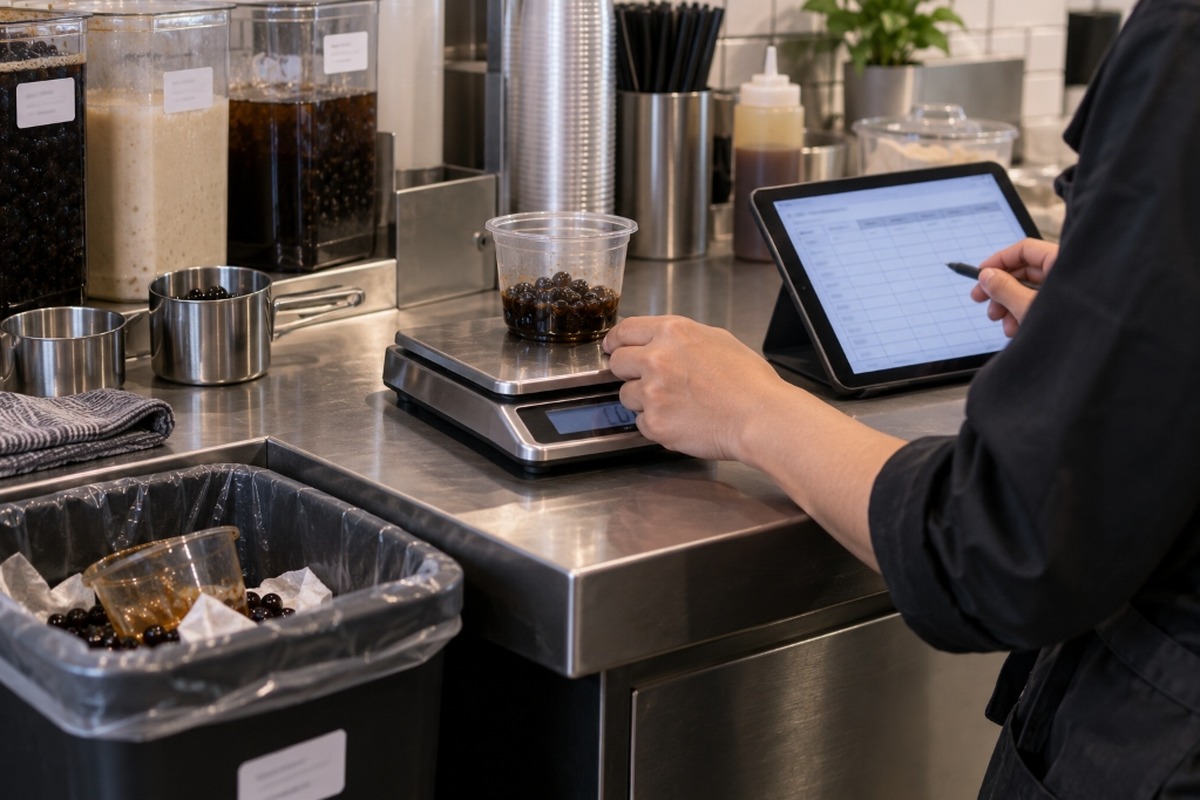
Fresh shops typically experience 18% to 25% ingredient waste, compared to under 2% for RTD canned distribution. Implement these waste reduction protocols:
- Staggered Batch Boiling: Cook 500g tapioca batches during slow afternoon hours rather than massive morning batches.
- Time-Marked Holding Canisters: Label cooking times and enforce strict rotation timers.
- Calibrated Syrup Dispensers: Use precision peristaltic pumps to eliminate over-portioning.
- Detailed Waste Logs: Log discarded tapioca weight and tea liters at the close of every shift.
Hybrid business model: Combining fresh and RTD
Forward-thinking beverage brands increasingly deploy a hybrid business model, serving custom handcrafted drinks at the service counter while stocking branded RTD cans in front-of-house grab-and-go coolers.
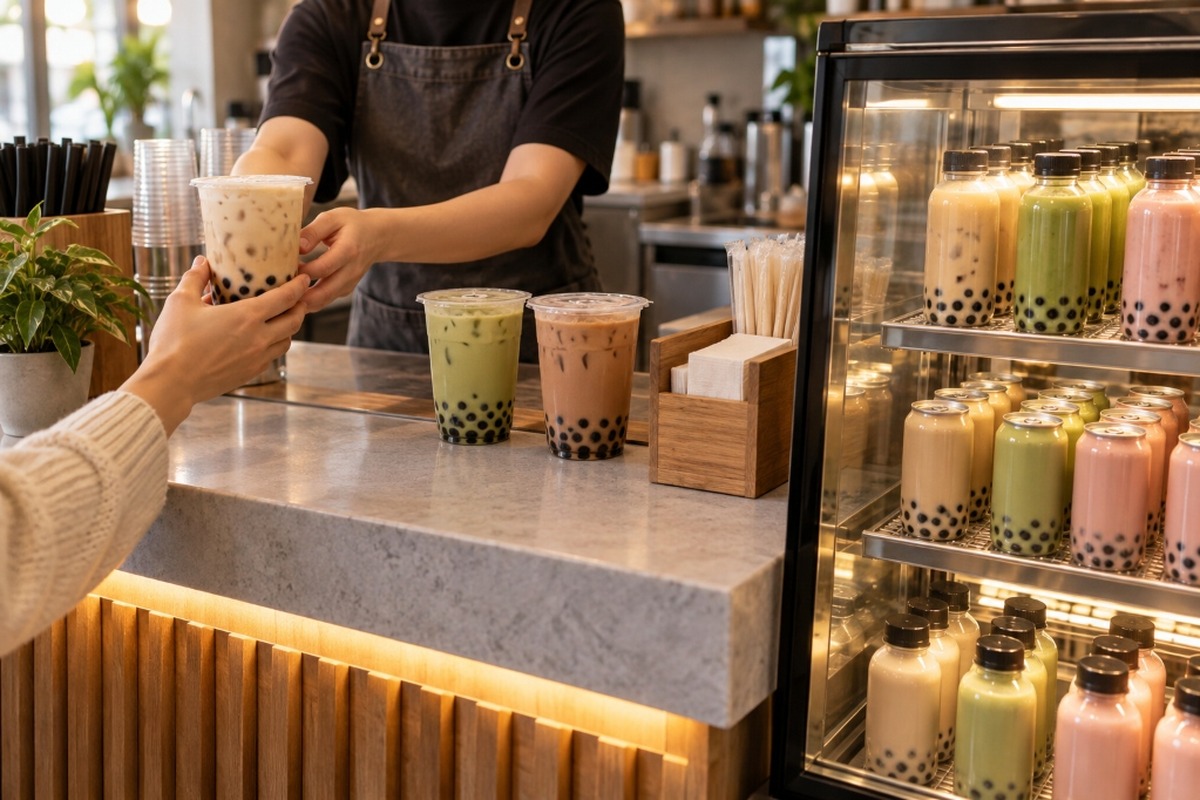
Benefits of the hybrid approach include:
- Queue Relieving: Capturing hurried commuters who cannot wait in a 10-person café queue.
- Take-Home Multipack Sales: Selling 4-packs and 6-packs for home entertaining.
- Off-Premise Revenue: Supplying local grocers, catering events, or operating a 24/7 Bubble Tea Vending Machine.
- Flavour Validation: Testing seasonal recipes in the café before committing to large-scale RTD canning runs.
Which model fits your business?
| Business Dimension | Choose Fresh Made-to-Order When: | Choose Ready-to-Drink (RTD) When: |
|---|---|---|
| Core Proposition | You want to build a hospitality brand focused on customized craft drinks and social experience | You want a scalable CPG beverage brand distributed across hundreds of retail points of sale |
| Capital Allocation | You have $85K-$250K for commercial store leases, fit-outs and counter equipment | You have capital for formulation R&D, co-packer production MOQs and inventory warehousing |
| Operational Focus | Managing hourly retail staff, customer service, daily cooking and local foot traffic | Managing supply chain logistics, distributor relationships, retail planograms and broker sales |
For alternative lower-capital retail strategies, explore our guide on How to Sell Bubble Tea Without Equipment and our operational breakdown of Bubble Tea Retail Merchandising.
Frequently asked questions
Is ready-to-drink boba as good as fresh bubble tea?
Fresh bubble tea offers superior customization and authentic soft cassava pearls. RTD bubble tea offers convenience, rapid checkout, standardized taste, and long shelf life using bouncy konjac pearls.
Why does fresh bubble tea create higher ingredient waste?
Fresh cafés must brew tea and boil tapioca in advance. Tapioca pearls harden within 4 hours, and unsold tea batches must be discarded at the end of the day, resulting in 18% to 25% waste.
Which model has higher profit margins, fresh or canned boba?
Fresh cafés generate higher gross product margins (68-74%) but incur heavy labor and rent costs. RTD brands achieve lower gross margins (42-48%) but scale across hundreds of retail stores without store labor.
Why do tapioca pearls become hard in cold drinks?
Cassava starch undergoes retrogradation as amylose molecules recrystallize upon cooling below 50°C, expelling water and turning the pearl core firm and rubbery.
Can canned bubble tea contain real tapioca pearls?
Traditional cassava pearls disintegrate during commercial retort sterilization (121°C). Commercial RTD cans use heat-stable konjac glucomannan pearls, popping boba, or nata de coco.
Does RTD bubble tea need refrigeration?
Retort-canned and aseptic RTD drinks are shelf-stable and store at room temperature before opening. Pasteurised or HPP-treated drinks require continuous refrigeration.
How long does RTD bubble tea last?
Unopened retort cans last 12 to 18 months, aseptic bottles last 9 to 12 months, and HPP chilled drinks last 30 to 45 days. See our RTD Bubble Tea Shelf Life Guide.
How much labor does a fresh bubble tea café require?
Fresh café labor accounts for $1.95 to $2.40 per drink sold, covering tea brewing, pearl cooking, drink assembly, counter ordering, cleaning, and opening/closing duties.
Can a fresh bubble tea café also sell RTD canned boba?
Yes. A hybrid café model allows operators to capture quick grab-and-go sales, sell multi-packs for home use, and supply local retail accounts with zero queue bottlenecks.
Is RTD bubble tea cheaper than fresh café bubble tea?
Yes. RTD canned bubble tea typically retails between $2.99 and $4.49, compared to $5.50 to $8.50+ for made-to-order café drinks, offering an accessible price point for everyday retail shoppers.
Sources and industry references
This operational and commercial comparison references food safety regulations and beverage manufacturing studies from the following sources:
- US FDA Food Code (2022): Section 3-501.19 Time as a Public Health Control.
- US FDA: Acidified and Low-Acid Canned Foods Guidance (21 CFR Part 113).
- National Library of Medicine (PubMed): Physicochemical and Gelling Properties of Konjac Glucomannan.
- Journal of Agricultural and Food Chemistry: Starch Retrogradation and Hydrocolloid Gel Interactions.


 Badge-157x140.png)
Comments