
Lavender Milk Tea: Easy Recipe, Taste and Best Toppings
Lavender milk tea combines food-grade culinary lavender, brewed tea, milk, and sweetener to create a soothing, delicately aromatic beverage. It delivers a creamy and floral profile when kept in strict balance; however, using too many flower buds or steeping in boiling water can quickly make the tea taste bitter, woody, or soapy like perfume.
Earl Grey serves as the premier foundation because natural bergamot citrus notes harmonize with lavender's floral aroma. You can also craft this drink with brisk Ceylon black tea, fragrant jasmine green tea, or caffeine-free herbal rooibos, layered over chewy boba pearls or refreshing aloe vera jelly.
Quick answer: To make lavender milk tea at home, use food-grade culinary English lavender (Lavandula angustifolia), start with ½ to 1 teaspoon of dried buds for 2 servings, and steep alongside tea leaves in 80°C to 85°C water for 3 to 4 minutes. Strain immediately. Sweeten with honey or simple syrup, cool slightly, shake with milk and ice, and pair with honey boba or aloe jelly.
Lavender milk tea at a glance
| Core Question | Key Finding & Guidance |
|---|---|
| What does it taste like? | Creamy, lightly floral, and sweet, with bright citrus and black tea depth when brewed with Earl Grey. |
| Best lavender to use | Culinary-certified English lavender (Lavandula angustifolia), such as Munstead or Hidcote cultivars. |
| Best tea base | Earl Grey, Ceylon black tea, jasmine green tea, or caffeine-free red rooibos. |
| Why can it taste soapy? | Too high a lavender dose, steeping longer than 5 minutes, boiling water, or ornamental floral varieties high in camphor. |
| Is lavender tea naturally purple? | No. Pure lavender infusion brews pale gold, tan, or amber. |
| How to get a natural lilac color? | Steep 2 to 4 dried butterfly pea flowers (Clitoria ternatea) with the tea, then lighten with milk. |
| Does it contain caffeine? | Lavender buds are naturally caffeine-free; caffeine depends entirely on the tea base (black/green vs herbal rooibos). |
| Best boba toppings | Honey boba, aloe vera jelly, translucent crystal boba, or lychee coconut jelly. |
What is lavender milk tea?
Lavender milk tea is a speciality beverage prepared by infusing edible dried lavender blossoms into hot water alongside whole tea leaves, combined with fresh or plant-based milk and a sweetener. Bubble tea variations incorporate traditional tapioca pearls, fruit jellies, or popping boba.
Rather than a single rigid historical formula, modern versions blend concepts from European herbal tisanes, British milk tea, and Taiwanese boba culture. Drink makers utilize whole dried buds, house-made floral simple syrups, or specialty tea blends.
Lavender on modern bubble tea menus
On specialty café menus, lavender sits alongside jasmine, rose, and osmanthus within the botanical and floral tea category. Pairing lavender with a recognizable black or green tea backbone ensures the beverage retains authentic tea character rather than tasting like flavored milk.
Lavender milk tea vs lavender boba
While "lavender milk tea" refers to the liquid drink itself, "lavender boba" signifies the drink served with chewy toppings. In most shops, tapioca pearls are sweetened with honey or brown sugar rather than lavender; always verify whether a café infuses lavender into the tea liquor, the syrup, or the pearls.
What does lavender milk tea taste like?
A balanced cup is silky, delicately sweet, and soothingly floral. When brewed with an Earl Grey base, bright Italian bergamot citrus notes cut through dairy richness while highlighting lavender's natural sweetness. Wildflower honey adds warm nectar notes, and a dash of vanilla extract rounds out the finish.
Lavender must remain an accent note. An excessive dose yields a medicinal, pungent, or soapy astringency that cannot be fully corrected by adding extra sugar or milk.
Why does lavender tea taste like soap?
A "soapy" or perfume-like off-flavor is the single most common mistake in floral tea preparation. The primary causes include:
- Over-dosing: Using tablespoons of flowers instead of a measured ½ to 1 teaspoon.
- Over-steeping: Leaving buds in hot water longer than 4 to 5 minutes extracts harsh, bitter tannins.
- Water at a rolling boil: Excessive heat (100°C) extracts astringent resins and volatile compounds aggressively.
- Ornamental or craft lavender: Non-food flowers often contain dust, synthetic perfumes, or pesticide residues.
- High-camphor lavender varieties: Ornamental French or Spanish varieties contain sharp medicinal notes.
- Artificial extracts / essential oils: Concentrated non-beverage oils overpower delicate tea bases.
Lavender contains naturally occurring aroma compounds including linalool, linalyl acetate, camphor, and 1,8-cineole. The ratio of sweet floral esters (linalyl acetate) to sharp medicinal terpenes (camphor/cineole) varies significantly across cultivars, which explains why culinary-grade flowers taste smooth while craft flowers taste harsh.
Which lavender is safe for tea?
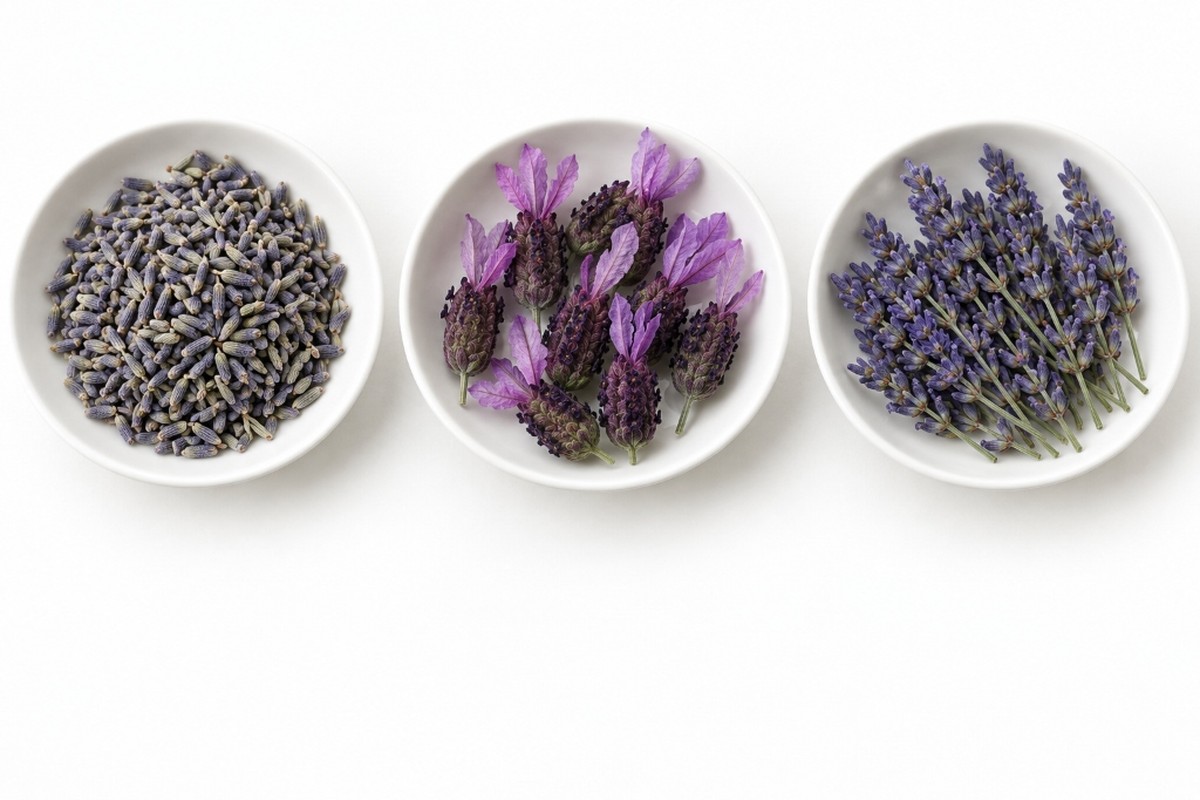
Always purchase lavender explicitly labelled culinary grade, food grade, or suitable for tea infusion.
- English Lavender (Lavandula angustifolia): The industry standard for culinary use. Cultivars like Munstead and Hidcote possess high concentrations of sweet linalool and low camphor levels, yielding a soft, honeyed floral cup.
- French / Spanish Lavender (Lavandula stoechas): Identified by distinct tufted bracts ("rabbit ears"). Contains higher concentrations of camphor and fenchone, resulting in a pungent, medicinal pine-like aroma ill-suited for beverages.
- Spike Lavender (Lavandula latifolia): Contains substantial camphor levels, primarily cultivated for industrial fragrance rather than delicate food recipes.
Important Safety Warning: Never Ingest Aromatherapy Essential Oils
Do not add aromatherapy essential oils or cosmetic extracts to drinks. Essential oils are extreme concentrations that can irritate mucosal linings and are rarely formulated for internal consumption. Always use whole culinary dried buds or certified food-grade syrups.
How brewing changes lavender flavor
Water temperature, steeping time, and flower dosage operate synergistically. Steeping culinary lavender in water heated to 80°C to 85°C for 3 to 4 minutes extracts desirable volatile floral esters while preventing excessive leaching of bitter polyphenols and woody tannins.
Linalool and linalyl acetate
Linalool imparts sweet floral and subtle woody characteristics, while linalyl acetate provides fresh, fruity-floral notes. Keeping water slightly below boiling preserves these delicate aromatic molecules.
Why Earl Grey pairs with lavender
Earl Grey is scented with cold-pressed oil from the peel of bergamot oranges (Citrus bergamia). Bergamot and English lavender share overlapping chemical constituents—specifically linalool and linalyl acetate. This molecular affinity creates an elegant, naturally unified flavor profile in the cup.
Is lavender milk tea naturally purple?
Contrary to popular café imagery, an infusion of pure lavender buds produces a pale yellow-gold or amber-tan liquor, not purple. Commercial vibrant purple drinks frequently rely on artificial food dyes, purple sweet potato powder, or taro flavoring.
How to make lavender bubble tea purple naturally
The safest and most vibrant natural coloring method uses dried butterfly pea flowers (Clitoria ternatea). Butterfly pea flowers contain vivid blue anthocyanin pigments called ternatins. When steeped alongside lavender and Earl Grey, the deep blue liquor transforms into a gorgeous pastel lilac when shaken with milk.
Note on Acidity: While citrus juice shifts butterfly pea anthocyanins toward vibrant violet or magenta, adding acid to dairy milk will cause curdling. For dairy-based milk tea, rely solely on milk dilution for a soft pastel lilac shade.
Does lavender milk tea have caffeine?
Dried lavender blossoms contain zero caffeine. The caffeine content of your drink is determined entirely by the underlying tea base:
| Drink Variation | Base Formulation | Caffeine Classification & Level |
|---|---|---|
| Lavender Earl Grey Milk Tea | Assam / Ceylon black tea + bergamot | Caffeinated (~40–60 mg per 16 oz) |
| Lavender Ceylon Milk Tea | High-grown Sri Lankan black tea | Caffeinated (~45–65 mg per 16 oz) |
| Jasmine Lavender Milk Tea | Green tea scented with jasmine blossoms | Moderately Caffeinated (~25–35 mg per 16 oz) |
| Lavender Oolong Milk Tea | Roasted or floral Taiwanese oolong | Caffeinated (~30–45 mg per 16 oz) |
| Rooibos Lavender Latte | South African red rooibos herbal tisane | Naturally 100% Caffeine-Free |
| Pure Lavender Vanilla Tisane | Culinary lavender + vanilla bean + milk | Naturally 100% Caffeine-Free |
| Decaf Earl Grey Lavender Tea | Decaffeinated black tea + bergamot | Trace Caffeine (<2–4 mg per 16 oz) |
Lavender milk tea recipe
This café-tested recipe yields 2 iced 16 oz (480 ml) servings. If using freshly opened, highly aromatic lavender buds, start with ½ teaspoon.
Ingredients
- ½ to 1 tsp dried culinary English lavender buds (Lavandula angustifolia)
- 2 tsp loose-leaf Earl Grey black tea (approx. 4–5 g)
- 2 to 4 dried butterfly pea flowers (optional, for natural lilac tint)
- 350 ml filtered water heated to 80°C–85°C
- 20 to 30 ml wildflower honey or simple cane syrup
- 160 ml fresh whole milk (or barista-grade oat/almond milk)
- 300 g ice cubes
- 100 g cooked honey boba, aloe vera jelly, or crystal boba
- ¼ tsp pure vanilla extract (optional)
Equipment
- Temperature-controlled kettle (or kitchen thermometer)
- Heat-safe teapot, jug, or French press
- Fine-mesh stainless steel strainer
- Cocktail drink shaker
- 2 tall 16 oz serving glasses & wide 12 mm boba straws
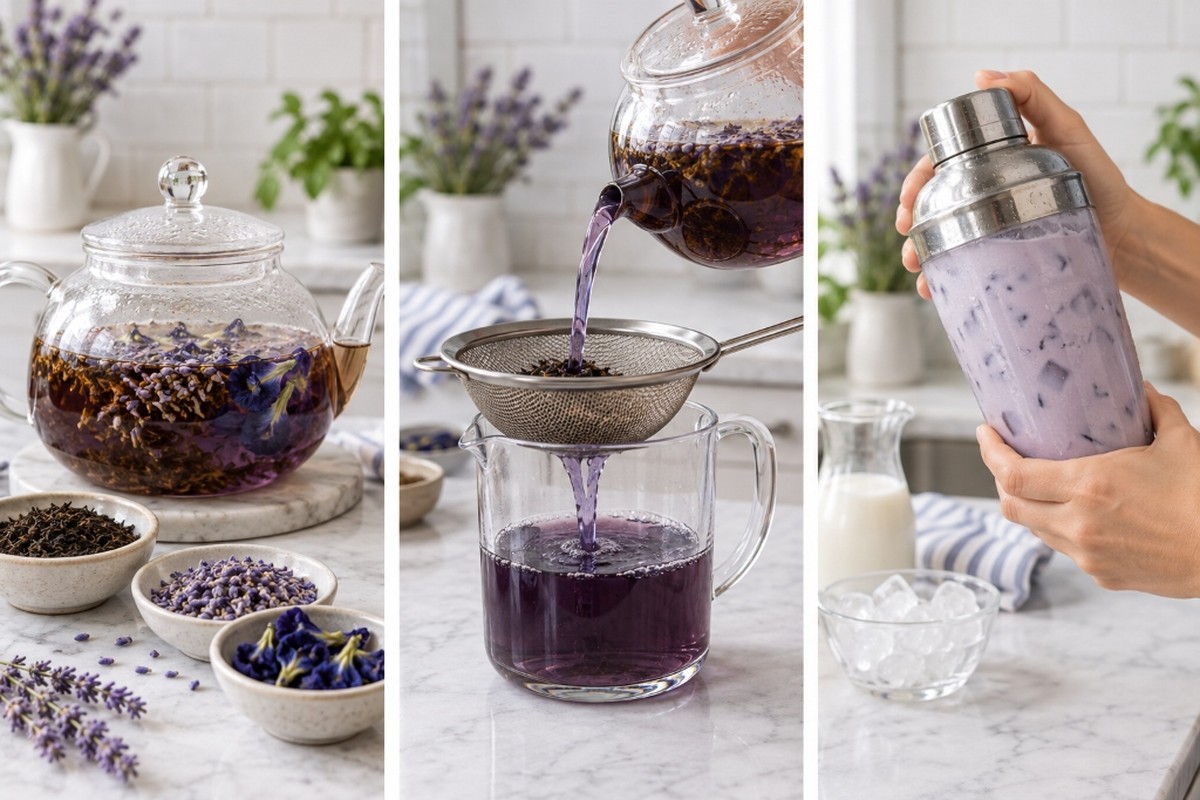
Step 1: Heat the water
Heat filtered water to 80°C–85°C. If your kettle boils completely, allow it to stand uncovered for 3 to 5 minutes to drop into the optimal extraction range.
Step 2: Steep the tea and flowers
Place Earl Grey leaves, culinary lavender buds, and butterfly pea flowers into your brewing vessel. Pour in 350 ml of hot water, cover, and steep for 3 minutes. Sample a spoonful; if floral notes are subtle, steep up to 4 minutes maximum, then strain immediately through a fine-mesh sieve.
Step 3: Sweeten the infusion
Stir 20 to 30 ml of honey or cane syrup and vanilla extract into the warm tea concentrate until fully dissolved.
Step 4: Cool the tea base
Allow the sweetened tea concentrate to cool for 5 to 10 minutes at room temperature. Pouring lukewarm rather than boiling tea over ice prevents premature dilution.
Step 5: Shake with milk and ice
Pour half the tea concentrate (approx. 175 ml), half the milk (80 ml), and a generous scoop of ice (150 g) into a drink shaker. Seal tightly and shake vigorously for 10 to 15 seconds until chilled and micro-aerated. Repeat for the second drink.
Step 6: Add toppings and serve
Divide 100 g of honey boba or aloe jelly between two glasses (50 g each). Strain the shaken lilac milk tea over the toppings, garnish with a pinch of dry lavender buds, and serve with wide boba straws.
| Recipe Metric | Specification |
|---|---|
| Preparation Time | 10 minutes |
| Steeping Time | 3 to 4 minutes |
| Assembly Time | 5 minutes |
| Yield | 2 servings (16 oz / 480 ml each) |
| Topping Portion | 50 g per serving |
Hot lavender milk tea recipe
For a warming hot latte, omit the ice. Brew tea leaves and lavender buds in 300 ml of hot water for 3 minutes, then strain. Warm 200 ml of milk separately in a saucepan or with a steam wand until frothy (65°C). Combine warm tea liquor, sweetener, and frothed milk in mugs.
Lavender simple syrup
Making a batch of floral simple syrup provides consistent café-quality flavor for milk teas, iced lattes, and sparkling lemonades.
- Ingredients: 100 g granulated sugar, 100 ml water, 1 tsp dried culinary lavender buds.
- Method: Bring sugar and water to a gentle simmer until dissolved. Remove saucepan from heat, stir in lavender buds, cover, and infuse for 5 minutes. Strain immediately through a fine sieve into a sterilized glass bottle. Refrigerate and consume within 2 to 3 weeks.
Best toppings for lavender milk tea
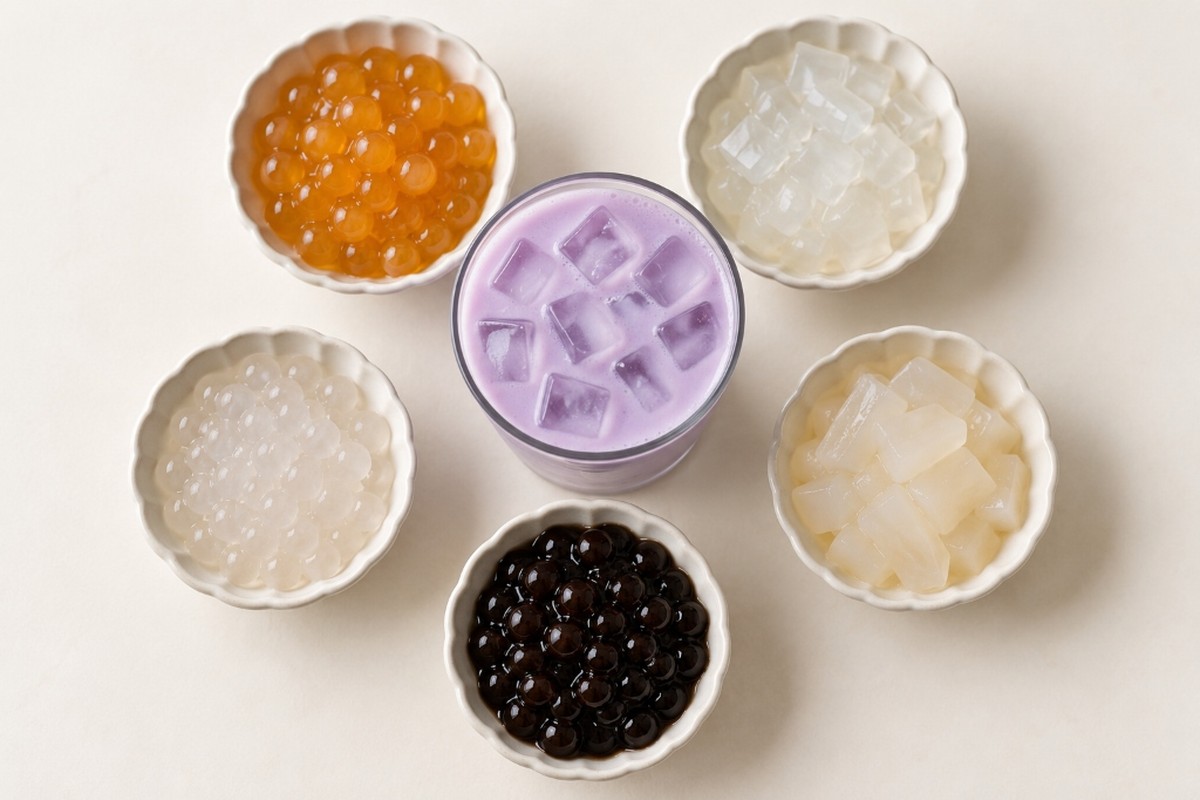
Honey Boba
Warm honey sweetness enhances floral notes and provides classic chewy Q-texture.
Aloe Vera Jelly
Juicy, crisp aloe vera cubes keep the beverage refreshing and light.
Crystal Boba
Translucent konjac pearls offer a snappy bite without masking delicate lavender aromas.
Lychee Coconut Jelly
Sweet tropical lychee notes complement citrus bergamot and floral lavender undertones.
Milk and sweetener choices
- Whole Dairy Milk: Creates a creamy body and buffers tea tannins.
- Oat Milk: Naturally sweet and velvety, pairing exceptionally well with Earl Grey and lavender.
- Almond Milk: Light and slightly nutty, keeping the drink crisp.
- Sweeteners: Wildflower honey emphasizes botanical notes; pure cane syrup provides clean neutral sweetness; vanilla syrup adds comforting dessert notes.
Calories, sugar and dietary notes
A standard 16 oz serving of homemade iced lavender milk tea with whole milk, 15 ml honey, and 50 g boba pearls contains approximately 210 to 260 calories and 24 to 28 g of sugar. Opting for unsweetened oat milk and aloe vera jelly reduces total caloric load to under 140 kcal.
- Vegan Friendly: Replace dairy with oat or almond milk and substitute honey with pure cane sugar or agave syrup.
- Gluten-Free: Pure tea, lavender buds, milk, and standard tapioca starch are naturally gluten-free. Always confirm certification for packaged syrups and commercial jellies.
Safety and serving notes
According to the U.S. National Center for Complementary and Integrative Health (NCCIH), culinary lavender consumed in customary food quantities is safe for most healthy adults. However, highly concentrated supplements or non-food extracts should be avoided during pregnancy or while taking sedative medications without professional medical advice. Furthermore, whole tapioca pearls present potential choking risks for children under 4 years old.
How to order lavender milk tea at a cafe
- Inquire about ingredients: Ask if the shop brews whole dried flowers, uses house syrup, or uses powdered mixes.
- Select sweetness level: Request 25% to 50% sweetness, especially when adding sweetened honey boba.
- Choose milk base: Oat milk provides optimal body without competing with botanical aromas.
Common problems and fixes
| Problem | Likely Cause | Practical Fix |
|---|---|---|
| Soapy or perfume-like taste | Excessive lavender dosage or over-steeping (>4 min). | Reduce buds to ½ tsp and strain strictly at 3 minutes. |
| Pungent medicinal / camphor scent | Used ornamental Spanish/Spike lavender or craft flowers. | Switch to certified culinary Lavandula angustifolia. |
| Bitter or harsh astringency | Water was boiling hot (100°C) during infusion. | Cool water to 80°C–85°C before pouring over tea. |
| Weak or undetectable lavender | Aged buds with lost essential oils or heavy dairy volume. | Use fresh culinary buds or add 10 ml lavender simple syrup. |
| Dull greyish-brown color | Dark black tea overshadowed blue butterfly pea anthocyanins. | Add 1–2 extra butterfly pea blossoms or use lighter green tea. |
| Dairy curdles or separates | Added acidic lemon juice to hot tea liquor before milk. | Avoid citrus acids when preparing dairy-based milk tea. |
| Watery, diluted texture | Poured boiling tea directly over ice without cooling. | Cool tea concentrate for 5–10 minutes before shaking with ice. |
| Excessively sweet drink | Syrup combined with sweetened honey boba. | Reduce added syrup to 10–15 ml when using sweetened toppings. |
Frequently asked questions about lavender milk tea
What does lavender milk tea taste like?
It tastes creamy, smooth, and delicately floral. When paired with Earl Grey, it offers notes of bergamot citrus and rich black tea, balanced by honeyed sweetness and a soft vanilla finish.
Why does my lavender tea taste like soap?
A soapy flavor results from using too many flower buds, steeping in boiling water, steeping for longer than 4 minutes, or using ornamental lavender varieties rich in camphor. Use culinary English lavender and steep at 80°C–85°C.
How do you make lavender milk tea?
Steep loose Earl Grey tea and culinary lavender in 80°C to 85°C water for 3 to 4 minutes. Strain, sweeten with honey, cool slightly, shake vigorously with milk and ice, and pour over chewy boba pearls.
Does lavender milk tea have caffeine?
Lavender buds contain zero caffeine. However, black tea (Earl Grey/Ceylon), green tea, and oolong bases contain natural caffeine (25–65 mg). For a caffeine-free drink, use rooibos herbal tea or pure lavender milk.
Can I make lavender milk tea without Earl Grey?
Yes. You can use brisk Ceylon black tea, floral jasmine green tea, roasted oolong, or caffeine-free South African red rooibos.
How do I make lavender bubble tea purple naturally?
Add 2 to 4 dried butterfly pea flowers (Clitoria ternatea) to the hot water while steeping. The deep blue anthocyanin infusion turns a soft pastel lilac when shaken with milk.
Can I use fresh lavender?
Yes, provided it is an organically grown culinary English lavender variety free of pesticides and chemical sprays. Fresh buds contain moisture, so use approximately double the volume of dried buds.
Can I use lavender essential oil in milk tea?
No. Aromatherapy essential oils are highly concentrated, non-water-soluble, and dangerous for ingestion. Only use whole culinary flowers or food-grade syrups explicitly labeled for beverages.
What toppings go best with lavender milk tea?
Honey boba, crisp aloe vera jelly, translucent crystal boba, and lychee jelly are the best companions. Dense brown sugar boba can overpower delicate lavender.
Can I make lavender milk tea vegan?
Yes. Substitute dairy milk with barista-blend oat or almond milk and sweeten with pure cane sugar, maple syrup, or agave nectar instead of honey.
Is lavender milk tea good before bed?
A caffeine-free version made with rooibos or pure herbal lavender is a comforting evening beverage. However, avoid black or green tea bases before sleep due to caffeine content.
How long does lavender milk tea last?
An assembled iced boba drink should be enjoyed immediately as tapioca pearls harden within 4 hours. Brewed unsweetened tea or lavender syrup can be refrigerated in airtight glass containers for 3 to 4 days.
Sources and editorial review
[1] National Center for Complementary and Integrative Health (NCCIH). Lavender safety, oral use, and health effects.
[2] U.S. Food and Drug Administration (FDA). Listing of Color Additives Exempt from Certification; Butterfly Pea Flower Extract (21 CFR Part 73).
[3] U.S. Food and Drug Administration (FDA). Spilling the Beans: How Much Caffeine is Too Much?
[4] Chemical composition and volatile profiles of Lavandula angustifolia, L. latifolia, and L. stoechas essential oils. Journal of Essential Oil Research.
[5] Evaluation of linalool and linalyl acetate aroma synergy in bergamot citrus and floral tea infusions.


 Badge-157x140.png)
Comments