
Rose Milk Tea: Floral Boba Recipe and Best Toppings
Rose milk tea looks simple and elegant, but getting the floral strength right can be tricky—use even a fraction too much rose water or syrup, and the entire drink can quickly taste like perfume or bath soap instead of a balanced beverage.
Quick answer: Rose milk tea is a sweet, floral drink made by combining brewed black or green tea with culinary rose syrup or rose water, cold milk, and chewy tapioca pearls or popping boba. For a standard 16-ounce drink, starting with 15 to 20 ml of culinary rose syrup (or 1/4 teaspoon of unsweetened rose water) creates a delicate flavour reminiscent of Turkish delight, balanced by tea tannins and milk fat. A black-tea version contains about 50 to 70 mg of caffeine, while rooibos or Bandung-style tea-free variations are naturally caffeine-free.
Notice: Food note: Use rose water, syrup, petals, and flavouring sold strictly for culinary use. Do not add perfume, cosmetic rose oil, or garden/florist petals treated with pesticides.
Editorial review: The Bobalicious content team checked the recipe ratios in a home test kitchen. Caffeine, calories, and storage guidance are estimates that change by product brand and portion.
What is Rose Milk Tea?
Rose milk tea is a floral milk drink made with rose flavour, brewed tea, and milk. Bubble tea versions add ice, syrup, tapioca pearls, popping boba, jelly, or foam.
Many recipes use Damask rose, Rosa damascena, as rose water or syrup. Persian rose water is often called golab. Rose also appears in sweets such as lokum, commonly known as Turkish delight. Modern rose boba combines these floral traditions with Taiwanese bubble tea service.
Rose Water vs Rose Syrup
| Ingredient | What it is | Sweetness | How to use it |
|---|---|---|---|
| Culinary rose water | Clear hydrosol from rose-petal distillation | None | Add by drops or small spoonfuls |
| Rose syrup | Sweetened rose cordial or flavoured syrup | High | Measure as flavour and sweetener |
| Rose extract | Concentrated flavour product | Varies | Follow the label carefully |
| Edible rose petals | Food-grade dried or fresh petals | None | Use as a light garnish |
Rose water and syrup are not equal replacements. A tablespoon of syrup is much milder than a tablespoon of concentrated rose water in many brands.
What Does Rose Milk Tea Taste Like?
Rose milk tea tastes sweet, floral, creamy, and lightly fruity. Black tea adds malt and tannin. Green tea gives a fresher finish. Milk rounds the sharp edge of the floral aroma.
The flavour can recall rose Turkish delight, floral honey, lychee, strawberry, or vanilla cream. A balanced drink should smell like roses without tasting cosmetic.
Why Rose Boba Can Taste Like Soap (Aroma Science)
Rose has a low flavour threshold, so a small extra amount can dominate the cup. Synthetic flavour, weak tea, and thin milk can make the problem stronger.
Rose aroma includes compounds such as phenylethyl alcohol, geraniol, and trace rose oxide. Their amounts differ by rose species, farming, processing, and product. These names explain part of the aroma, but they do not set one safe or correct dose for every syrup.
Use the label as the first guide. For a 16-ounce drink, 15 to 20 ml culinary rose syrup is a useful starting range. If you use unsweetened rose water, begin with about 1/4 teaspoon and taste before adding more.
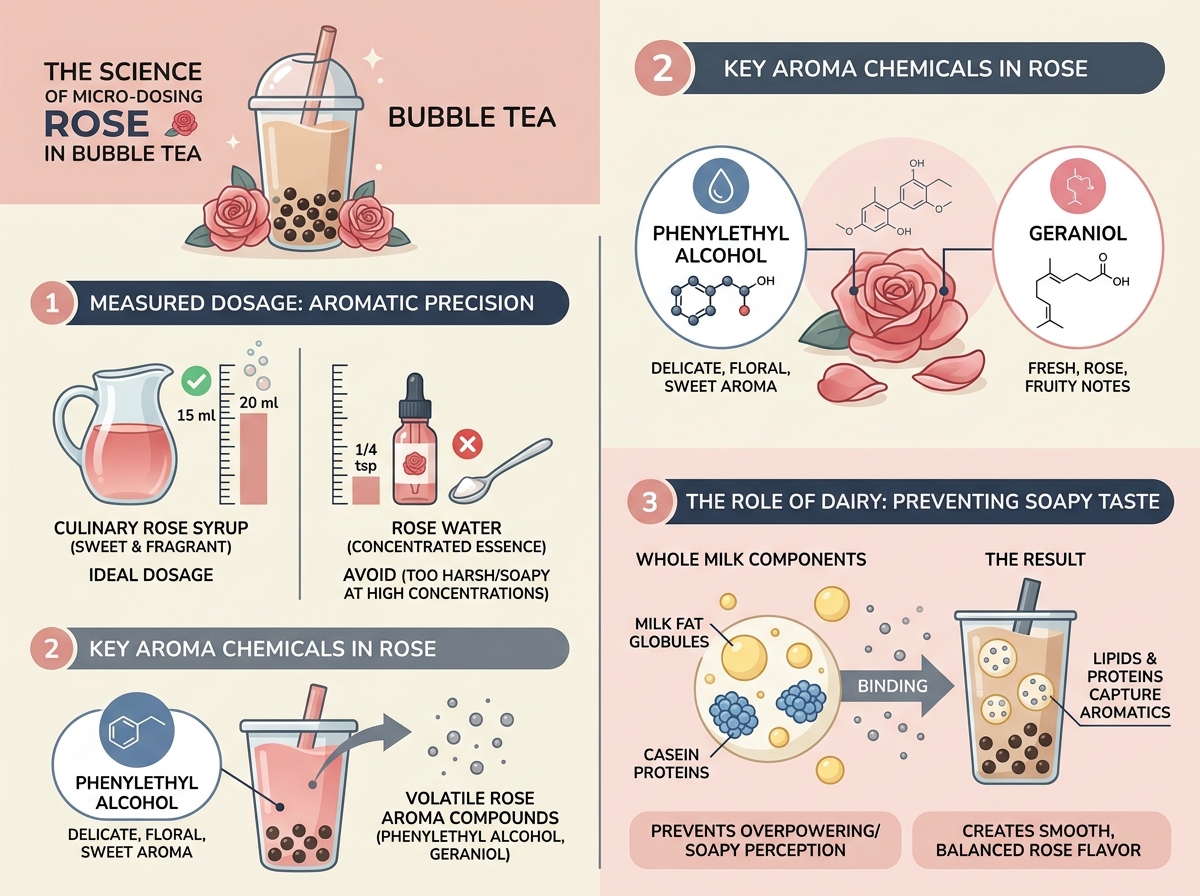
Start with a small rose dose and adjust after tasting.
How Milk and Tea Balance Rose
Whole milk gives the richest body. Milk fat can carry oil-soluble aroma compounds and release them more slowly while drinking. Milk proteins such as casein can also soften tea tannins.
Oat milk gives grain sweetness and a creamy plant-based texture. Soy milk adds more body. Almond milk is lighter and can make rose aroma feel sharper.
A bold Assam or Ceylon tea provides enough malt and tannin to stand beside rose. Black-tea thearubigins contribute colour, body, and astringency. Weak tea can disappear under syrup and milk.
Best Tea Bases for Rose Boba
- Assam black tea: Assam adds malt, colour, and strength. It fits a classic creamy rose bubble tea.
- Ceylon black tea: Ceylon gives a brighter citrus edge and a cleaner finish.
- Jasmine green tea: Jasmine adds another floral layer. Use less rose syrup so the 2 aromas remain distinct.
- Rooibos or hibiscus: Rooibos has no tea caffeine and gives a mild woody sweetness. Hibiscus adds tartness and red colour, though its acidity can affect milk. Add milk slowly and test a small batch.
Rose Milk Tea Caffeine
| Base | Rough caffeine in a 16-ounce drink |
|---|---|
| Assam or Ceylon black tea | 50 to 70 mg |
| Jasmine green tea | 35 to 60 mg |
| Rooibos | 0 mg |
| Bandung-style milk and rose syrup, no tea | 0 mg |
These are estimates. Tea weight, steep time, water temperature, and brand can change the amount.
Rose Boba Recipe
This recipe makes 1 iced 16-ounce serving, about 475 ml.
Iced Rose Milk Tea with Boba
Ingredients
- 12 g Assam or Ceylon black tea
- 180 ml filtered water at about 95 deg C
- 15 to 20 ml culinary rose syrup
- 100 ml cold whole milk or oat milk
- 30 ml evaporated milk, optional
- 50 g uncooked tapioca pearls
- 25 ml honey or brown sugar syrup for the pearls
- 140 g ice
- edible dried rose petals, optional
Equipment
- Kettle
- Covered brewing cup or teapot
- Fine strainer
- Saucepan for tapioca pearls
- Cocktail shaker or sealed jar
- 16-ounce glass
- Wide straw, about 12 mm
Instructions
- 1. Brew the tea concentrate: Heat 180 ml water to about 95 deg C. Add 12 g black tea, cover, and steep for 4 to 5 minutes. Strain the tea. Taste the concentrate. It should be strong because milk and ice will dilute it. Shorten the next steep if it tastes harsh.
- 2. Add the rose syrup: Stir 15 ml rose syrup into the warm tea. Taste after it cools slightly. Add up to 5 ml more if the rose is too faint.
- 3. Cook the tapioca pearls: Bring 600 ml water to a boil. Add 50 g tapioca pearls and stir for 1 minute. Cook according to the package directions. Drain and rinse under lukewarm water. Mix the pearls with 25 ml honey or brown sugar syrup and rest for 10 minutes. Use cooked pearls the same day.
- 4. Chill and assemble: Add 40 g ice to a shaker. Pour in the rose tea and shake for about 10 seconds. Add the pearls to the glass, followed by the remaining ice and milk. Pour the chilled rose tea over the milk. Garnish with a small pinch of edible petals. Stir before drinking.
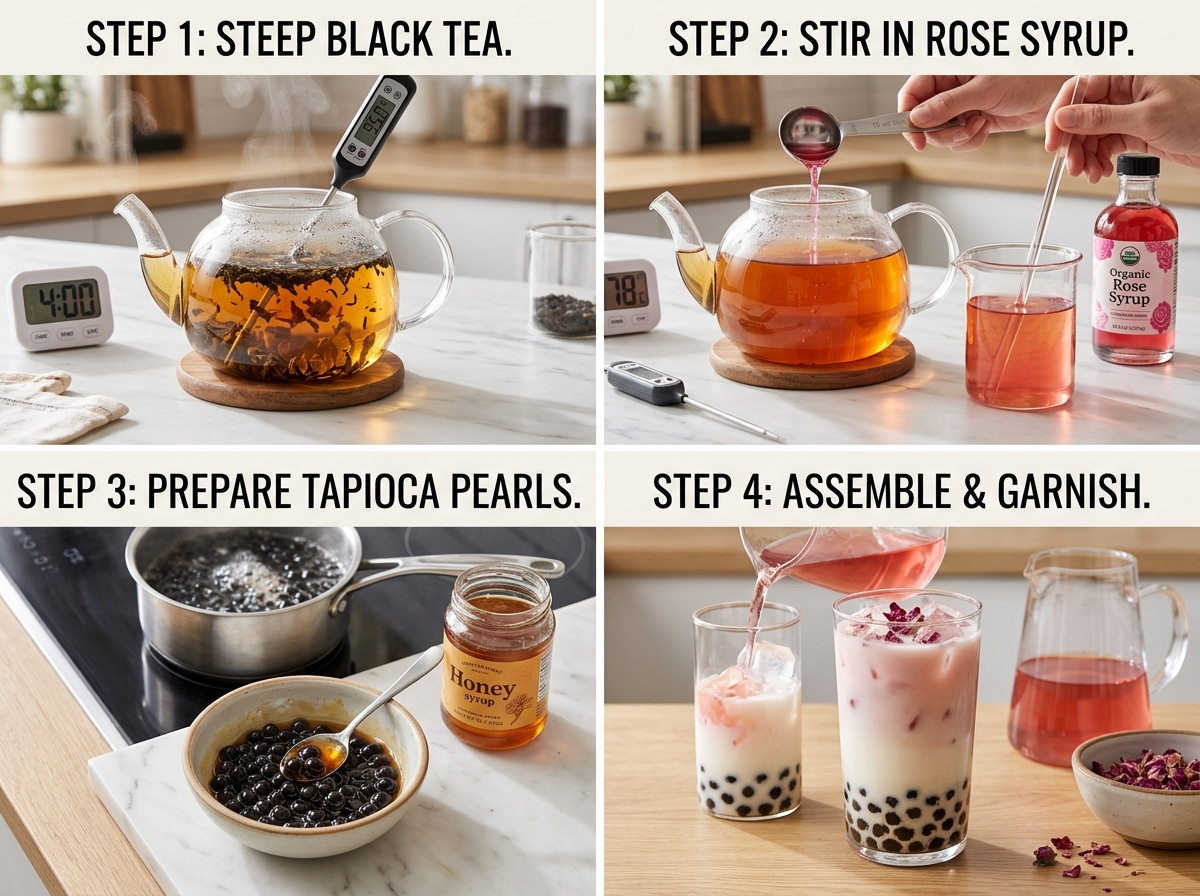
Brew, flavour, chill, and assemble.
Bandung Boba Recipe Variation
Bandung is a Southeast Asian rose drink often made with rose cordial and evaporated or condensed milk. It usually contains no brewed tea.
For a quick Bandung boba, mix 20 ml rose cordial with 120 ml cold milk, 40 ml evaporated milk, and ice. Add cooked tapioca pearls. Adjust the cordial to its label and sweetness because brands vary.
Best Toppings for Rose Milk Tea
- Lychee popping boba: Lychee adds sweet fruit and matches rose aroma. Use a small portion so the drink does not become too sweet.
- Honey tapioca pearls: Honey gives a soft floral sweetness and chewy texture.
- Nata de coco: Coconut jelly adds a crisp bite and mild flavour.
- Aloe jelly: Aloe gives a clean, cool texture and works well with green-tea rose boba.
- Salted cheese foam: A thin foam layer adds creaminess and salt. Keep it mild so the rose remains clear.
- Egg pudding: Egg pudding adds custard and vanilla notes. Reduce syrup when using this topping.
| Topping | Taste effect | Best base |
|---|---|---|
| Lychee popping boba | Fruity and juicy | Jasmine green tea |
| Honey tapioca | Floral sweetness and chew | Assam black tea |
| Nata de coco | Crisp coconut bite | Oat milk |
| Aloe jelly | Light and clean | Green tea |
| Cheese foam | Salty cream finish | Black tea |
Rose Milk Tea Calories
| Drink version | Rough calories per 16 oz |
|---|---|
| Traditional rose boba with whole milk | 300 to 380 |
| Rose milk tea with lychee popping boba | 320 to 410 |
| Oat-milk rose tea with half syrup | 210 to 290 |
| Unsweetened rose black tea with milk, no toppings | 100 to 160 |
These are recipe estimates. Syrup, milk, pearls, foam, and serving size can change the total.
Storage and Ingredient Safety
Store opened rose water and syrup according to the label. Some products need refrigeration after opening, while shelf-stable products may not.
Keep brewed tea and milk covered and chilled. Use mixed milk tea as soon as practical. Cooked tapioca pearls are best used the same day.
Only use petals sold as edible. Florist and garden roses may carry pesticide residue or treatments not intended for food.
Troubleshooting Rose Milk Tea
| Problem | Likely cause | Fix |
|---|---|---|
| Drink tastes soapy | Too much rose water or extract | Dilute with tea and milk, then reduce the next dose |
| Rose aroma disappears | Tea is weak or milk volume is high | Brew a stronger tea concentrate and measure the milk |
| Drink is too sweet | Syrup is doing 2 jobs | Use less rose syrup or choose unsweetened rose water |
| Milk separates | Acidic fruit or hibiscus base | Cool the tea, add milk slowly, and test a small batch |
| Colour is too bright | Strong commercial colouring | Check the label and reduce the syrup amount |
| Tapioca turns hard | Pearls were stored too long | Cook a fresh batch and serve the same day |
The Bottom Line
Rose milk tea is an exquisite, aromatic treat when treated with precise measurement. By starting with a restrained 15 to 20 ml dose of culinary rose syrup (or 1/4 teaspoon of unsweetened rose water), brewing a structured Assam black tea concentrate, and leveraging the fat of whole or oat milk to soften volatile floral notes, you achieve a silky, refreshing bubble tea that tastes authentically like Turkish delight without ever bordering on perfume.
Frequently Asked Questions
Q: What does rose milk tea taste like?
It tastes floral, creamy, sweet, and lightly fruity. Black tea adds malt, while rose can recall Turkish delight and honey.
Q: Why does rose milk tea taste like soap?
Too much rose water or syrup can overwhelm the drink. Artificial flavour, weak tea, or thin milk can make the effect stronger.
Q: How much caffeine is in rose milk tea?
A 16-ounce drink with black tea often contains about 50 to 70 mg. Rooibos and tea-free Bandung-style versions contain no tea caffeine.
Q: What is the difference between rose milk tea and Bandung?
Bandung usually combines rose cordial with milk and water without brewed tea. Rose milk tea adds black, green, or herbal tea and may include boba toppings.
Q: Can I use oat milk?
Yes. Oat milk gives a creamy texture and mild grain sweetness.
Q: Can I use rose water instead of rose syrup?
Yes, but rose water is unsweetened and may be stronger. Start with about 1/4 teaspoon, then add sweetener separately.
Q: Can I use fresh rose petals?
Use only petals sold for culinary use. Rinse them as directed and use a small amount.
Q: Is rose milk tea naturally pink?
Rose water is often clear. Pink colour may come from syrup, petals, hibiscus, fruit, or food colouring. A clear drink can still contain real rose.
Q: What are the best toppings for rose milk tea?
Lychee popping boba, honey pearls, nata de coco, aloe jelly, cheese foam, and egg pudding all work.
Q: How do I make rose milk tea caffeine-free?
Use rooibos or make a Bandung-style drink with rose cordial and milk but no tea.
Related Milk Tea & Boba Guides
- Jasmine Milk Tea: Floral Green Tea Recipe & Pearl Pairings
- Earl Grey Milk Tea: Citrus Bergamot Boba Guide
- What is Popping Boba? Juice Pearls & Lychee Flavours
- What is Nata de Coco? Coconut Jelly Topping Guide
- Sparkling Boba Drinks: 5 Soda & Mocktail Recipes
- Pandan Boba: Botanical Coconut Milk Tea Guide
- What is Boba? The Complete Tapioca Pearl Guide
Sources and Editorial Notes
- FDA food-ingredient safety guidance on botanical extracts and essential oils
- Mayo Clinic caffeine guidelines for brewed tea and herbal infusions
- The report supplied the competitor review, keyword plan, rose-aroma topics, recipe, Bandung comparison, topping ideas, FAQ set, internal links, image plan, and schema plan. This page adds caution around dose, edible petals, exact aroma percentages, caffeine, calories, hibiscus acidity, and storage labels.


 Badge-157x140.png)
Comments