
How Much Does Bubble Tea Cost? Cafe, RTD and Home Prices
Bubble tea costs about $5.50 to $8.50 at a US specialty café, according to the September 2026 research supplied for this page. A ready-to-drink can costs about $2.50 to $4.50. A homemade serving costs about $0.85 to $1.60 before equipment, delivery and personal time.
City, brand, size, milk, toppings, delivery fees and tax can move the final price outside those ranges. Check a current local menu before setting a budget.
For a shop, the cost of a drink includes more than tea and pearls. Staff time, rent, packaging, waste, card fees and delivery commissions can exceed the raw ingredient cost.
Quick answer: A 16 oz café bubble tea costs about $5.50 to $8.50. A supermarket RTD drink costs about $2.50 to $4.50, while a homemade drink costs about $0.85 to $1.60. These September 2026 US planning ranges come from the supplied research. Local prices and recipes differ.
Price note: The dollar amounts below are estimates from the supplied report unless another source is named. They are not a national price survey. Check dated menus, supplier quotes and business records before using them for a purchase or financial plan.
Bubble tea cost at a glance
| Format | Report Price Range | Sample Benchmark Price | Best Fit & Consumer Context |
|---|---|---|---|
| Specialty Café (16 oz / 473 ml) | $5.50 to $8.50 | $6.75 | Made-to-order craft customization, fresh tapioca & social dine-in |
| Supermarket RTD Can (320 ml) | $2.50 to $4.50 | $3.49 | Quick grab-and-go convenience retail & multi-month shelf stability |
| Homemade Boba (16 oz / 473 ml) | $0.85 to $1.60 | $1.08 | Lowest ingredient cost for frequent home brewers and bulk pantry buyers |
Serving sizes differ across formats: a standard 16 oz café cup contains 473 ml, whereas a standard RTD can holds 320 ml. Evaluate cost on a per-ounce or per-100ml basis when comparing across channels.
Average bubble tea price
$6.75 represents a standard US specialty café benchmark for a 16 oz milk tea with tapioca pearls. However, actual retail prices fluctuate significantly across metropolitan markets such as New York City, Los Angeles, and San Francisco compared to suburban or Midwestern areas.
To calculate an accurate local market average, survey 5 to 10 independent and chain shops in your area using this standardized method:
- Select 5 to 10 competing stores within a 3-mile radius.
- Record the base menu price for a 16 oz regular black milk tea.
- Note whether tapioca pearls are included or require an extra topping surcharge ($0.50 – $1.00).
- Account for local municipal sales taxes and mandatory packaging fees.
- Calculate both the mathematical mean and the median to filter out outlier pricing.
Why does bubble tea cost so much?
A café menu price covers far more than raw tea leaves and starch pearls. Direct ingredients represent only 18% to 22% of total operational expenditure.
Key operational cost drivers include:
- Specialty Ingredients: Loose-leaf Assam or Oolong tea, fresh dairy milk, barista oat milk, and Taiwanese cassava tapioca.
- Custom Packaging: Heavyweight PP cups, customized sealing film, dome lids, and 12 mm wide boba straws.
- Store Labour Overhead: Hourly barista wages, payroll taxes, worker compensation insurance, and mandatory benefits.
- Prime Commercial Rent: High-footfall urban storefronts and shopping center lease fees.
- Utility Consumption: Continuous water filtration, commercial refrigeration, and electric tea/pearl induction cookers.
- Delivery & Merchant Commissions: 2.5% to 3.5% credit card fees plus 20% to 30% third-party courier platform cuts (UberEats, DoorDash).
- Batch Shrinkage & Waste: Tapioca discarded every 4 hours and unsold brewed tea at daily close.
Café price breakdown
The following cost structure illustrates how a typical $6.75 retail café milk tea is divided across operating expenses:
| Cost Line Item | Estimated Dollar Amount | Percentage of Retail Selling Price |
|---|---|---|
| Raw Ingredients & Packaging (COGS) | $1.35 | 20.0% |
| Direct Store Staff Labour | $2.10 | 31.1% |
| Store Rent, CAM & Utilities | $1.25 | 18.5% |
| Remaining Operating Cash Flow (Pre-Tax & Fixed Fees) | $2.05 | 30.4% |
Note: The $2.05 remainder must fund commercial insurance, POS software subscriptions, marketing, equipment depreciation, maintenance repairs, and corporate income taxes.
Café ingredient COGS breakdown
A granular look at the direct recipe components for a standard 16 oz Brown Sugar Pearl Milk Tea:
| Recipe Ingredient | Unit Cost | Portion Specification |
|---|---|---|
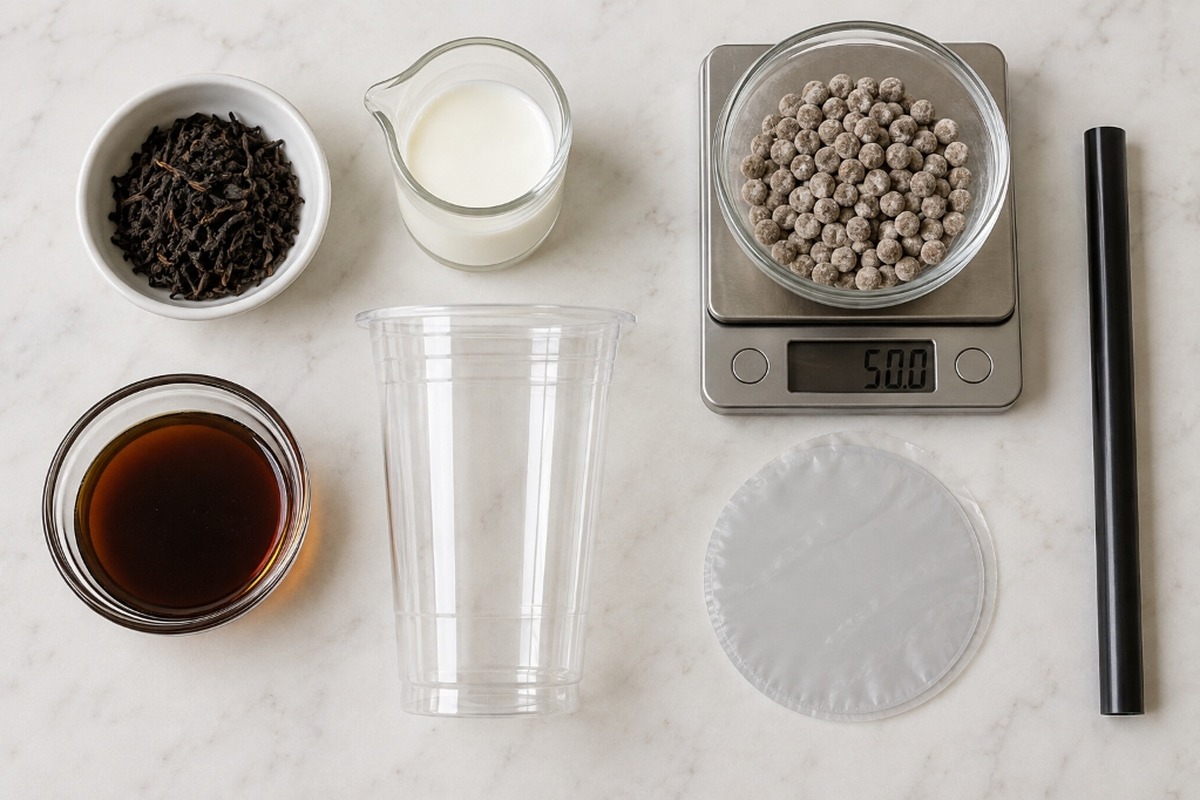
| Brewed Tea Base | $0.14 | 8 g loose premium Assam / Oolong tea leaves |
| Fresh Whole Milk / Creamer | $0.38 | 120 ml fresh dairy milk or non-dairy creamer base |
| Cassava Tapioca Pearls | $0.22 | 50 g raw uncooked Grade-A Taiwanese boba pearls |
| Brown Sugar Syrup | $0.18 | 30 ml concentrated Taiwanese brown sugar syrup |
| Packaging (Cup, Seal & Straw) | $0.32 | 16 oz PP cup, printed sealing film, and 12 mm wrapped straw |
| Total Drink COGS | $1.24 – $1.35 | Sum of ingredients and disposable serviceware |
Food cost percentage and prime cost targets
In professional restaurant and café management, two fundamental metrics govern profitability:
Food Cost Percentage = (Total COGS ÷ Total Sales) × 100
($1.35 COGS ÷ $6.75 Selling Price) × 100 = 20.0% Food Cost
Prime Cost = Total COGS + Direct Store Labour
$1.35 (COGS) + $2.10 (Labour) = $3.45 Prime Cost (51.1% of sales)
Bubble tea labour cost per cup
Labor cost is heavily determined by customer queue volume and barista preparation efficiency. The table below outlines direct wage expenses across different service times and hourly pay rates:
| Active Staff Time per Drink | $15.00 / hr Wage | $18.00 / hr Wage | $21.00 / hr Wage | $24.00 / hr Wage |
|---|---|---|---|---|
| 2.0 Minutes | $0.50 | $0.60 | $0.70 | $0.80 |
| 3.5 Minutes | $0.88 | $1.05 | $1.23 | $1.40 |
| 5.0 Minutes | $1.25 | $1.50 | $1.75 | $2.00 |
| 7.0 Minutes (2 Staff Split) | $1.75 | $2.10 | $2.45 | $2.80 |
For broader operational models and labor comparisons, read our detailed guide on Ready-to-Drink vs Fresh Bubble Tea.
Toppings and plant-milk surcharges
Cafés frequently leverage add-ons and premium ingredient upgrades to increase average ticket size:
- Extra Toppings ($0.75 – $1.00): Tapioca pearls, Popping Boba, Nata de Coco, Grass Jelly, or Aiyu Jelly.
- Alternative Plant Milks ($0.80 – $1.00): Barista Oat Milk, Almond Milk, or Coconut Milk.
- Cheese Foam / Cream Cap ($1.00 – $1.50): Salted cream cheese froth topping.
- Upsizing to Large (24 oz / 700 ml): Adds $0.75 to $1.25 to the base cup price.
Supermarket RTD canned boba prices and COGS
Ready-to-drink canned boba offers an accessible retail price point ($2.50 to $4.50) by eliminating on-site preparation labor through automated manufacturing lines.
| Factory Cost Component (320 ml Can) | Ex-Factory Cost |
|---|---|
| Concentrated Tea Extract | $0.12 |
| Standardised Dairy / Plant Base | $0.18 |
| Konjac Glucomannan Inclusions | $0.16 |
| Syrup & Flavour Formulation | $0.06 |
| Aluminium Can, End & BPA-NI Liner | $0.22 |
| Total Ex-Factory Manufacturing Cost | $0.74 – $0.88 |
For packaging and container durability details, see our technical breakdown of Bubble Tea Cups vs Cans vs Bottles and our shelf-life validation guide on Ready-to-Drink Bubble Tea Shelf Life.
Cost to make boba at home vs store
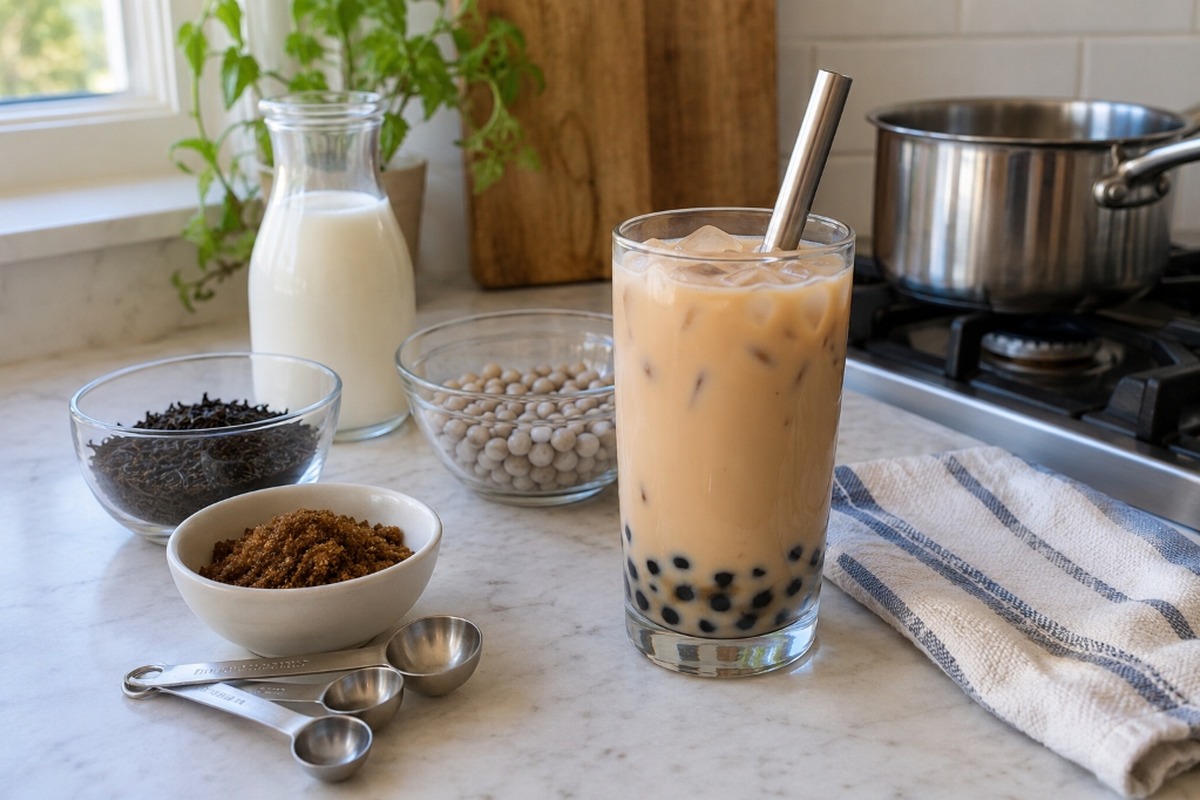
Brewing bubble tea at home provides dramatic cost savings for regular drinkers, averaging $1.08 per 16 oz serving (an 84% reduction compared to café retail prices):
| Homemade Ingredient | Cost per Serving |
|---|---|
| Loose Leaf Black / Green Tea | $0.15 |
| Fresh Whole Milk or Oat Milk | $0.35 |
| Dry Tapioca Pearls (1 kg bulk bag) | $0.30 |
| Brown Sugar / Simple Syrup | $0.10 |
| Reusable Glassware & Straw Wear | $0.18 |
| Total Cost per Homemade Serving | $1.08 |
How much profit does a bubble tea shop make per cup?
Net store profitability is determined by monthly drink sales volume and total fixed operational overhead.
Break-even volume calculation
According to US Small Business Administration (SBA) financial guidelines:
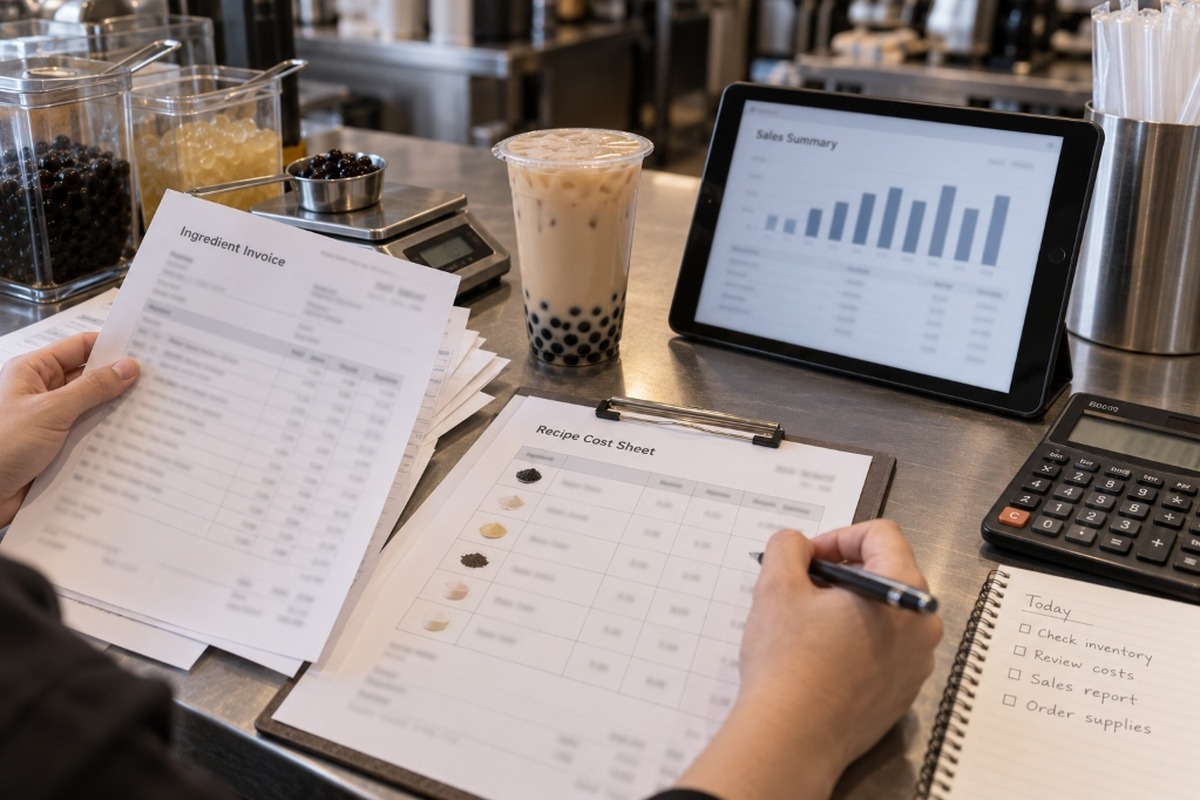
Break-Even Units = Monthly Fixed Costs ÷ Contribution Margin per Drink
- Monthly Fixed Costs (Rent + Core Payroll + Utilities + Insurance): $20,000.00
- Average Retail Price: $6.75
- Variable Cost per Drink (COGS + Hourly Staff Assembly): $2.25
- Contribution Margin per Drink: $4.50
- Monthly Break-Even Sales: $20,000 ÷ $4.50 = 4,445 drinks / month (approx. 148 drinks / day)
Cost control strategies for café owners
- Precision Syrup Dispensing: Deploy calibrated electronic or peristaltic dispensers to prevent $0.15+ over-pouring per drink.
- Batch Staggering: Cook smaller 500 g pearl batches hourly to prevent end-of-day tapioca waste.
- Direct Supplier Invoicing: Purchase tea leaves and pearls in pallet quantities to capture 15-25% wholesale discounts.
- Automated Equipment: Implement automated cup sealers and shakers to reduce customer wait time from 5 minutes to under 2 minutes. For manual low-cost setups, see our guide on How to Sell Bubble Tea Without Equipment.
Frequently asked questions
How much does bubble tea usually cost?
At a specialty boba café, a 16 oz drink typically costs between $5.50 and $8.50. Canned RTD bubble tea in supermarkets costs $2.50 to $4.50, and homemade boba costs about $0.85 to $1.60 per cup.
What is the average price of bubble tea in the US?
The benchmark national average for a standard 16 oz milk tea with boba is approximately $6.75, with higher prices ($7.50 to $8.50+) observed in major coastal metro areas like New York and San Francisco.
Why has bubble tea become so expensive?
Rising commercial storefront rents, increasing minimum wage rates, imported Taiwanese ingredient freight costs, premium plant milks, and third-party delivery commissions have driven café menu prices upward.
Is making bubble tea at home cheaper?
Yes. Making boba at home costs around $1.08 per 16 oz drink in raw ingredients, representing an 84% savings compared to purchasing from a café.
How much does homemade boba cost to prepare?
A homemade serving costs roughly $0.15 for tea leaves, $0.35 for milk, $0.30 for tapioca pearls, $0.10 for brown sugar syrup, and $0.18 for reusable serviceware wear, totaling $1.08.
How much is canned RTD bubble tea in supermarkets?
A 320 ml can of ready-to-drink bubble tea typically retails between $2.50 and $4.50, averaging $3.49 per can in mainstream grocery and Asian specialty stores.
How much profit does a boba shop make per cup?
On a $6.75 drink with $1.35 in COGS, $2.10 in direct labour, and $1.25 in occupancy overhead, a shop generates approximately $2.05 in gross operating margin before taxes, software, and marketing costs.
How much do extra toppings add to the price?
Extra toppings such as popping boba, egg pudding, grass jelly, or cheese foam generally add $0.75 to $1.25 per portion to the base beverage price.
Is oat milk more expensive in bubble tea?
Yes. Specialty cafés typically charge an additional $0.80 to $1.00 for barista-grade oat milk or almond milk substitutes due to higher wholesale ingredient costs.
Is a large 24 oz bubble tea better value than a 16 oz?
Yes. A 24 oz large drink typically offers a 20% to 28% lower price per ounce compared to a 16 oz medium, provided the customer consumes the entire portion.
How much does bubble tea cost near me?
Local prices depend on regional lease rates and competition. Check local shop menus directly on Google Maps or store ordering apps to verify if toppings and taxes are included.
How much does bubble tea cost at major chains like Kung Fu Tea and Gong Cha?
Major chains average $5.75 to $7.25 for standard medium drinks, with prices rising to $8.00+ when ordering via third-party delivery apps due to delivery surcharges.
Sources and industry references
This pricing and commercial cost analysis references financial benchmarks and labor statistics from the following industry sources:


 Badge-157x140.png)
Comments