
Honey Boba: Taste, Recipe, Calories and Best Tea Pairings
Honey boba is cooked tapioca pearls soaked in a warm honey syrup. The pearls have a soft, chewy center and a light floral sweetness. Their color can range from pale gold to dark brown, depending on the pearls and honey used.
You can add honey boba to milk tea, jasmine green tea, oolong, fruit tea or a caffeine-free herbal drink. The recipe matters because thick, undiluted honey can coat the pearls unevenly and may make them firmer as they sit.
Quick answer: Cook tapioca pearls according to the package, drain them, and coat them in warm honey syrup. A practical starting ratio is 3 parts honey to 1 part warm water by weight. Let the pearls soak for 15 to 20 minutes, then serve them while warm and soft. Make only what you expect to use within 4 hours.
Honey boba at a glance
| Question | Short answer |
|---|---|
| What is it made from? | Tapioca pearls, water and honey |
| What does it taste like? | Sweet and floral, with a neutral tapioca base |
| What is the texture? | Soft, springy and chewy when freshly cooked |
| Is it the same as black boba? | The pearl may be similar, though the soaking syrup differs |
| Best honey | Clover for a mild taste, wildflower for a stronger floral taste |
| Best tea pairing | Jasmine green tea or light oolong |
| Is it vegan? | No. Honey comes from bees |
| Does it contain caffeine? | The pearls do not, though the drink may contain tea or coffee |
| How long should it sit? | Use cooked pearls as soon as possible, within 4 hours |
What is honey boba?
Honey boba usually means tapioca pearls sweetened with honey. Cafes may use white, golden, clear or black pearls. This means the name describes the syrup more reliably than the pearl color.
Tapioca is cassava root starch. Cassava has the scientific name Manihot esculenta. Manufacturers mix the starch with water and other ingredients, form it into small balls and dry it. Cooking lets the starch absorb water and develop its familiar chew.
In Taiwan, tapioca pearls are often called fenyuan. Bubble tea shops may also use the terms pearls, tapioca, black boba or boba.
What is honey boba made of?
A basic batch has 3 parts:
- Dried tapioca pearls
- Water for cooking
- Honey diluted with a little warm water
Commercial pearls may contain caramel color, preservatives, gums or other starches. Packaged honey syrup may contain sugar, flavoring or glucose syrup. Check the label if ingredients, allergies or dietary rules matter to you.
How tapioca becomes chewy
Tapioca starch contains amylose and amylopectin. Heat and water cause the starch granules to swell. Food scientists call this gelatinization.
The cooking time depends on the pearl. Traditional dried pearls may need 20 to 30 minutes of simmering plus a covered rest. Quick-cook pearls can finish in about 5 minutes. The package directions should take priority because pearl size and formula vary.
What does honey boba taste like?
Honey boba tastes sweet, mild and floral. Tapioca has little flavor on its own, so most of the taste comes from the honey bath and the drink around it.
Clover honey gives a clean, gentle sweetness. Wildflower honey can taste deeper and more floral. Orange blossom honey may add a soft citrus scent. Darker honey can have stronger malt, spice or caramel notes.
The tea changes the full drink. Jasmine green tea keeps the flavor light. Oolong adds roasted or floral notes. Black tea makes the drink deeper and more tannic. Milk softens both the honey and tea.
Honey boba vs regular boba
The main difference is the sweetener used after cooking.
| Feature | Honey boba | Brown sugar boba |
|---|---|---|
| Soaking syrup | Honey and water | Brown sugar and water |
| Common color | Pale gold, amber or original pearl color | Dark brown or black |
| Main flavor | Floral sweetness | Molasses and caramel |
| Best with | Jasmine tea, oolong, fruit tea and lighter milk tea | Assam, roasted tea and rich brown sugar milk tea |
| Vegan status | Usually not vegan | Often vegan, subject to pearl ingredients |
| Calories | Depend on pearl portion and syrup absorbed | Depend on pearl portion and syrup absorbed |
Brown sugar shops may call their dark syrup kuromitsu, though recipes differ. Muscovado is another dark sugar used for a deep molasses taste.
Both versions contain cooked starch and added sugar. Honey contains small amounts of plant compounds and minerals, though a normal boba serving is not a major source of nutrients.
Is honey boba healthier than regular boba?
There is no reliable answer without the full recipe and serving weight. Honey and brown sugar both add calories and free sugars. A smaller serving with less syrup can have fewer calories, regardless of which sweetener you choose.
For an accurate menu figure, weigh each ingredient, calculate the full batch, and divide by the measured yield. Cafes should use exact product labels and recipe records.
Why honey can change boba texture
Cooked tapioca pearls hold a large amount of water. A thick sugar solution outside the pearl can draw some water from its surface. This movement is called osmosis, and the concentration difference creates osmotic pressure.
Pure honey contains little water compared with freshly cooked tapioca. Food science uses the term hypertonic solution for a liquid with a higher dissolved-solute concentration than the food beside it. A direct soak in thick honey can coat poorly and may make the pearl surface firmer over time. Diluting the honey makes it easier to mix and gives the pearls a more even coating.
Cooling also changes cooked starch. Amylose and amylopectin chains begin to join again after cooking. This process includes amylose retrogradation. It causes pearls to lose softness as they cool and sit. Fresh pearls have the springy chew often called Q texture in Taiwanese food culture.
A practical honey syrup ratio
Use 3 parts honey to 1 part warm water by weight as a starting point. For example:
- 75 g honey
- 25 g warm water
This produces enough syrup for about 100 g of dry tapioca pearls after cooking. Honey varies in water content, so the finished concentration will also vary. A refractometer can measure degrees Brix when a cafe needs repeatable batches.
Why the honey goes in after cooking
Cook the pearls in plain water. Add honey after the pan comes off the heat.
This method keeps honey away from a long boil and protects more of its aroma. Heat can reduce the activity of honey enzymes such as diastase, invertase and glucose oxidase. It can also change volatile aroma compounds such as linalool, pinene and geraniol.
How to make honey boba
This recipe uses traditional dried tapioca pearls. Read your package first. Use its directions when the stated cooking time differs from this recipe.
Recipe timing and yield
| Detail | Estimate |
|---|---|
| Active preparation | About 10 minutes |
| Cooking and covered rest | About 50 minutes for traditional pearls |
| Honey soak | 15 to 20 minutes |
| Yield | About 4 topping portions |
| Best use | Serve the same day, within 4 hours |
Ingredients
- 100 g dried tapioca pearls
- 1 litre water, plus more if needed
- 75 g clover or wildflower honey
- 25 g warm water for the honey syrup
- 1/2 teaspoon vanilla extract (optional)
Equipment
- Medium saucepan with a lid
- Kitchen scale
- Heat-safe spoon
- Fine-mesh strainer
- Heat-safe bowl
- Food thermometer (useful for cafe batches)
Step-by-step instructions
- Boil the water: Bring 1 litre of water to a full rolling boil in a medium saucepan.
- Add the tapioca pearls: Pour in the pearls slowly while stirring. Keep stirring until they float freely. Lower the heat to maintain a steady simmer, cover, and cook for about 25 minutes (or package time).
- Rest the pearls: Turn off the heat. Leave the pan covered to steam for 20 to 25 minutes. Cut one pearl in half to confirm the center is fully translucent and soft.
- Make the honey syrup: In a heat-safe bowl, combine 75 g honey with 25 g warm water (and vanilla if using). Stir until smoothly blended.
- Drain and rinse briefly: Drain the pearls through a fine-mesh strainer. Give them a brief rinse with warm or lukewarm water to clear excess surface starch without chilling the core.
- Soak in honey syrup: Transfer the warm pearls into the honey syrup. Stir gently and let them soak for 15 to 20 minutes before serving.
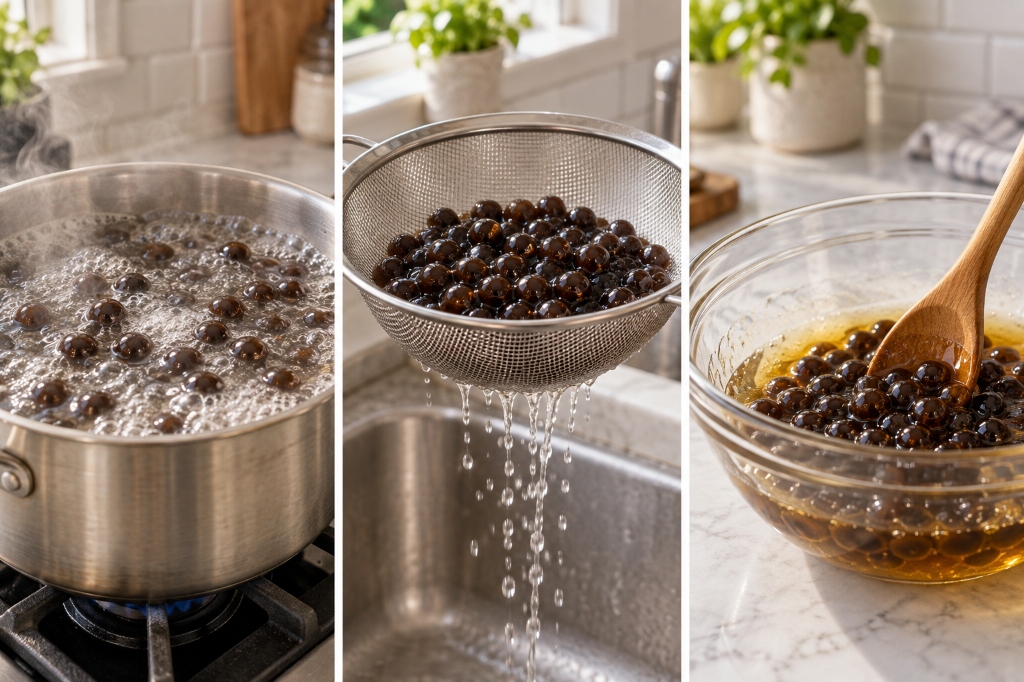
Cook the pearls in water, then add the honey after draining.
Quick-cook honey boba method
Quick-cook pearls suit home kitchens and small batches. Many brands cook in 5 to 10 minutes. Follow the package directions, drain, rinse briefly with warm water and soak in the same 3-to-1 honey mixture. Test one pearl before serving to ensure the center is soft.
How to keep honey boba soft
Fresh preparation gives the best texture. These steps reduce hard centers and sticky surfaces:
- Use enough boiling water (at least 10:1 ratio by volume).
- Stir continuously when the pearls first enter the boiling water.
- Follow the cooking and covered-rest times on the package.
- Check the center for complete gelatinization before draining.
- Rinse briefly with warm water instead of leaving pearls under cold running water.
- Coat the pearls in syrup while they are still warm.
- Add them to iced drinks just before serving.
- Enjoy the drink within 30 to 45 minutes for peak chewiness.
Why honey boba gets hard in iced tea
Cold liquid accelerates starch retrogradation, making cooked tapioca firm. Melting ice also dilutes the syrup coating. Keep pearls at room temperature or warm until assembly, pour the iced beverage over them immediately before serving, and use a wide boba straw.
Storage and food safety
Cooked tapioca pearls are best consumed on the day they are made. Keep the container covered at room temperature and protect it from cross-contamination.
For home use, prepare small batches and discard leftovers after 4 hours. Do not refrigerate cooked pearls, as the cold causes rapid starch crystallization (hardening).
Commercial cafe holding guidelines
Commercial beverage operations must adhere to local food safety codes. Under the US FDA Food Code, hot-holding foods requiring time and temperature control (TCS) must maintain 57°C (135°F) or above. Alternatively, cafes operating under time as a public health control must maintain strict 4-hour written logs and discard unsold product at the 4-hour mark.
Important infant health warning: Do not give honey boba or any food containing real honey to infants younger than 12 months. Honey can contain Clostridium botulinum spores that pose a severe risk of infant botulism. Boiling, cooking, or diluting honey into syrup does not eliminate this risk.
Best honey for boba
Honey varieties alter the sweetness profile, aroma, and color of the finished boba:
| Honey type | Taste | Color | Good pairing |
|---|---|---|---|
| Clover | Mild and clean | Pale gold | Jasmine green tea |
| Wildflower | Floral and rich | Gold to amber | Oolong or classic milk tea |
| Orange blossom | Sweet with citrus notes | Pale amber | Citrus green tea & passion fruit tea |
| Acacia | Light and delicate | Very pale gold | White tea or floral green tea |
| Buckwheat | Dark, earthy and robust | Deep brown | Assam or roasted oolong |
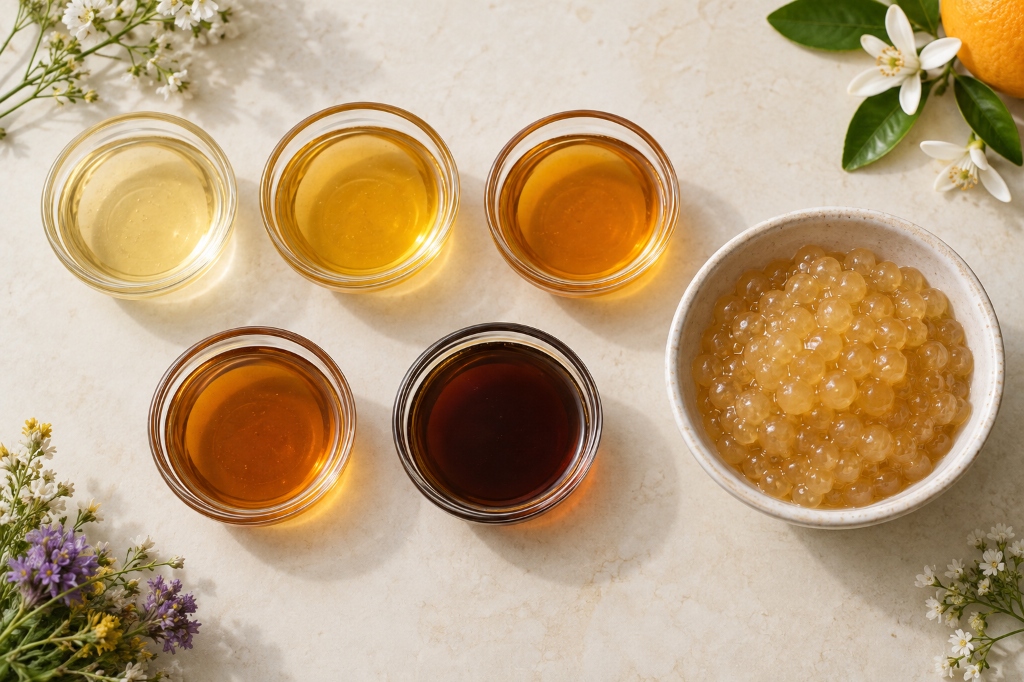
Honey type changes the color and flavor of the finished pearls.
Best tea pairings for honey boba
- Jasmine green tea: The quintessential match. The delicate floral aromatics of jasmine blossoms seamlessly complement clover or acacia honey.
- Four Seasons oolong (Si Ji Chun): Brings roasted floral and orchid notes that pair wonderfully with wildflower honey and oat or dairy milk.
- Assam black tea: Bold, malty Ceylon or Assam tea stands up to robust wildflower or buckwheat honey in rich milk teas.
- Citrus fruit teas: Fresh lemon, orange, or passion fruit provides vibrant acidity to counterbalance honey's sweetness (best served dairy-free).
- Herbal teas: Lavender milk tea, hibiscus, or chamomile create soothing, caffeine-free alternatives.
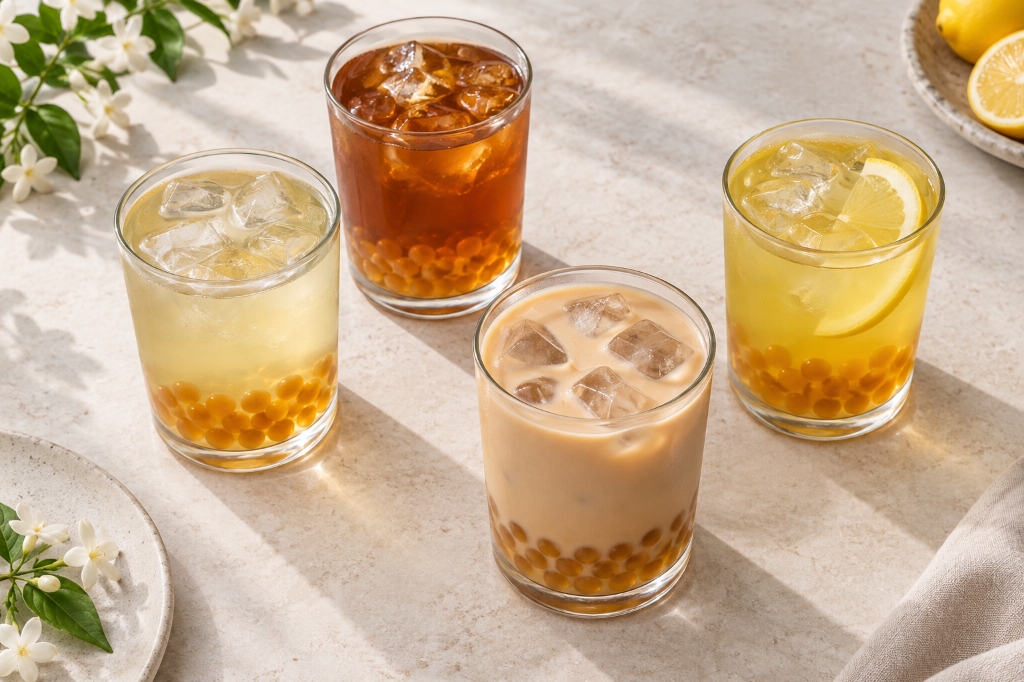
Mild honey suits jasmine and oolong, while darker honey can match black tea.
Common honey boba problems & solutions
| Problem | Likely cause | Fix |
|---|---|---|
| Hard center | Pearls needed more cooking or covered rest | Cut one open and continue simmering until the center is translucent |
| Sticky clumps | Too little cooking water or poor stirring | Use at least 10 parts water to 1 part dry pearls and stir early |
| Firm pearls after soaking | Thick syrup (hypertonic) or long holding time | Dilute the honey 3:1 with warm water and prepare smaller batches |
| Mushy outer layer | Quick-cook pearls were overcooked | Strictly adhere to the package timer |
| Weak honey flavor | Mild honey or excess rinse water | Use wildflower honey and drain thoroughly before soaking |
| Pearls harden in drink | Prolonged contact with ice | Add pearls at point of service and consume within 45 minutes |
Frequently asked questions about honey boba
What is honey boba made of?
Honey boba contains cooked tapioca pearls and diluted honey syrup. The pearls are made from cassava starch (Manihot esculenta), water, and optional stabilizers.
How do you make honey boba at home?
Boil tapioca pearls according to package directions, drain them, rinse briefly with warm water, and steep them for 15 to 20 minutes in a warm syrup of 3 parts honey to 1 part water.
What does honey boba taste like?
It has a sweet, subtle floral flavor. Clover honey produces a mild sweetness, wildflower honey provides richer floral depth, and orange blossom honey adds delicate citrus hints.
Does honey boba taste different from black boba?
Yes. Honey boba has a lighter, floral sweetness, whereas traditional black boba is soaked in dark brown sugar syrup with intense caramel and molasses notes.
Why does pure undiluted honey make boba firm?
Pure honey is a hypertonic sugar solution with very low water content. Osmotic pressure draws moisture out of the freshly cooked tapioca pearls, causing the outer layer to stiffen. Diluting the honey 3:1 prevents this effect.
How long does honey boba stay fresh?
Freshly cooked honey boba has an optimal chewy texture for 3 to 4 hours at room temperature. After 4 hours, starch retrogradation degrades the chew, and food safety standards require discarding leftover batches.
Can I refrigerate cooked honey boba?
No. Cold temperatures accelerate amylose retrogradation, causing the pearls to become hard, opaque, and chalky. Never refrigerate cooked pearls intended for drink service.
Is honey boba vegan?
No. Because honey is produced by bees, honey boba is not vegan. Plant-based alternatives can use pure maple syrup, organic agave nectar, or brown sugar syrup.
Can infants eat honey boba?
No. Children under 12 months must never consume honey due to the danger of infant botulism from Clostridium botulinum spores. Tapioca pearls are also a serious choking hazard for toddlers.
Sources and industry references
- US Food and Drug Administration (FDA): FDA Food Code 2022 Guidelines on Time and Temperature Control for Food Safety.
- Centers for Disease Control and Prevention (CDC): Infant Nutrition & Botulism Prevention Guidance on Honey.
- USDA FoodData Central: Standard Nutritional Profiles for Cassava Starch and Natural Honey.
- US Food and Drug Administration (FDA): Spilling the Beans: How Much Caffeine is in Tea and Coffee.
- Food Hydrocolloids Journal: Gelatinization, Retrogradation, and Rheological Properties of Cassava Tapioca Pearls.


 Badge-157x140.png)
Comments