
Fruit Bubble Tea Health Benefits: Sugar and Nutrition Guide
Fruit bubble tea can be a lighter boba order, but the name does not prove much. A cup made with brewed tea, real fruit, less sugar, and one light topping can be refreshing and easier to fit into your day.
But the name can also hide a lot. Some fruit bubble teas get most of their flavor from syrup, sweetened puree, popping boba, jelly, and a large serving size. That version is closer to a sweet drink than a health drink.
This guide explains the real fruit bubble tea health benefits, the limits, and the order choices that matter most. It is informational only and is not medical advice. If you manage diabetes, food allergies, pregnancy caffeine limits, or a medically prescribed diet, use shop nutrition facts and ask a qualified health professional for personal guidance.
Quick Answer: Fruit Bubble Tea Health Benefits
Fruit bubble tea can be a lighter choice when it uses brewed tea, real fruit, less sugar, and one modest topping. It becomes less helpful when most flavor comes from syrup, sweetened puree, popping boba, jelly, or a large serving size.
Quick Bubble Tea Nutrition Snapshot
Use this snapshot to read bubble tea nutrition before you order.
| Part of the Drink | Better Sign | Watch Out For |
|---|---|---|
| Tea base | Brewed green, black, jasmine, oolong, or matcha tea. | Powder bases or tea that is already sweetened. |
| Real fruit | Fresh fruit pieces or visible fruit blended into the drink. | A fruit name with no real fruit in the cup. |
| Fruit puree | Real fruit flavor and texture. | Sweetened puree or concentrated fruit sweetener. |
| Syrup or powder | Consistent flavor and color. | Added sugar with fewer fruit nutrients. |
| Milk or plant milk | Dairy milk or unsweetened plant milk when it fits your needs. | Sweetened plant milk, creamer, or milk powder. |
| Toppings | One lighter topping such as aloe vera, chia seeds, basil seeds, grass jelly, or fresh fruit. | Popping boba, pudding, cream foam, and multiple toppings. |
| Sugar level | 25 to 50 percent sugar or no extra syrup. | Full sugar plus sweet toppings. |
| Caffeine | Tea base chosen on purpose. | Assuming fruit flavor means caffeine-free. |
| Portion size | Regular size. | Large size by default. |
Where Fruit Bubble Tea Health Benefits Come From
Fruit bubble tea is not healthy because of the word fruit. The health value comes from the actual ingredients in the cup.
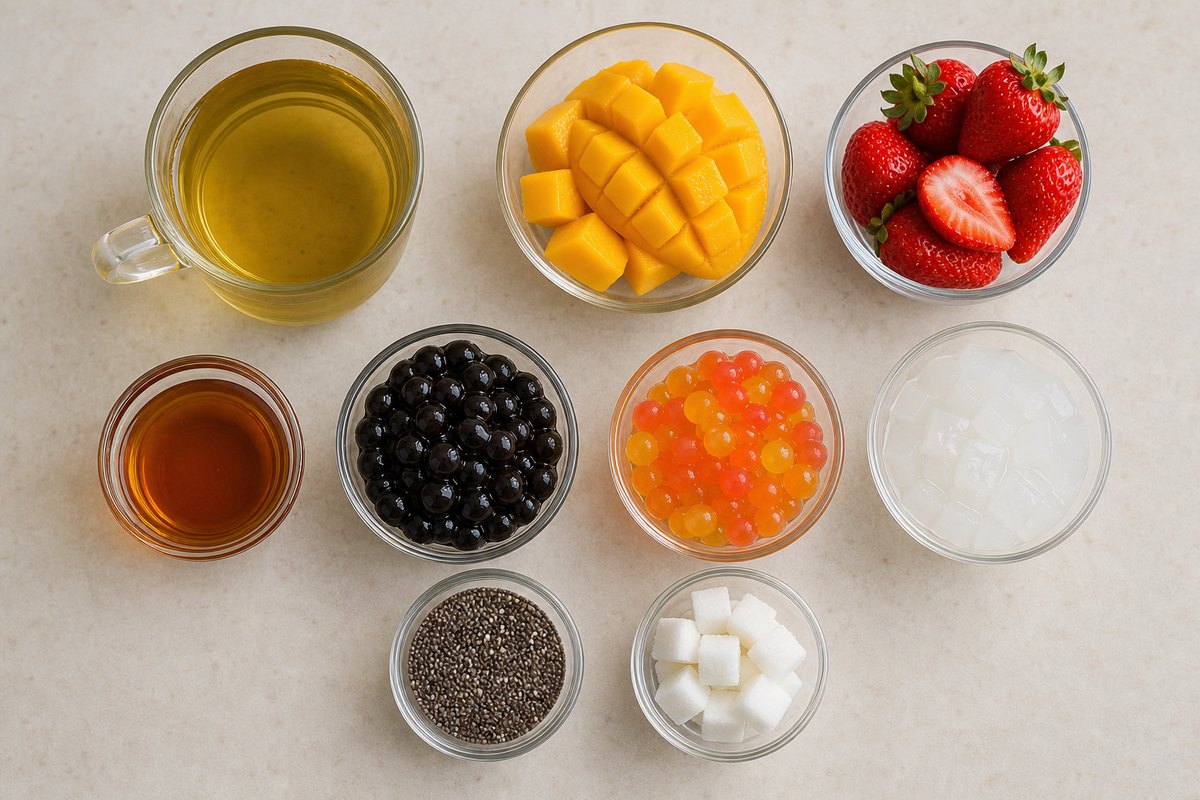
Use this table as a quick guide.
| Ingredient | Potential Benefit | What Can Reduce the Benefit |
|---|---|---|
| Brewed tea | Provides tea polyphenols and fluid. May contain caffeine for alertness. | Heavy syrup, large size, or sweetened powders. |
| Real fruit | Adds flavor, color, and some nutrients. | Small fruit amount or syrup used instead of fruit. |
| Fruit puree | Can add fruit flavor and texture. | Added sugar or concentrated sweetener. |
| Dairy milk | May add protein, calcium, and vitamin D if used. | Full sugar, creamers, or large portions. |
| Unsweetened plant milk | Can be dairy-free and lighter for some orders. | Sweetened plant milk or low-protein options. |
| Aloe vera | Adds light texture in some drinks. | Syrup-packed aloe can add sugar. |
| Chia or basil seeds | Add texture and may add fiber. | Sweetened soaking liquid or large portions. |
| Tapioca pearls | Add chew and energy from carbohydrates. | They are starch-heavy and often held in syrup. |
| Popping boba | Adds fruit-like bursts and flavor. | Often sweetened and not the same as whole fruit. |
The practical takeaway is simple. Look at the full recipe, not the drink name.
Brewed Tea: The Strongest Part of the Drink
The tea base is often the most helpful part of fruit bubble tea. Green tea, black tea, jasmine tea, oolong tea, and matcha come from the Camellia sinensis plant.
Tea contains plant compounds called polyphenols. NCCIH notes that tea polyphenols are thought to be responsible for many of the health benefits linked with tea, especially green tea. The evidence is stronger for tea as part of an overall eating pattern than for any single bubble tea order.
Tea can also contain caffeine. For people who tolerate caffeine, that may support alertness. For people who are sensitive to caffeine, it can cause sleep problems, jitters, or other unwanted effects.
If you want the tea benefit without a heavy drink, choose brewed tea instead of a powder base when possible. Ask whether the tea is already sweetened before you choose your sugar level.
Tea Base Comparison
The tea base changes flavor, caffeine, and the overall nutrition profile.
| Tea Base | Best Use in Fruit Bubble Tea | What to Know |
|---|---|---|
| Green tea | Mango, passion fruit, lemon, peach, and lighter fruit flavors. | A clean base for a healthier boba order, but it can still contain caffeine. |
| Black tea | Peach, lemon, strawberry, and stronger fruit flavors. | Stronger flavor and caffeine presence. It can pair well with light honey. |
| Jasmine tea | Strawberry, mango, lychee-style fruit flavors, and fresh fruit. | Floral flavor works well in clear fruit tea. |
| Oolong tea | Peach, citrus, apple, and richer fruit flavors. | Toasty flavor can make the drink taste fuller without creamer. |
| Matcha | Strawberry, mango, and milk-based fruit drinks. | More intense tea flavor. It contains caffeine and can be paired with sweet bases. |
| Caffeine-free or herbal base | Lemon, berry, peach, and fresh fruit drinks. | Better when caffeine is a concern, but check whether the base is sweetened. |
Tea choice does not decide everything. Sugar level, fruit source, cup size, and toppings still matter.
Fruit: Real Fruit Is Not the Same as Fruit Syrup
This is the biggest gap in many fruit bubble tea health claims.
Real fruit and fruit syrup are not the same. Real fruit can add flavor, color, water, and some nutrients. Depending on the fruit and amount used, it may also add fiber.
Fruit syrup gives a stronger and more consistent flavor, but it often adds sugar with fewer nutrients. Fruit-flavored powder can do the same.
Fruit puree sits in the middle. It may contain real fruit, but it can also contain added sugar. Ask the shop whether the flavor comes from fresh fruit, puree, syrup, powder, or a mix.
Better questions to ask:
- Is this made with real fruit or syrup?
- Is the puree sweetened?
- Can I get less syrup?
- Can I add fresh fruit instead of popping boba?
- Is the base tea already sweetened?
Fruit bubble tea with real mango, strawberry, passion fruit, peach, green apple, or lemon can be a better choice than syrup alone. But the portion and sugar level still matter.
Fruit bubble tea with real fruit is the better phrase to look for, but even that needs context. A small amount of fruit with full sugar and popping boba is still a sweet drink.
For flavor ideas that focus on pairings, see fruit bubble tea combinations.
Fruit Flavor Guide: Better Choices and Better Questions
Fruit bubble tea gets easier to judge when you know how each flavor is built. The fruit name alone does not tell you whether the drink uses fresh fruit, puree, syrup, powder, or a mix.
Use this table to ask better questions at the counter.
| Fruit Flavor | What Can Help | What to Ask |
|---|---|---|
| Mango | Works well with green tea, jasmine tea, puree, and aloe vera. | Is the mango puree sweetened? |
| Strawberry | Pairs well with jasmine tea, fresh slices, and basil seeds. | Is it made with fresh strawberry, puree, syrup, or powder? |
| Passion fruit | Strong flavor can work with less added sugar. | Is extra fructose added after the passion fruit base? |
| Peach | Works with black tea, oolong, or green tea. | Is the peach flavor syrup or fruit puree? |
| Green apple | Tart flavor can taste bright with tea and ice. | Is the green apple base mostly syrup? |
| Lemon | Can make tea taste fresh with less sweetness. | Is it lemon juice, lemon syrup, or honey lemon mix? |
This is also where many health claims fall apart. A drink that tastes like mango may still be mostly syrup. A strawberry drink may contain real fruit, but still have a lot of added sugar.
The best version uses brewed tea, a real fruit ingredient, and a lower sugar level. The weakest version uses a powder or syrup base, full sugar, and several sweet toppings.
Hydration: Helpful, but Do Not Overstate It
Fruit bubble tea can add fluid to your day. Clear fruit tea with brewed tea, ice, and water-based fruit flavor is more hydrating than many creamy, dessert-style drinks.
That does not mean fruit bubble tea should replace water. Added sugar, caffeine, and toppings change the drink. If you want hydration first, choose a smaller clear tea with low sugar and a light topping.
If caffeine is a concern, ask for herbal tea, lemonade, or a caffeine-free base. Decaf and caffeine-free are not always the same, so ask the shop.
Milk or Plant Milk: Helpful for Some Orders, Not All
Fruit milk tea is different from clear fruit tea.
Dairy milk may add protein, calcium, and vitamin D, depending on the milk used. That can improve the nutrition profile compared with syrup and tea alone.
Plant milk can be useful if you avoid dairy. Unsweetened soy milk may add more protein than some other plant milks. Almond, oat, coconut, and other plant milks vary a lot by brand.
The catch is simple. Milk does not cancel out added sugar. A large fruit milk tea with full sugar, creamer, and toppings can still be a high-calorie sweet drink.
For a deeper comparison, see fruit tea vs milk tea.
Toppings: The Fastest Way to Change the Health Profile
Toppings can make fruit bubble tea lighter, heavier, or much sweeter.
| Topping | Better Use | Watch Out For |
|---|---|---|
| Fresh fruit | Adds real fruit flavor and texture. | Portion may be small. |
| Aloe vera | Light texture in clear fruit teas. | Often packed in syrup. |
| Chia seeds | Adds texture and may add fiber. | Sweetened soaking liquid. |
| Basil seeds | Adds texture and a lighter feel. | Added syrup. |
| Grass jelly | Often lighter than creamy toppings. | Syrup or sweet milk base. |
| Tapioca pearls | Classic chewy boba texture. | Mostly starch and often syrup-soaked. |
| Popping boba | Strong fruit flavor and fun texture. | Usually sweetened, not the same as fruit. |
| Pudding | Creamy dessert texture. | Adds sugar and calories. |
| Cream foam | Rich taste. | Adds cream, sugar, and fat. |
If your goal is a lighter fruit bubble tea, choose one topping. Three toppings can turn a light drink into a dessert.
For more detail, use a boba toppings guide when you compare add-ins.
The Main Limits of Fruit Bubble Tea
Fruit bubble tea has real limits. Good articles on this topic should say that plainly.
Added Sugar
Added sugar is the biggest concern in many fruit bubble teas. It can come from simple syrup, fruit syrup, sweetened puree, honey, fructose, popping boba, jelly, and cream toppings.
The FDA lists 50 grams as the Daily Value for added sugars on a 2,000 calorie diet. The FDA also says 5 percent Daily Value or less is low, while 20 percent Daily Value or more is high.
That does not mean every person has the same sugar target. It means added sugar is worth checking, especially in sweet drinks.
Calories
Calories vary by cup size, tea base, syrup, milk, and toppings. A clear fruit tea can be much lighter than a creamy brown sugar milk tea. But a large fruit tea with full sugar and multiple toppings can still add up.
This article focuses on health benefits. For a deeper calorie breakdown, use the main boba calories guide. That pillar page explains calorie ranges by drink type, toppings, and cup size.
Caffeine
Fruit bubble tea has caffeine if it uses black tea, green tea, jasmine tea, oolong tea, or matcha. The FDA cites 400 milligrams per day as an amount not generally linked with negative effects for most adults. Sensitivity varies.
Pregnant people, people trying to become pregnant, people who are breastfeeding, children, teens, people taking certain medications, and people with some health conditions may need lower limits. Ask a health care professional if caffeine matters for you.
Portion Size
Size changes everything. A regular cup with low sugar is not the same as a large cup with full sugar and two toppings.
If you want fruit bubble tea more often, make the regular size your default. Save large, full-sugar drinks for occasional dessert-style orders.
Topping Portions
A topping can be reasonable in a small portion and heavy in a large one. Tapioca pearls, popping boba, jelly, and pudding all vary by scoop size and syrup.
Ask for half topping if the shop allows it. This keeps the texture without letting the topping take over the drink.
Fruit Bubble Tea Myths and Overstated Claims
Fruit bubble tea can be part of a balanced diet, but some claims go too far.
It Is Not a Detox Drink
Tea and fruit do not make a drink a detox treatment. Your body already uses the liver, kidneys, lungs, digestive system, and skin to process waste. A lower-sugar fruit tea can be a better drink choice, but it should not be sold as a cleanse.
It Is Not a Weight-Loss Drink by Default
Green tea is often linked with weight-loss claims, but NCCIH says green tea has not been shown to be effective for weight loss. A fruit bubble tea order can be lighter or heavier depending on sugar, size, milk, and toppings.
It Is Not Automatically Good for Blood Sugar
Fruit tea can still contain added sugar from syrup, puree, popping boba, honey, or jelly. People who monitor blood sugar should check the ingredients and use medical advice when needed.
It Is Not the Same as Eating Whole Fruit
Whole fruit gives you the full food. Fruit bubble tea may use only a small amount of fruit or may use syrup instead. It can taste fruity without offering the same nutrition as eating fruit.
It Is Not Always Caffeine-Free
Fruit flavor does not remove caffeine from tea. Green tea, black tea, oolong, jasmine tea, and matcha can all contain caffeine.
A Fruit Tea Benefit Is Not a Medical Claim
Fruit tea benefits can include flavor, fluid, and useful ingredients from brewed tea or real fruit. That does not mean the drink prevents disease, treats a condition, or makes a high-sugar order healthy.
Fruit Tea vs Fruit Milk Tea
Fruit tea and fruit milk tea can both fit different goals.
Clear fruit tea is often the better choice when you want a lighter drink. It skips dairy, creamer, and milk powder. It also lets the tea and fruit flavor stand out.
Fruit milk tea may be better when you want a creamier drink or want some protein from dairy or soy milk. But it can also add calories, sugar, and saturated fat depending on the base.
| Goal | Better Starting Point | Why |
|---|---|---|
| Lower calories | Clear fruit tea | No milk or creamer by default. |
| Less dairy | Clear fruit tea or plant milk fruit tea | Easier to avoid dairy ingredients. |
| Creamier taste | Fruit milk tea | Milk or plant milk adds body. |
| More tea flavor | Green, jasmine, black, or oolong fruit tea | Brewed tea stays noticeable. |
| Lower sugar | Either, at 25 to 50 percent sugar | Sugar level matters more than the name. |
Do not assume clear fruit tea is always low sugar. Do not assume fruit milk tea is automatically unhealthy. The build matters.
How to Read a Fruit Bubble Tea Nutrition Sheet
When a shop has nutrition facts, read them before you compare drinks.
Start with serving size. A 16-ounce drink and a 24-ounce drink should not be compared as if they are the same.
Next, check whether the listing includes toppings. Some menus list the base drink only, then list tapioca pearls, popping boba, jelly, or cream foam as separate add-ons.
Then look at added sugar, total carbohydrates, caffeine, and calories. Added sugar tells you more than the fruit flavor name. Total carbohydrates matter if you track carbs or blood sugar. Caffeine matters if you are sensitive to it.
For boba sugar content, check whether the label includes the base drink only or includes toppings. Popping boba, jellies, syrups, sweetened puree, and cream foam can all change the final number.
Finally, check allergens. Fruit milk tea may contain dairy, soy, coconut, or non-dairy creamer. Toppings may have their own ingredients.
If you customize your drink, use the nutrition sheet as an estimate. A lower sugar level, extra topping, different milk, or larger size changes the drink.
Best Fruit Bubble Tea Choices
These examples are practical order ideas, not exact nutrition claims.
| Order Idea | Why It Works | What to Adjust |
|---|---|---|
| Mango green tea with aloe vera | Brewed tea plus fruit flavor and a lighter topping. | Ask for 25 to 50 percent sugar. |
| Strawberry jasmine tea with fresh fruit | Clear tea with real fruit texture. | Ask if the strawberry base is syrup or puree. |
| Passion fruit green tea with basil seeds | Bright flavor and light texture. | Skip extra fructose or popping boba. |
| Peach black tea with light honey | Brewed tea flavor with controlled sweetness. | Use light honey and no creamer. |
| Green apple tea with chia seeds | Crisp flavor and texture without cream. | Ask whether the green apple flavor is syrup. |
| Lemon honey tea with half pearls | Classic sweet-tart profile with less topping. | Keep honey light and use half pearls. |
If you want more flavor-specific guidance, start with mango, strawberry, passion fruit, peach, green apple, or lemon fruit tea styles.
How to Order a Better Fruit Bubble Tea
Use this order path when you are at a shop.
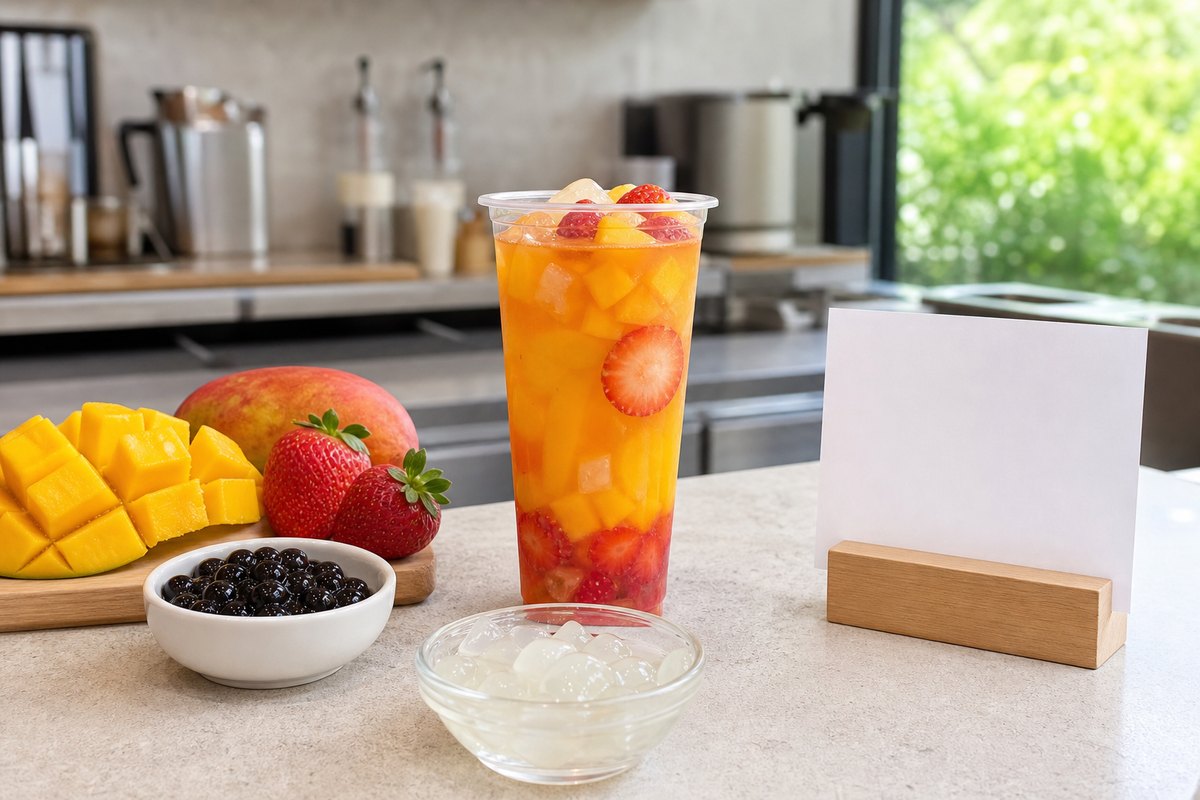
Start with brewed tea. Choose green tea, jasmine tea, black tea, oolong tea, or matcha if you want a tea-based drink.
Ask how the fruit flavor is added. Fresh fruit or fruit puree gives a better nutrition story than syrup alone. Sweetened puree still counts as a sweetened ingredient.
Choose the sugar level. Ask for 25 to 50 percent sugar. If the fruit base is already sweet, ask for no extra syrup.
Choose one topping. Pick aloe vera, chia seeds, basil seeds, grass jelly, fresh fruit, or half tapioca pearls. Avoid stacking popping boba, jelly, and pearls in the same cup if you want a lighter order.
Choose a regular size. A smaller cup is the easiest way to control sugar, calories, caffeine, and toppings.
A Simple Healthier Order
Try this:
Jasmine green tea with mango puree, 50 percent sugar, regular size, and aloe vera.
If you want tapioca pearls, ask for half pearls. If the mango puree is already sweetened, ask for 25 percent sugar or no extra syrup.
Order Scripts
Use these as plain-language examples at the counter:
- Mango green tea, 50 percent sugar, aloe vera.
- Strawberry jasmine tea, fresh fruit, 25 percent sugar.
- Passion fruit green tea, no extra fructose, basil seeds.
- Peach black tea, light honey, no creamer.
- Lemon tea, half pearls, light honey.
Better Orders by Goal
| Goal | Order Pattern | Avoid |
|---|---|---|
| Lower sugar | Brewed tea, real fruit, 25 percent sugar | Full sugar plus syrup toppings. |
| Lower calories | Regular clear fruit tea, one light topping | Large cup with multiple toppings. |
| Less caffeine | Herbal or caffeine-free fruit base | Black tea, green tea, oolong, matcha. |
| More real fruit | Fresh fruit or puree | Fruit powder or syrup only. |
| More classic boba texture | Half tapioca pearls | Pearls plus jelly plus popping boba. |
| Dairy-free | Clear fruit tea or unsweetened plant milk | Milk powder, cream foam, pudding. |
For lower-sugar steps, use the bubble tea sugar level guide. A healthier boba order starts with brewed tea, a clear sugar request, one topping, and a regular size.
How Often Should You Drink Fruit Bubble Tea?
There is no single answer for everyone. It depends on the order, your overall diet, and your health needs.
If your usual order is clear tea, real fruit, low sugar, and one light topping, it may fit more often than a large full-sugar drink with several toppings. If your usual order is closer to dessert, treat it like dessert.
Frequency matters because sugar and calories add up over time. A sweet drink once in a while is different from a large sweet drink every day.
The most practical rule is to make your default order lighter and save richer versions for when you truly want them.
Common Mistakes
Assuming Fruit Tea Is Always Healthy
Fruit tea can be a better choice, but it can still be high in added sugar. The word fruit does not prove the drink contains much real fruit.
Treating Fruit Syrup Like Fresh Fruit
Fruit syrup can taste bright and strong. It is not the same as fresh fruit. Syrup mainly adds sweetness and flavor.
Adding Too Many Toppings
Popping boba, jelly, tapioca pearls, pudding, and cream foam can add sugar, starch, and calories. Choose one topping when health is the goal.
Forgetting About Caffeine
Green tea, black tea, jasmine tea, oolong tea, and matcha can contain caffeine. Ask for a caffeine-free base if needed.
Ordering Large by Default
A large size may mean more syrup, more tea, more toppings, and more caffeine. Start with regular unless you have a reason to size up.
Believing Health Claims Without Details
Words like natural, fruity, refreshing, and antioxidant do not tell you the full nutrition story. Ask what is actually in the cup.
Ignoring the Base
Some fruit bubble teas are made with brewed tea. Others are made with powder, syrup, lemonade, or a non-tea base. The base changes caffeine, flavor, and nutrition.
Practical Checklist
Use this checklist before you order:
- Choose brewed tea instead of a powder base when possible.
- Ask whether the fruit flavor is fresh fruit, puree, syrup, or powder.
- Pick 25 to 50 percent sugar.
- Choose a regular size.
- Pick one topping.
- Use aloe vera, chia seeds, basil seeds, grass jelly, or fresh fruit for lighter texture.
- Ask for half tapioca pearls if you want classic boba.
- Skip cream foam and pudding when you want a lighter drink.
- Ask for caffeine-free options if caffeine is a concern.
- Check nutrition facts when the shop has them.
Who Should Be More Careful?
Fruit bubble tea is a customizable sweet drink. Some people need to be more careful with it.
People who monitor blood sugar or manage diabetes should pay close attention to sugar, syrup, toppings, and cup size. Lower sugar and fewer toppings may help, but individual needs vary.
People who limit caffeine should ask about the tea base. Matcha, green tea, black tea, jasmine tea, and oolong tea can all contain caffeine.
People with food allergies should ask about milk, non-dairy creamer, fruit bases, toppings, coconut, soy, and shared equipment.
Pregnant people, people who are breastfeeding, children, teens, and people taking certain medications should ask a health care professional about caffeine if they are unsure.
If a drink choice affects a medical condition, do not rely on a blog post. Use the shop's nutrition facts and personal medical advice.
Is Fruit Bubble Tea Better Than Regular Boba?
It can be, but not always.
Fruit bubble tea is often better when it uses brewed tea, real fruit, low sugar, and one light topping. It is less helpful when it uses a large cup, full sugar, syrup, popping boba, jelly, and cream.
Regular milk tea can be reasonable too if it is smaller, lower in sugar, and not overloaded with toppings. The better choice is not decided by the category. It is decided by the build.
Can You Make Fruit Bubble Tea Healthier at Home?
Yes. Homemade fruit bubble tea gives you more control.
Brew tea first and let it chill. Add real fruit or a small amount of puree. Sweeten slowly and taste as you go. Measure tapioca pearls or use a lighter topping. Keep the cup size close to a regular shop serving.
Good home combinations include:
- Green tea, mango puree, and aloe vera
- Jasmine tea, strawberry slices, and basil seeds
- Black tea, peach slices, and light honey
- Oolong tea, lemon juice, and half pearls
- Caffeine-free herbal tea, fresh fruit, and chia seeds
Homemade does not automatically mean lower sugar. The benefit is control.
Conclusion
Fruit bubble tea can have real benefits when the drink is built with brewed tea, real fruit, sensible portions, and lighter toppings. The best parts usually come from the tea base and real fruit, not from the word fruit on the menu.
The main limits are added sugar, syrup, caffeine, calories, and topping portions. A regular-size fruit tea with lower sugar and one light topping is a very different choice from a large full-sugar drink with syrup, popping boba, jelly, and cream.
Use the simple rule: choose real tea, ask how the fruit flavor is made, reduce added sugar, keep toppings modest, and do not confuse fruit flavor with a health claim.


 Badge-157x140.png)
Comments