
Egg Pudding Boba: Taste, Recipe, Calories and Pairings
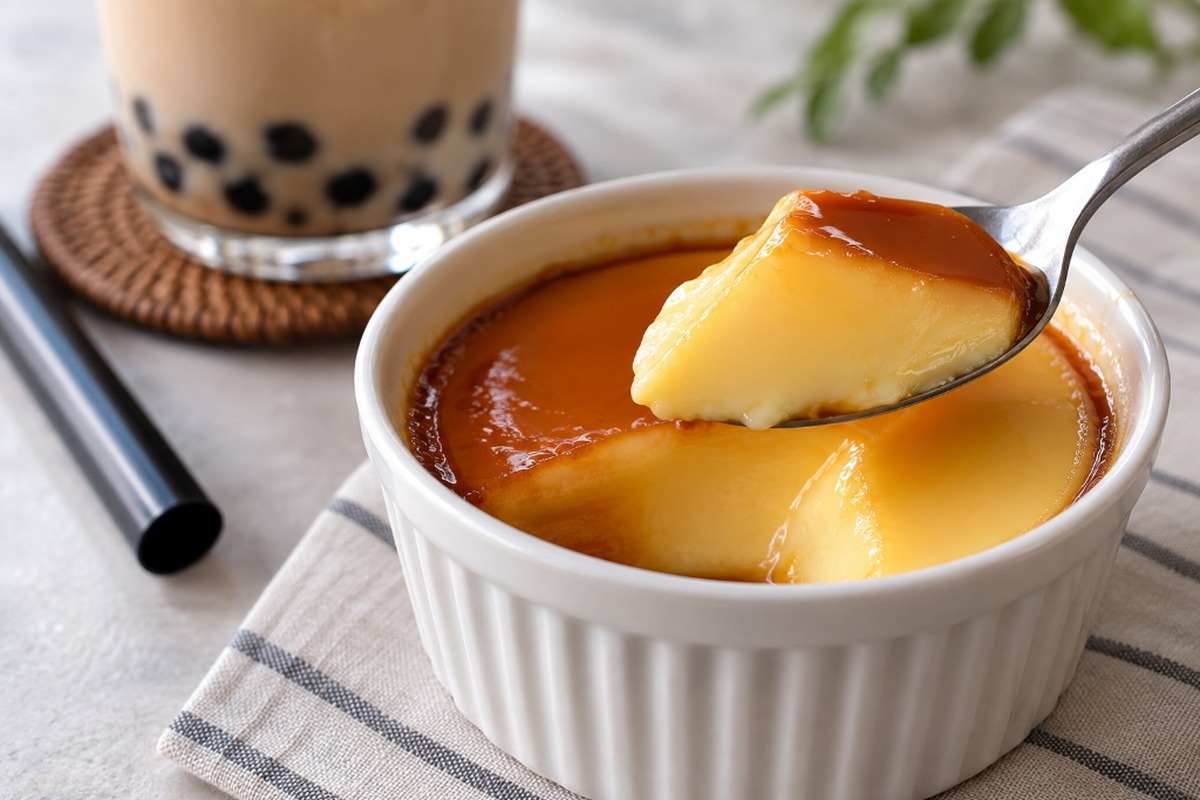
Egg pudding boba is a soft custard topping served in bubble tea. It is made with cooked eggs, milk, cream, sugar and vanilla, often with caramel at the bottom. A wide straw breaks the pudding into soft pieces as you drink.
Quick answer: Egg pudding boba is a sweet, cooked egg custard served as a bubble tea topping. It usually contains eggs, dairy, sugar and vanilla. Its soft texture lets it break into small pieces and pass through a wide boba straw.
The topping does not contain raw egg when it is prepared safely. A homemade version should reach 71°C or 160°F in the centre, then cool and chill promptly.
This guide explains what egg pudding tastes like, how shops make it, how to cook it at home, which drinks suit it and how its calories compare with tapioca pearls.
What is egg pudding boba?
Egg pudding boba is a cooked custard used as a bubble tea topping. It has a smooth texture similar to flan or caramel custard, though shops may make it softer so it passes through a boba straw.
In a drink, staff scoop or spoon the pudding into the cup. It settles near the bottom and breaks into soft pieces when pulled through a 12 mm straw.
Egg pudding is different from tapioca boba. Tapioca pearls are round, springy and chewy. Egg pudding is soft, creamy and easy to break apart. A drink can contain either topping or both. To explore traditional tapioca, check out our comprehensive guide on What Is Boba?.
Egg pudding boba is also different from creme brulee. Creme brulee has a baked custard base and a hard shell of burnt sugar on top. Bubble tea pudding stays soft and may use caramel syrup beneath the custard.
What does egg pudding boba taste like?
Egg pudding boba tastes creamy, sweet and lightly eggy. Vanilla gives it a familiar custard taste. Caramel adds a darker, slightly bitter sweetness that balances rich milk and cream.
The texture should be smooth and soft enough to scoop. It should hold together in the cup, then break into small pieces under pressure from the straw. Overcooked pudding can become firm, grainy or watery.
Commercial pudding powder may taste more like vanilla than egg. The result depends on the powder, milk, sugar and flavourings used by the shop.
What is egg pudding boba made of?
A scratch-made version commonly contains:
- Whole eggs and extra egg yolks
- Whole milk
- Cream
- Sugar
- Vanilla
- Caramel made from sugar and water
- A small amount of gelatin in some cafe-style recipes
Commercial bubble tea shops may use pudding powder mixed with water or milk. These powders can contain sugar, milk solids, egg yolk solids, starch, gums, carrageenan, flavouring and colour. Ingredients differ by brand.
Read the package or ask the shop if you have an egg, milk, soy or other food allergy. The word pudding does not tell you the full ingredient list.
Homemade custard and commercial pudding powder
Homemade egg custard gets most of its structure from cooked egg proteins. It takes longer to prepare and must be handled as a chilled egg dish. The cook controls the sweetness, dairy and caramel.
Commercial pudding powder is faster and gives shops consistent texture. Some products use dried egg yolk or milk solids. Others may use flavourings and gelling agents with little or no egg.
Lian-Hwa and other bubble tea ingredient makers sell cafe pudding powders, though recipes and ingredients can change. Check the current label instead of assuming every powder contains the same ingredients.
Egg pudding boba ingredients
This recipe makes 4 small puddings or about 6 topping portions.
| Component | Ingredient | Quantity | Function & Notes |
|---|---|---|---|
| Caramel Base | White granulated sugar | 40 g | Forms the bittersweet amber layer at the bottom |
| Water | 15 ml | Helps dissolve sugar evenly before caramelisation | |
| Custard Pudding | Large egg yolks | 2 yolks | Supplies lecithin and rich custardy colour |
| Large whole egg | 1 egg | Provides structural gel strength from ovalbumin | |
| Whole milk | 250 ml | Provides clean dairy base | |
| Double cream or heavy cream | 60 ml | Adds butterfat richness and velvety mouthfeel | |
| White granulated sugar | 35 g | Sweetens custard and delays egg protein coagulation | |
| Vanilla extract | 1 tsp (5 ml) | Provides classic aromatic custard flavour | |
| Leaf gelatin (optional) | 3 g | Gives extra structural support for easy drink scooping |
Gelatin gives chilled custard more support for scooping into drinks. The eggs can set the custard without it. The final texture will depend on ramekin size, baking time and temperature.
The report lists 5 g carrageenan as an alternative. Do not swap it into this recipe by weight. Kappa, iota and lambda carrageenan behave differently, and milk minerals affect gel strength. Use a formula written for the exact carrageenan product.
How to make egg pudding for boba
1. Prepare the water bath
Heat the oven to 150°C or 300°F. Place 4 small ramekins in a deep baking dish. Boil enough water to reach halfway up their sides later.
2. Make the caramel
Put 40 g sugar and 15 ml water in a small light-coloured saucepan. Heat without stirring until the syrup turns deep amber.
Caramel is extremely hot and can cause a serious burn. Keep children away from the pan. Swirl the pan gently if one area colours faster. Remove it from the heat before it smells burnt.
Divide the caramel between the ramekins. Work carefully because it hardens as it cools.
3. Warm the milk and cream
Heat the milk and cream in a saucepan to about 70°C or 158°F. It should steam without boiling.
If using gelatin, soften it according to the package. Stir it into the warm milk until fully dissolved.
4. Mix the eggs and sugar
Whisk the whole egg, egg yolks and 35 g sugar until combined. Use gentle strokes to avoid creating too much foam.
5. Temper the eggs
Pour the warm milk into the egg mixture in a thin stream while whisking. Add it slowly so the eggs warm without forming cooked lumps. Stir in the vanilla.
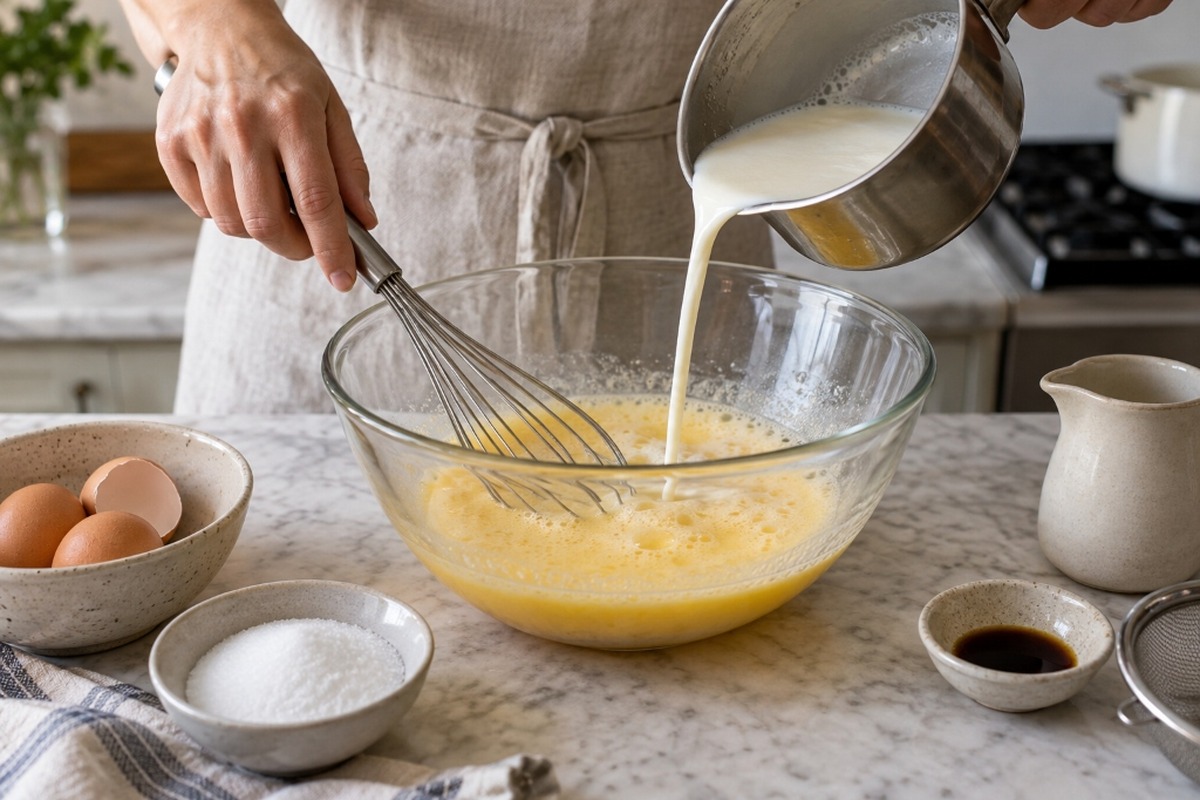
6. Strain the custard
Pass the mixture through a fine sieve twice. Straining removes small cooked pieces, foam and chalaza, the white strands found near the yolk. Scoop off any bubbles that remain on the surface. Bubbles can leave small holes in the cooked pudding.
7. Bake in a water bath
Divide the custard between the caramel-lined ramekins. Pour hot water into the baking dish until it reaches halfway up the ramekin sides.
Bake for about 30 minutes. Begin checking early because ovens and ramekins differ. The centre should reach 71°C or 160°F when checked with a clean food thermometer. The pudding should still move slightly when the ramekin is nudged.
8. Cool and chill
Remove the ramekins from the water bath. Let them cool briefly, then refrigerate promptly. Chill for at least 4 hours before serving.
9. Add the pudding to bubble tea
Scoop about 60 g of chilled pudding into a 16 oz glass. Add ice and cold milk tea. Serve with a clean 12 mm or wider straw and a long spoon.
Test the texture before serving. If large pieces block the straw, break the pudding into smaller pieces with the spoon.
Why egg pudding sets
Egg proteins unfold and join as they heat, which changes the liquid custard into a soft gel. Ovalbumin is one of the main proteins in egg white. Egg white contains several proteins, and ovalbumin makes up about half of its protein content.
The report gives 60 to 84°C as a broad protein-setting range. A real custard contains yolk, sugar, milk and cream, so its behaviour cannot be predicted from ovalbumin alone.
Heating too far can tighten the protein network and push out water. This leaking is called syneresis. A water bath slows the heating and reduces hot spots, which lowers the chance of grainy or watery custard.
Egg yolk contains lecithin, including phosphatidylcholine. Lecithin can keep fat and water mixed, which supports a smooth texture. Milk butterfat and cream add richness.
The report describes disulfide bonds between unfolded proteins. These sulphur links can form during heating, though several bonds and protein interactions take part in custard setting.
Why the pudding passes through a boba straw
A 12 mm boba straw has a wider opening than a normal drinking straw. Suction and contact with the straw wall break soft pudding into smaller pieces.
Food scientists use yield stress to describe the force needed before a soft material starts to flow. The report estimates a yield stress below 15 pascals for egg pudding. Treat this as a product target rather than a tested value for the home recipe.
| Topping | Report Density Estimate | Texture | Behaviour in a 12 mm Straw |
|---|---|---|---|
| Tapioca boba | 1.25 g/cm³ | Elastic and chewy | Travels as separate round pearls |
| Egg pudding | 1.08 to 1.12 g/cm³ | Soft with low yield stress (<15 Pa) | Breaks into soft pieces or ribbons |
| Nata de coco | 1.05 g/cm³ | Firm and fibrous | Keeps its cut shape and needs chewing |
These numbers came from the source report and were not confirmed by product testing. Texture changes with recipe, temperature and serving size.
Caramel flavour and colour
Caramel forms when sugar is heated until it browns. The report gives about 170°C as a target and names maltol and furans among the compounds linked with caramel aroma.
Home cooks should watch colour and smell rather than chase an exact pan temperature. A small batch can darken quickly. Deep amber caramel tastes bittersweet, while very dark caramel can taste burnt.
The report also gives 72 degrees Brix for a commercial-style caramel syrup. Brix measures dissolved sugar. You do not need a refractometer for this home recipe because the measured sugar and water set the starting ratio.
Pudding milk tea boba pairings
Egg pudding suits milk tea with a clear tea or roasted taste. The creamy custard softens bitterness and adds vanilla and caramel notes.
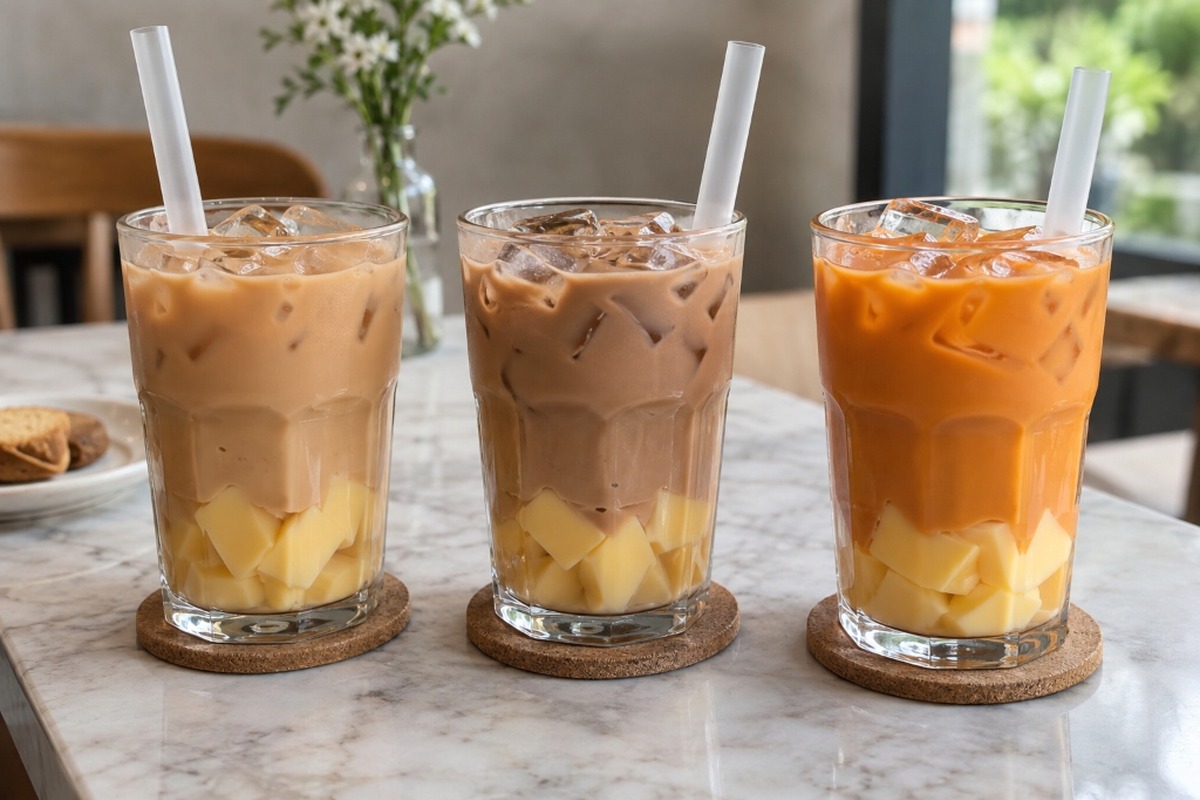
Assam black milk tea
Assam tea has a strong malty taste that remains clear beside custard. This is a good starting choice if you want the tea to stand out.
Roasted oolong milk tea
Roasted oolong can bring toasted and nutty notes. Keep the sweetness moderate so the tea and caramel remain clear. Discover our full brewing ratios in our Oolong Milk Tea Recipe.
Brown sugar fresh milk
Brown sugar fresh milk makes a rich dessert drink. Use less brown sugar syrup because the pudding and caramel already add sweetness. Learn more about syrup ratios in our guide to Brown Sugar Milk Tea.
Thai tea
Thai tea has a bold, sweet taste that suits smooth custard. Check the combined sugar because both parts can be sweet. Explore our Thai Milk Tea Guide for balance tips.
Mango green tea
Mango green tea gives a lighter fruit contrast. Choose a milk-free version or a low-acid mango flavour to reduce the risk of dairy curdling.
Jasmine milk tea
Jasmine milk tea gives the custard a floral tea base. Keep the sugar moderate so the vanilla and jasmine remain easy to taste.
Fruit tea caution
Lemon, passion fruit and other acidic juices can make dairy proteins clump. Egg pudding can still be served with fruit tea when the recipe is dairy-free, or when the fruit flavour does not rely on a strongly acidic juice.
Is egg pudding boba dairy free?
Standard egg pudding boba is not dairy-free. Homemade custard usually contains milk and cream. Commercial powders may contain milk solids or dairy creamer.
Ask the shop or read the product label if you avoid dairy. A topping made without dairy may still contain egg.
Dairy-free pudding option
You can make a dairy-free egg custard with an unsweetened plant drink and eggs. The texture may differ because plant drinks have different protein and fat levels. Use a tested recipe for that plant drink.
An egg-free pudding made with oat milk or coconut milk and agar can be vegan. It is a plant-based pudding topping rather than egg pudding. Check our recipe on How to Make Jelly Boba With Agar for a 100% plant-based alternative.
Is egg pudding boba safe to eat?
Properly cooked and chilled egg pudding is safe for most people who can eat eggs and dairy. Use clean equipment, refrigerated eggs and a food thermometer.
The centre of a home egg dish should reach 71°C or 160°F. Do not judge safety from colour or firmness alone.
Refrigerate the pudding promptly after baking. Do not leave it at room temperature for more than 2 hours, or more than 1 hour when the temperature is above 32°C or 90°F.
Egg and milk are major allergens. Avoid cross-contact and check every commercial powder, creamer and topping label.
Egg pudding boba calories
Calories change with pudding portion, milk, cream, tea, syrup and tapioca pearls.
The source report gives these estimates for a 16 oz drink:
| Drink Composition | Sweetness Level | Estimated Calories | Estimated Protein | Estimated Fat |
|---|---|---|---|---|
| Classic milk tea with egg pudding, no boba | 50% sweet | 230 kcal | 5.5 g | 7.0 g |
| Classic milk tea with pudding and boba | 50% sweet | 345 kcal | 6.0 g | 7.2 g |
| Brown sugar fresh milk with egg pudding | 70% sweet | 390 kcal | 8.0 g | 10.5 g |
| Egg pudding topping alone (60 g scoop) | Standard | 65 kcal | 2.5 g | 3.2 g |
These figures are planning estimates, not tested nutrition data. Shop recipes and serving sizes can differ. The report gives 45 to 65 calories as a broad range for one pudding scoop and lists 65 calories for a 60 g portion.
To reduce calories or sugar, choose 30% or 50% sweetness, skip extra tapioca pearls, ask for a smaller pudding scoop or make the drink at home with less syrup. For a deeper breakdown of drink nutrition, see our Boba Calories & Ordering Guide.
Egg pudding compared with other boba toppings
| Topping | Main Texture | Common Ingredients | Contains Caffeine? | Common Allergens |
|---|---|---|---|---|
| Egg pudding | Soft and creamy | Egg, milk, cream, sugar, vanilla | Usually no | Egg and milk |
| Tapioca pearls | Chewy & bouncy | Tapioca starch, brown sugar | No | Check package |
| Grass jelly | Soft and springy | Grass jelly plant, starch, gum | Usually no | Check package |
| Coffee jelly | Firm and clean-cut | Coffee, agar, sugar | Usually yes (caffeine) | Check additions |
| Nata de coco | Firm and fibrous | Fermented coconut water, sugar | No | Check package |
To compare other toppings in detail, explore our guide to Coffee Jelly Boba and our complete Bubble Tea Toppings Guide.
Common problems and fixes
The custard is grainy
The mixture probably heated too fast or became too hot. Use a water bath, keep the oven at 150°C and remove the puddings once the centre reaches 71°C.
Water leaks from the pudding
Overcooking can cause syneresis. Check the temperature early and cool the ramekins after they leave the oven.
The pudding did not set
The centre may not have reached the needed temperature, the ramekins may be large or the measurements may be off. Use a thermometer and allow the full chilling time.
The eggs formed lumps
The milk may have been added too fast or was too hot. Pour it in slowly while whisking, then strain the mixture.
The caramel became hard
Caramel hardens when cool. It softens again as the custard bakes and rests. A thin hard layer before baking is normal.
The pudding blocks the straw
Break it into smaller pieces and use a 12 mm or wider straw. A long spoon is useful for any pieces left in the cup.
The drink is too sweet
Reduce syrup in the tea. The pudding and caramel already add sugar.
Storage
Cover the cooked puddings and keep them at 4°C or 40°F or below. Use within 3 to 4 days, following FDA guidance for leftover cooked egg dishes.
Keep the pudding separate from bubble tea until serving. Discard any portion that smells unusual, shows mould or has been left out beyond the safe time.
Freezing can damage the smooth texture and cause water release after thawing, so refrigeration is the better choice.
Egg pudding boba variations
No-caramel egg pudding
Leave out the caramel for a lighter vanilla taste. The custard will contain less sugar.
Matcha egg pudding milk tea
Serve a small scoop with matcha milk tea. The mild bitterness of matcha can balance the custard. Learn how to brew it in our Matcha Milk Tea Guide.
Roasted oolong pudding tea
Pair the pudding with cooled roasted oolong and milk. Keep the syrup light.
Egg pudding with tapioca pearls
Use half a serving of pudding and half a serving of pearls. This gives both soft and chewy textures.
Plant-based pudding topping
Use a tested oat or coconut milk pudding recipe made with agar. Label it as egg-free and dairy-free only when every ingredient and preparation surface meets those needs.
Steamed egg pudding
Egg pudding can be cooked with gentle steam instead of an oven water bath. Cover the ramekins so condensed water does not drip onto the custard. Keep the steam gentle and check that the centre reaches 71°C or 160°F.
Loaded pudding milk tea
For a drink with several textures, combine small portions of egg pudding, grass jelly, black tapioca pearls and small white tapioca pearls. Use less of each topping so the cup still has enough milk tea and the straw does not block.
Frequently asked questions
Does egg pudding boba contain raw egg?
Properly prepared egg pudding contains cooked egg. For home cooking, the centre should reach 71°C or 160°F. Commercial powders may use pasteurised dried egg ingredients or may contain no egg, depending on the brand.
Why doesn't egg pudding clog the straw?
Its soft structure breaks into smaller pieces under suction. A 12 mm or wider straw gives those pieces enough room to pass.
Is egg pudding boba dairy-free?
Standard egg pudding contains milk or cream. Check the shop's ingredient list because some powders also contain dairy. Egg-free plant pudding is a separate topping.
How many calories are in egg pudding boba?
The report gives about 45 to 65 calories for a scoop and lists 65 calories for a 60 g portion. Treat these figures as a guide because recipes and serving sizes differ.
What is egg pudding boba made of?
A homemade version usually contains eggs, milk, cream, sugar, vanilla and caramel. Some cafe versions use pudding powder and stabilisers.
Does egg pudding boba taste like eggs?
It has a mild custard taste. Vanilla, milk and caramel soften the egg flavour.
Is egg pudding boba vegan?
No. Egg pudding contains egg and usually dairy. An oat or coconut pudding made without egg can be vegan, though it is a different topping.
Does egg pudding boba have caffeine?
The pudding itself usually has no caffeine. Milk tea, coffee jelly, coffee or tea in the same drink can add caffeine.
Can I use agar instead of gelatin?
Use a recipe written for agar. Agar sets firmer and breaks differently from gelatin, so an equal swap will change the texture.
How long does egg pudding last?
Keep cooked pudding covered in the fridge and use it within 3 to 4 days. Discard it if it was left at room temperature for more than 2 hours.
Sources and editorial notes
This guide references food safety, protein gelation, and hydrocolloid standards from the following authorities:
- US Food and Drug Administration (FDA) Egg Safety Guidelines
- USDA Food Safety and Inspection Service Safe Temperature Guidance (71°C / 160°F)
- Food and Agriculture Organization (FAO) Hydrocolloid & Carrageenan Monograph
- Google Search Central Recipe Structured Data Specifications


 Badge-157x140.png)
Comments