
Chai Bubble Tea Recipe: Spices, Calories and Tips
Chai bubble tea combines Indian-style masala chai with Taiwanese tapioca pearls. It has strong black tea, fragrant spices, creamy milk and a soft, chewy topping.
You can make it at home in about 20 minutes if the pearls are already cooked. The best results come from simmering whole spices in water, brewing a bold Assam tea, and adding milk near the end. This keeps the tea clear in taste and prevents the milk from boiling for too long.
Ready-made chai syrup saves time, though some products can make the drink sweeter than expected. Brewing tea and whole spices from scratch lets you set the sweetness and spice level for yourself.
Quick answer: Chai bubble tea is spiced black milk tea served cold with chewy tapioca pearls. A common version uses Assam tea, cardamom, ginger, cinnamon, cloves, milk, brown sugar syrup, and ice.
This iced chai boba recipe covers the ingredients, method, caffeine, calorie estimates, toppings, storage and common mistakes.
What is chai bubble tea?
Chai bubble tea is a cold milk tea made with masala chai and boba pearls. Masala chai usually contains black tea, milk, sweetener, and spices such as cardamom, ginger, cinnamon, and cloves. Boba pearls are chewy balls commonly made from tapioca starch.
The drink joins 2 tea traditions. Masala chai has deep roots in South Asia, while pearl milk tea became popular in Taiwan. Chai boba is a newer cafe drink inspired by both.
You may also see it called chai boba tea, chai milk tea with boba, bubble tea chai, or iced chai latte with pearls. These names often describe the same basic drink, though recipes vary by shop.
Related guide: Learn all about bubble tea fundamentals in our complete guide to what is boba.
What does chai bubble tea taste like?
Chai bubble tea tastes sweet, creamy, and warmly spiced. Assam tea gives it a malty taste that stays present after you add milk and ice. Cardamom adds a fresh floral note, ginger brings a mild bite, cinnamon adds sweetness, and cloves give a deep spice taste.
Brown sugar boba adds caramel notes and a chewy texture. The final taste depends on the tea strength, spice mix, milk, and sugar level.
If you want a stronger tea taste, use CTC Assam. CTC means crush, tear, curl, a process that forms small tea pellets. These small pieces brew fast and produce a dark, strong cup. Loose-leaf Assam or plain black tea bags also work, though the drink may taste lighter.
Chai bubble tea ingredients
This recipe makes 1 large drink, about 16 oz or 475 ml after adding ice.
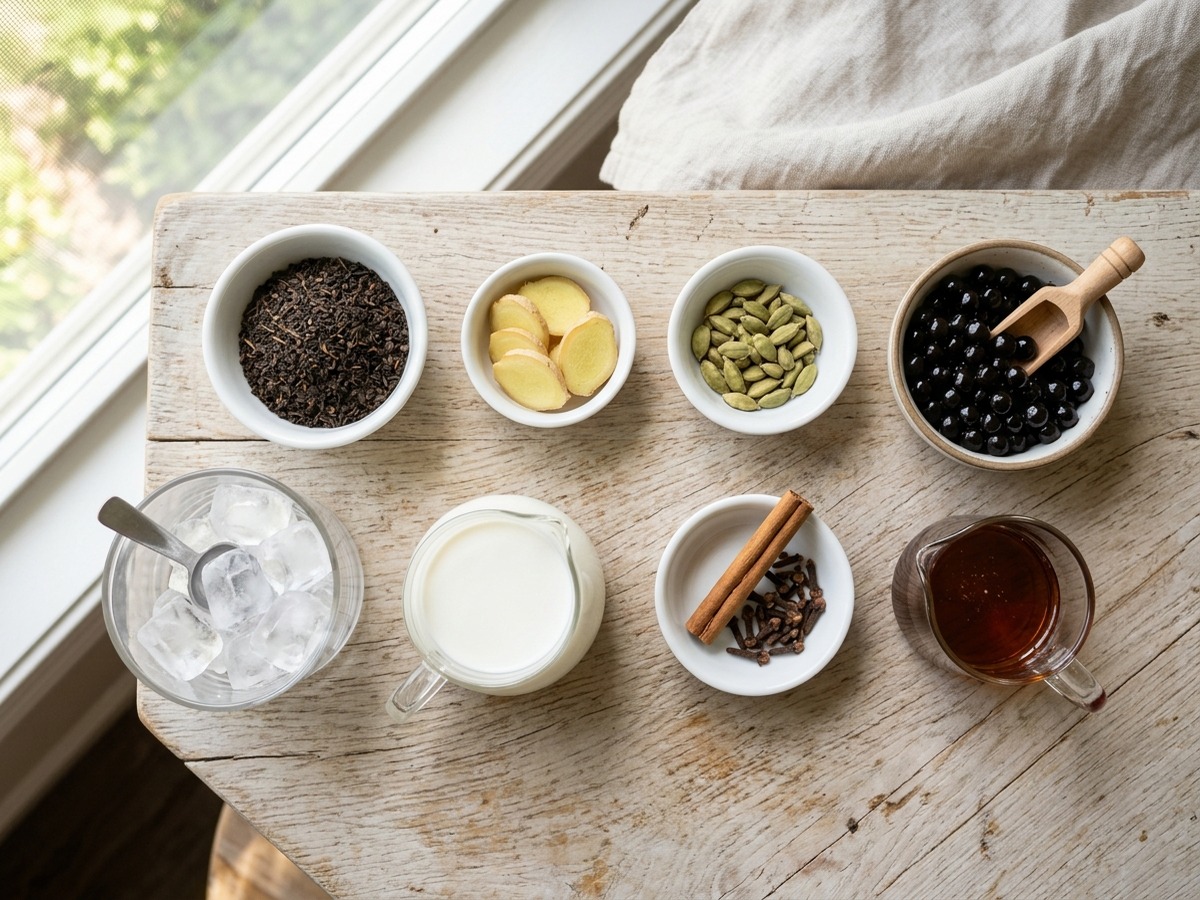
- 8 g CTC Assam black tea, about 2 level tablespoons
- 150 ml water
- 120 ml whole milk or barista oat milk
- 2 green cardamom pods, lightly crushed
- 1 small cinnamon stick
- 2 whole cloves
- 5 g fresh ginger, thinly sliced
- 25 ml brown sugar syrup, plus more to taste
- 50 g cooked tapioca pearls
- 1 cup ice, or enough to fill the glass
- 2 black peppercorns, lightly cracked, optional
Choosing the tea
CTC Assam gives the boldest result. Its small pieces release color and tannins faster than most whole-leaf teas. That strength suits a drink diluted with milk, syrup, and ice.
Regular Assam tea bags are an easy substitute. Use 2 bags and taste the tea before adding milk. English breakfast tea also works. Avoid delicate white or green tea because the spices can cover their lighter taste.
Choosing the spices
Whole spices give you better control over the final drink. Crush the cardamom pods so the seeds contact the water. Slice fresh ginger thinly. Keep cloves limited to 2 because they can take over the cup.
Ceylon cinnamon has a light, sweet taste. Cassia cinnamon is stronger and is easier to find in many shops. Either type works in the small amount used for one drink.
Many masala chai recipes include black pepper. Add 2 cracked peppercorns for more heat, or leave them out for a softer cup. Star anise, fennel, and nutmeg appear in some family and cafe recipes, though they are optional.
Choosing milk
Whole milk makes a rich, smooth drink. Semi-skimmed or 2% milk gives a lighter result.
Barista oat milk is a useful dairy-free choice because it usually stays creamy in tea. Soy milk also works. Coconut milk adds a clear coconut taste, and almond milk makes a thinner drink. Check labels if you need a vegan drink, since some creamers and toppings contain milk.
Choosing boba pearls
Freshly cooked black tapioca pearls give the classic chew. Follow the packet directions because quick-cook and traditional pearls need different cooking times.
Use the pearls while they are warm and soft. They become firm as they cool and usually do not keep well overnight.
Related guide: Master tapioca cooking steps in our guide to how to make bubble tea at home.
Iced chai boba recipe: how to make chai milk tea with boba
- Cook the tapioca pearls: Cook 50 g of pearls according to the packet directions. Drain them, then mix with a spoonful of brown sugar syrup. Keep them warm while you make the tea.
- Simmer the spices: Add 150 ml water, cardamom, cinnamon, cloves, ginger, and optional peppercorns to a small saucepan. Bring the water to a boil, lower the heat, and simmer for 4 minutes. Starting the spices in water lets their taste spread through the drink before milk is added. A gentle simmer also reduces the chance of scorching milk on the pan.
- Brew the Assam tea: Add 8 g CTC Assam tea. Simmer for 2 minutes. The liquid should turn dark amber. Avoid brewing it much longer. Extra time can make the tea harsh, especially with finely cut leaves.
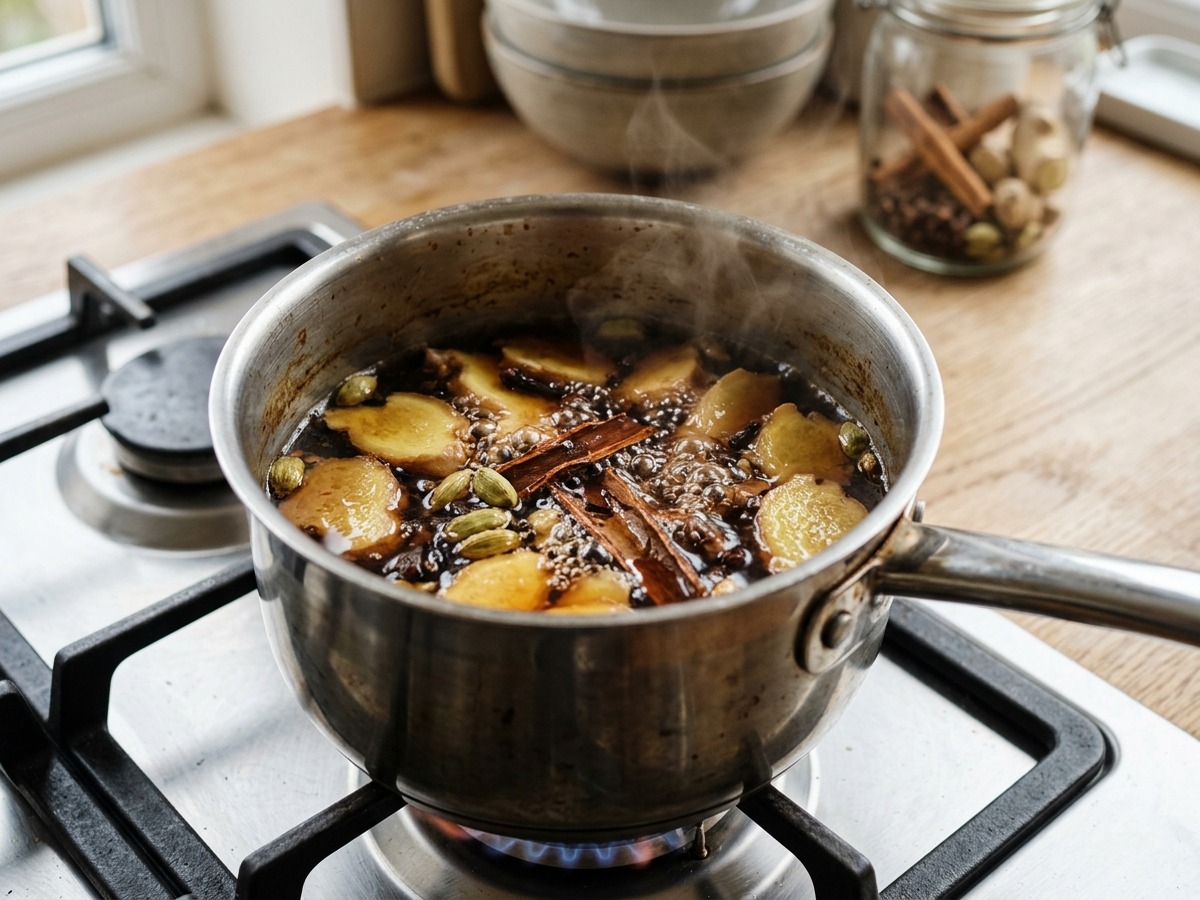
- Add the milk: Pour in 120 ml milk. Heat the mixture until it begins to steam and gently simmer at the edges. Remove the pan from the heat before a hard boil. Cover it and rest for 3 minutes. Milk softens the dry feeling caused by tea tannins. It also carries spice aromas and gives the drink a fuller texture.
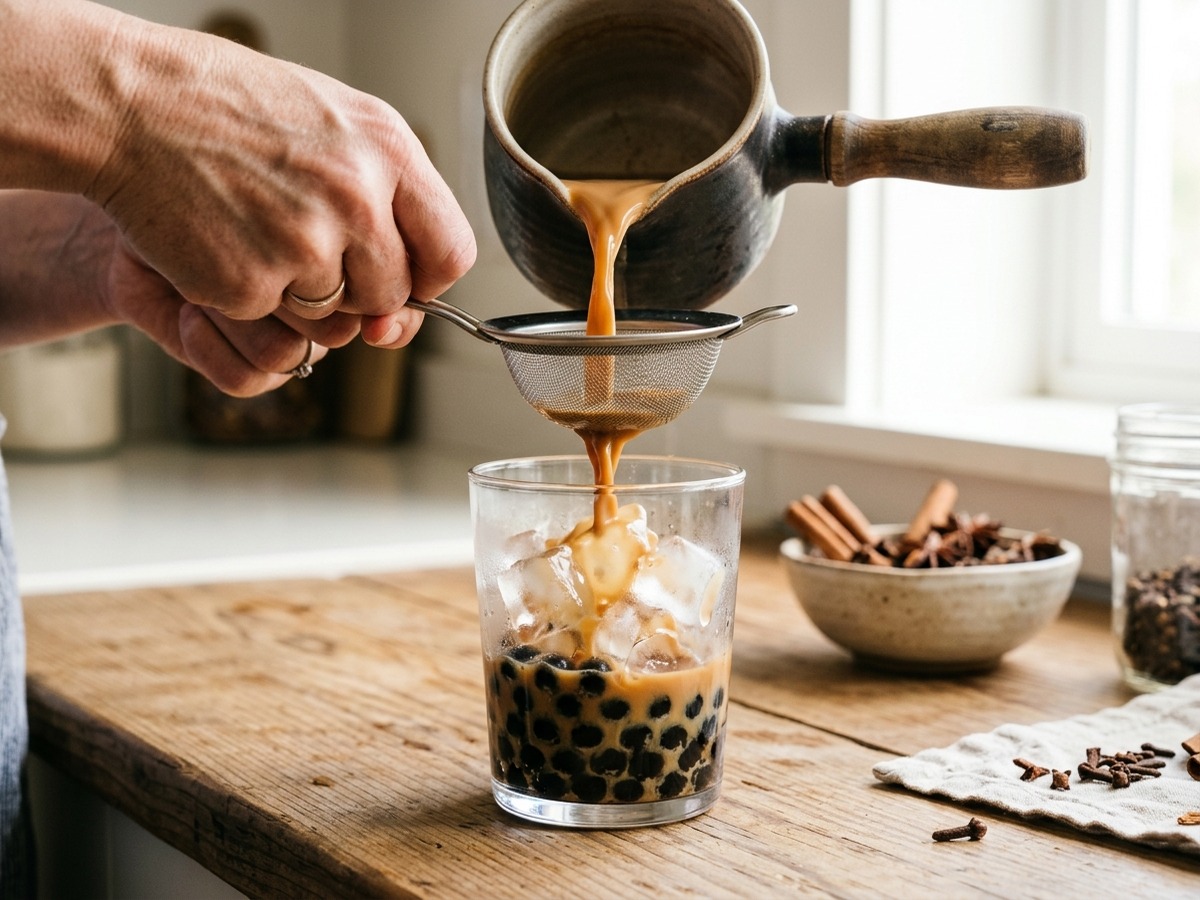
- Sweeten and strain: Add 25 ml brown sugar syrup to the warm tea and stir. Strain the chai through a fine sieve. Taste it before assembly, since ice will reduce its strength.
- Assemble the drink: Put the warm pearls in a 16 oz glass. Fill the glass with ice, then pour in the strained chai. Stir well and serve with a wide boba straw. A 12 mm straw is wide enough for standard tapioca pearls. Check the pearl size before serving, since larger pearls may need a wider straw.
Why this brewing order works
The spices go into water before the milk. Hot water draws out their taste while a short simmer prevents the milk from scorching.
Cinnamon contains cinnamaldehyde, cloves contain eugenol, and fresh ginger contains 6-gingerol. Heating ginger can form some 6-shogaol, which has a sharper taste. Cinnamaldehyde can affect TRPA1, a sensory receptor linked to the warming feeling caused by some spices. These facts explain flavour and sensation. They do not show that chai treats a health problem.
The tea goes in after the spice simmer because finely cut CTC Assam brews quickly. Assam tea contains thearubigins and other polyphenols that give black tea much of its colour and body. Adding milk last gives the tea and spices time in hot water before the milk softens the strong taste.
Casein micelles are small groups of milk proteins. They can bind with some tea polyphenols, changing astringency and the way the drink feels in the mouth. Whole milk also contains butterfat, which gives the drink a fuller texture.
Oats contain beta-glucan, a soluble fibre that can add body. Barista oat milk often contains other ingredients that improve texture and stability, so products differ. Check the label if ingredients matter to you.
Black pepper contains piperine, the compound behind much of its pungent taste. In this recipe, pepper is an optional flavour choice.
Recipe notes for a better cup
- Keep the spice pieces large enough for easy straining. Ground cinnamon or clove can leave a gritty layer in the drink.
- Make the warm chai a little stronger and sweeter than you want the final drink to taste. Ice adds water as it melts.
- Cool the tea for 10 to 15 minutes if you want less melting. Do not leave cooked pearls sitting during a long cooling period. Make the pearls near serving time.
- For a smoother drink, strain the chai twice. A fine tea strainer catches small CTC leaves and ginger fibres.
Iced chai boba recipe with concentrate
Pre-made chai concentrate cuts the work to a few minutes. Mix concentrate with milk according to its label, then pour it over ice and cooked boba.
Check the sugar before adding syrup. Many concentrates already contain a large amount of sweetener. Some also use spice flavourings rather than whole spices.
Concentrate is practical when time is short. Scratch-brewed chai gives you direct control over tea strength, spice, milk, and sugar.
Dirty chai bubble tea
Dirty chai bubble tea adds a shot of espresso to chai milk tea with boba. Espresso gives the drink a roasted coffee taste and raises its caffeine content.
Make the main recipe, then add 1 cooled espresso shot during assembly. Reduce the brown sugar syrup to 15 or 20 ml if you prefer a less sweet drink.
A single espresso commonly adds about 60 to 75 mg of caffeine, though the amount varies. Ask the cafe or check the coffee label if you track caffeine closely.
Chai bubble tea without caffeine
Use decaffeinated black tea for a lower-caffeine version. Decaf tea can still contain a small amount of caffeine.
For a caffeine-free drink, leave out tea leaves and simmer the spices with water and milk. This makes a spiced milk drink rather than tea-based masala chai. Rooibos is another caffeine-free option, though it adds its own woody taste.
Chai bubble tea caffeine
Chai bubble tea contains caffeine when it is made with black tea. The amount changes with the tea type, weight, brewing time, serving size, and any added espresso.
The research report estimates 45 to 70 mg in a standard 16 oz chai bubble tea. Treat this as a working estimate, since the finished recipe has not been tested in a lab. For comparison, the US Food and Drug Administration lists about 71 mg for a typical 12 oz black tea.
A dirty chai may contain about 105 to 145 mg after an espresso shot is added. Cafe recipes can fall outside this range.
Ask a qualified medical professional about caffeine if you are pregnant, react strongly to it, take medicine that may interact with it or are choosing a drink for a child.
Calories and sugar
Calories in chai bubble tea vary widely. Milk, syrup, pearl portion, cup size, and extra toppings all change the total. The report gives these planning estimates for a 16 oz drink:
| Drink | Sweetness | Estimated calories | Estimated carbs | Estimated caffeine |
|---|---|---|---|---|
| Chai milk tea with tapioca pearls | Full sweet | 320 kcal | 64 g | 55 mg |
| Chai milk tea with tapioca pearls | Half sweet | 240 kcal | 46 g | 55 mg |
| Chai boba with oat milk | Light sweet | 195 kcal | 38 g | 55 mg |
| Dirty chai boba with espresso | Half sweet | 245 kcal | 47 g | 120 mg |
These figures are estimates, not tested nutrition data. A shop recipe may use more syrup, more pearls, sweetened milk, or a larger serving.
To reduce sugar, ask for 30% or 50% sweetness, choose fewer pearls, or make the drink at home with less syrup. Oat milk may contain added sugar, so check the carton. Explore our complete guide to boba calories and understand how sweetness adjustments work in our bubble tea sugar level guide.
Is chai bubble tea healthy?
Chai bubble tea can fit into a varied diet, though it often contains a sizeable amount of added sugar. Tapioca pearls mainly supply starch, while milk can add protein and calcium. The exact nutrition depends on the recipe.
Spices contain plant compounds such as cinnamaldehyde in cinnamon, gingerols in fresh ginger, and eugenol in cloves. These compounds affect aroma and taste. A sweet drink made with small culinary amounts of spice should not be treated as a medicine.
Research does not clearly support cinnamon as a treatment for any health condition. Large or repeated amounts of some spices can cause side effects or interact with medicine. The small amounts used in food differ from concentrated supplements.
Nutritional Disclaimer: Calorie and caffeine values provided are estimates based on standard recipes and ingredient databases. Exact figures vary based on dairy choice, sweetener level, and topping portions.
Best toppings for chai milk tea with boba
Brown sugar tapioca pearls are the standard choice. Their caramel taste suits Assam tea and cinnamon. Learn how they are prepared in our brown sugar milk tea recipe.
Egg pudding adds a soft custard texture. It may contain egg and dairy, so check before ordering if you have an allergy or follow a vegan diet.
Salted cheese foam makes the drink richer and adds a light salty taste. It also raises the calorie and dairy content.
Coffee jelly suits dirty chai. Popping boba can work, though sharp fruit flavours may compete with the spices. Start with a small portion if you want to try it. Explore all popular add-ins in our comprehensive bubble tea toppings guide.
For a close flavour comparison, Thai milk tea is usually sweeter and has its own distinct spice profile. Jasmine green tea is lighter and floral. Those guides can help readers choose a drink based on tea strength and spice.
Common mistakes and fixes
- The drink tastes weak: Use Assam tea, increase the tea slightly, or reduce the milk. Brew the tea before adding milk and account for dilution from ice.
- The chai tastes bitter: Reduce the tea brewing time to 90 seconds or use 6 g of CTC tea. Too much finely cut tea can make a small batch harsh.
- One spice takes over: Use fewer cloves and less cinnamon. Cardamom pods also vary in size, so start with 2 and adjust next time.
- The drink is watery: Cool the chai before pouring it over ice, or use larger ice cubes that melt more slowly. Keep the water and milk measurements fixed.
- The pearls are hard: Cook them for the time printed on the packet and serve them soon after cooking. Refrigeration makes tapioca pearls firm.
- The milk splits: Use fresh milk and avoid a hard boil after adding it. Some plant milks split more easily; a barista version usually handles heat better.
Storage and food safety
Store strained chai without pearls in a clean, covered container in the fridge. Use it within 2 days for the best taste.
Cool it promptly. Discard milk tea left at room temperature for more than 2 hours, or more than 1 hour when the temperature is above 32°C (90°F).
Cooked tapioca pearls are best on the day they are made. Keep them separate from the tea until serving. Follow the pearl maker's storage directions if they differ.
Chai boba variations
- Hot chai boba: Skip the ice and serve the warm chai over freshly cooked pearls. Use a heat-safe cup and take care with the wide straw.
- Vegan chai bubble tea: Use oat or soy milk, a plant-based sweetener, and pearls made without honey or dairy additives. Check any pudding or foam separately.
- Extra-spicy chai boba: Add 2 cracked black peppercorns and another slice of ginger. Keep the clove amount low so the drink stays balanced.
- Brown sugar chai milk tea: Coat the inside of the glass with brown sugar syrup before adding the pearls and ice. This version is sweeter and may need less syrup in the tea.
- Chai popping boba: Replace tapioca pearls with apple, mango, or passion fruit popping boba. The texture changes from chewy to juice-filled.
Frequently Asked Questions
Does chai bubble tea have caffeine?
Yes. Black tea contains caffeine. The report estimates 45 to 70 mg for a 16 oz serving, though tea weight and brewing time can change the amount. Espresso raises it further.
What spices are in chai boba?
A common mix contains green cardamom, cinnamon, cloves, fresh ginger, and black pepper. There is no single required blend. Families and cafes use different recipes.
Can I use pre-made chai concentrate?
Yes. Mix it with milk as directed, then add ice and cooked boba. Taste it before adding syrup because many concentrates are already sweetened.
What does chai bubble tea taste like?
It tastes creamy, sweet, malty, and spiced. Cardamom smells floral, ginger adds mild heat, and brown sugar pearls add caramel notes and chew.
Is chai bubble tea the same as a chai latte?
The tea base may be similar. Chai bubble tea includes a boba topping and is often served cold, while a chai latte usually has no pearls.
Can I make chai bubble tea vegan?
Yes. Use oat or soy milk and check that the pearls, syrup, and toppings contain no animal products.
Is chai bubble tea gluten-free?
Tea, milk, spices, and plain tapioca pearls do not usually contain gluten. Packaged pearls, concentrates, syrups, and toppings can vary, so check every label if you have coeliac disease or a wheat allergy.
Can I make it without tapioca pearls?
Yes. Drink it as iced chai milk tea, or add coffee jelly, pudding, or popping boba.
How long does homemade chai bubble tea last?
Refrigerated chai is best within 2 days. Add freshly cooked pearls just before serving because stored pearls become hard.
What is dirty chai bubble tea?
It is chai milk tea with boba and a shot of espresso. The coffee adds a roasted taste and more caffeine.
Sources and Editorial Notes
This page uses the Bobalicious Chai Bubble Tea Deep Research report as its main content brief. Caffeine context comes from the US Food and Drug Administration. Bubble tea history is supported by Taiwan's Tourism Administration. Cinnamon safety context comes from the US National Center for Complementary and Integrative Health.
- US Food and Drug Administration (FDA): Spilling the Beans: How Much Caffeine is Too Much?
- Taiwan Tourism Administration: Cultural beverage traditions and history.
- NCCIH (National Center for Complementary and Integrative Health): Cinnamon facts and clinical evidence overview.
- FoodSafety.gov: Four steps to food safety (Clean, Separate, Cook, Chill).


 Badge-157x140.png)
Comments