

Most homemade black milk tea ends up thin and watery. The reason is simple: standard tea brewing instructions are calibrated for a hot cup with a modest splash of milk, not a tall iced drink loaded with melting cubes and chewy tapioca pearls. Pulling off a cafe-quality result requires a specific tea leaf—one strong enough to hold its flavor through all of that dilution.
Quick answer: Assam milk tea is a bold, full-bodied drink made from Camellia sinensis var. assamica black tea, dairy, and a sweetener. Grown in India's Brahmaputra River Valley, Assam tea has unusually high concentrations of thearubigins—the compounds behind its deep coppery color and rich malt flavor. Those tannins bind chemically with milk proteins without losing intensity under ice, which is why Assam is the standard black tea base for bubble tea worldwide.
Notice & Food Safety: Consume freshly cooked tapioca pearls within 4 hours at room temperature to avoid starch retrogradation and food safety risks; do not refrigerate cooked pearls. Store brewed tea concentrates in an airtight container at or below 4°C (40°F) for no longer than 48 hours. Ensure dairy milk is kept properly refrigerated.
Editorial Review: At Bobalicious, sensory panel testing across multiple CTC Assam leaf grades confirmed a single ratio that consistently outperforms all others: 15 grams of leaf brewed in 180 ml of water at 100°C for 6 minutes. That concentrate produces the dense, reddish-amber liquor needed to replicate authentic Taiwanese boba shop flavor at home.
Key Takeaways
- Assam tea grows from Camellia sinensis var. assamica, a broad-leaf variety indigenous to northeastern India—genetically distinct from Chinese teas.
- CTC (Crush, Tear, Curl) processing gives 100% cell rupture, releasing 85%+ of soluble solids within 5 minutes of boiling—far faster than whole leaf teas.
- A 16 oz iced Assam boba brewed to double strength contains 100 to 140 mg of caffeine, balanced by calming L-theanine.
- Milk casein proteins form hydrophobic bonds with Assam tannins, neutralizing harsh astringency and creating a silky, velvety texture.
- The café-grade brewing ratio is 15g CTC leaf in 180 ml water at 100°C for 6 minutes.
What is Assam Milk Tea?
Assam milk tea is a beverage made from black tea harvested in the state of Assam, northeastern India—the largest tea-growing region on earth by land area. Most delicate white and green teas come from Camellia sinensis var. sinensis, the Chinese variety. Assam tea comes from a different plant entirely: Camellia sinensis var. assamica, an indigenous broad-leaf variety first found growing wild in the dense forests along the Brahmaputra River basin.
The assamica leaf is larger, grows faster, and produces far more polyphenols than its Chinese cousin. Those polyphenols are what give Assam its signature strength, deep mahogany color, and malty body.
The Discovery: Robert Bruce, 1823, and the Singpho Tribe
British botanist and adventurer Robert Bruce documented the first recorded Western encounter with wild assamica tea plants in 1823, guided by indigenous Singpho tribe members who had been brewing and drinking the local leaves for generations. The Singpho people used a preparation method called miang, fermenting the fresh tea leaves before brewing—a practice that predates commercial Assam tea by centuries.
After Bruce's death, his brother Charles confirmed the botanical discovery and the British East India Company established the first commercial Assam tea estate at Chabua in 1840. That single moment transformed the global tea trade. Within 50 years, Assam tea was filling teacups across the British Empire, and its bold character made it the base of choice for English Breakfast and Irish Breakfast blends worldwide.
The Brahmaputra Valley Terroir: Heat, Humidity, and Low Elevation
Unlike high-altitude teas such as Darjeeling or Sri Lanka's Nuwara Eliya, which grow in cool mountain mist, Assam tea bushes grow in rich alluvial clay soil at near sea level. During the summer monsoon (June through September), the Brahmaputra Valley runs at extreme humidity with temperatures regularly exceeding 35°C (95°F).
That tropical heat drives rapid leaf growth and unusually high concentrations of polyphenols. When the harvested leaves go through oxidation, those polyphenols convert into dark thearubigins and bright theaflavins—the compounds responsible for Assam's deep coppery red color, signature briskness, and thick body.
Why Assam Black Tea is the Global Bubble Tea Standard
When bubble tea first appeared in Taichung and Tainan, Taiwan during the 1980s, shop owners tested green tea, roasted oolong, and black tea as base options. Lighter teas washed out completely when combined with sweet condensed milk, ice cubes, and caramelized cassava starch pearls.
Assam black tea for boba held its ground. Its bold malt, pyrazine compounds, and structural tannins cut through milk fat and sugar cleanly, delivering a clear tea identity in every sip. Today, over 80% of commercial milk tea shops across Asia, North America, and Europe use Assam as their house black tea base. To compare bold malty brews with bright, brisk black teas, read our guide to Ceylon milk tea.
What Does Assam Milk Tea Taste Like?
If you have had English Breakfast tea or Indian Masala Chai, you know the core. Assam milk tea is full-bodied, warming, and noticeably heavier than most teas. The milk softens its sharp edges without hiding the flavor.
Toasted Malt, Dark Caramel, and Cocoa Notes
The flavor profile has three recognizable layers:
- Warm maltiness: Maillard reaction products and heterocyclic pyrazines form during leaf drying, producing an aroma close to toasted wheat, warm barley, or dark wort.
- Caramelized undertones: Natural plant sugars in the broad leaves caramelize under hot-air roasting, yielding notes of dark molasses and unsweetened chocolate.
- Structured body: Soluble thearubigins create a thick, tongue-coating weight in the mouth—the kind that makes each sip feel substantial.
Assam vs Ceylon vs Earl Grey: Side-by-Side Comparison
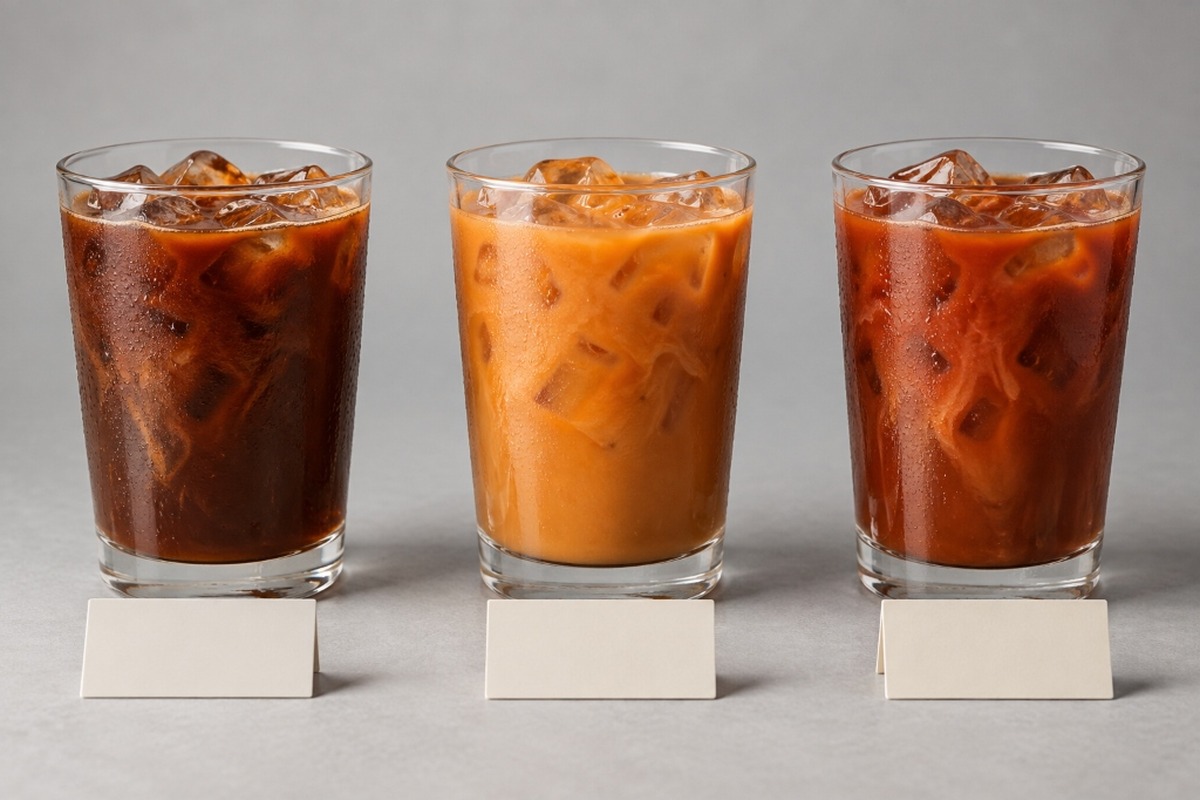
| Metric | Assam (India) | Ceylon (Sri Lanka) | Earl Grey (Flavored) |
|---|---|---|---|
| Dominant notes | Toasted malt, dark chocolate, molasses | Citrus peel, wildflower honey, floral wood | Bergamot citrus, lavender, brisk black tea |
| Liquor intensity | Heavy, dark mahogany, dense body | Medium, bright copper, lively acidity | Medium, deep red-amber, aromatic |
| Astringency | High (softens to velvet with milk) | Moderate (crisp, refreshing finish) | Moderate (perfumed, dry finish) |
| Best dairy pairing | Condensed milk, whole milk, creamer | Whole milk, evaporated milk, oat milk | Whole milk, half-and-half, oat milk |
| Best boba topping | Dark brown sugar boba, custard egg pudding | Honey boba, aloe vera, crystal boba | Brown sugar boba, salted cheese foam |
| Caffeine per 16 oz | 100 to 140 mg | 90 to 130 mg | 80 to 110 mg |
The Science of Strong Assam Milk Tea: CTC vs Orthodox Leaves
Leaf grade is the most consequential decision when making Assam milk tea. It controls extraction speed, liquor color, and—the part most home brewers miss—whether the tea survives ice and dairy dilution without going flat.
CTC (Crush, Tear, Curl): Why Bubble Tea Cafes Prefer It
William McKercher developed the CTC manufacturing process in Assam in the 1930s to meet growing demand for fast-brewing, high-yield black tea. The machine passes withered leaf through two cylinders fitted with interlocking serrated teeth. Those cylinders crush, tear, and curl the leaf tissue into small, dense pellets in a single pass.
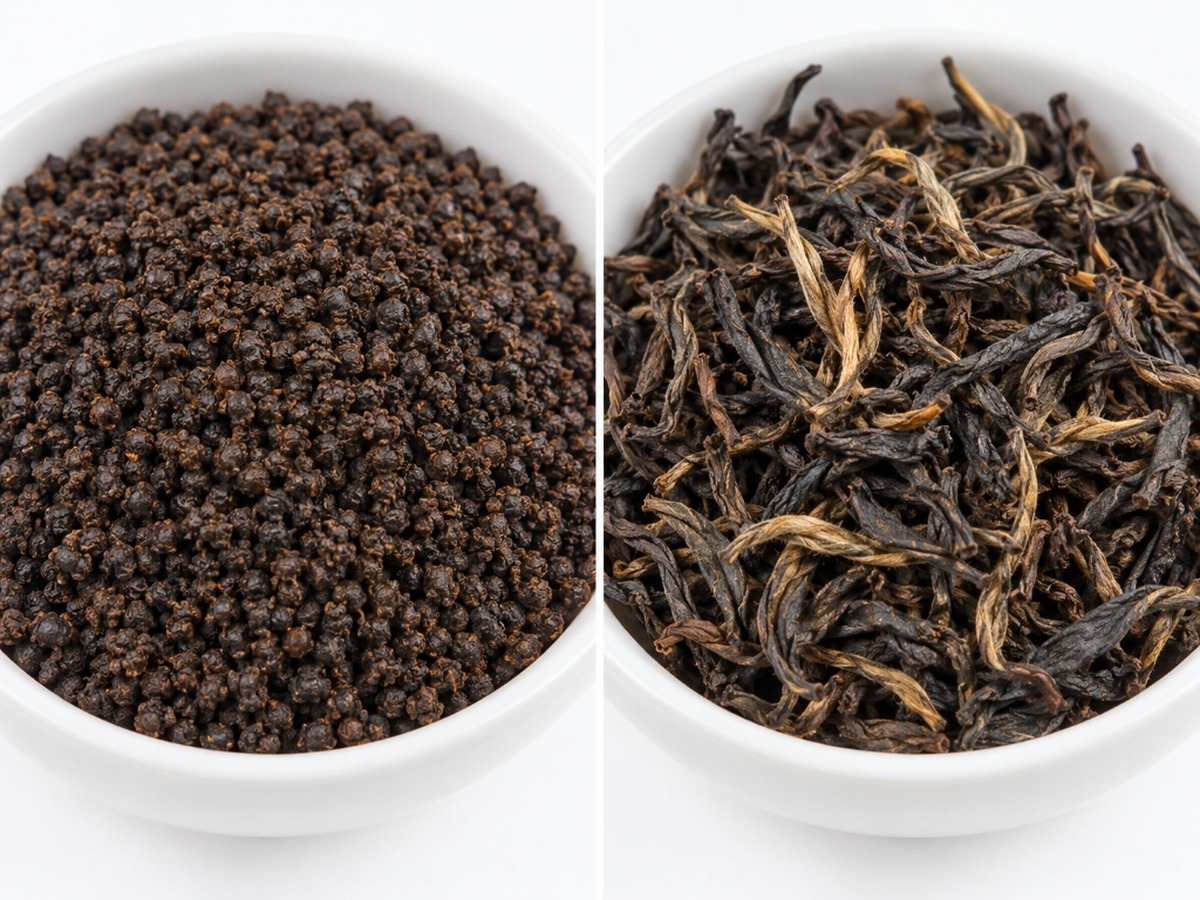
- Total cell rupture: Every plant cell wall breaks open, letting internal polyphenols contact polyphenol oxidase enzymes directly. Full oxidation happens within minutes.
- Rapid mass transfer: The diffusion path inside each pellet is microscopic. Over 85% of soluble solids and pigments dissolve into water within 4 to 5 minutes at 100°C.
- Maximum color and tannin yield: The resulting liquor is dense and dark red. It resists dilution from both ice melt and high-fat milk—exactly what a 16 oz iced boba needs.
Orthodox Whole Leaves: Aromatic Complexity, Lighter Body
Orthodox processing preserves the intact cell structure of the leaf, including its tips and buds. The highest Orthodox Assam grades carry designations like TGFOP (Tippy Golden Flowery Orange Pekoe). These teas produce subtle floral notes, a honey sweetness, and refined complexity. The problem for iced boba is their larger surface area extracts slowly—10 to 15 minutes—and yields a lighter liquor that disappears under heavy dairy and ice.
For Assam black tea boba, choose CTC grade or Broken Orange Pekoe (BOP). Both give the color, body, and malt intensity that hold up in a cold, dairy-heavy drink.
How Milk Proteins Neutralize Bitterness (Casein Binding)
Black tea tannins bind to salivary proline-rich proteins in your mouth, producing the dry, puckering feeling called astringency. When you add whole cow's milk to hot Assam tea, milk casein micelles—specifically alpha-s1 and beta-casein fractions—form hydrophobic complexes with the free tannins before the liquid reaches your tongue. This chemical bonding neutralizes the bitterness entirely, turning a sharp, mouth-drying brew into something silky and velvety.
Non-dairy creamer powder contains minimal casein. That is why a boba made with powder tastes smoother initially but can feel thin and slightly harsh on the finish compared to whole milk.
Caffeine Content in Assam Milk Tea
Assam tea leaves carry some of the highest natural caffeine concentrations of any commercial tea plant, averaging 3.5% to 4.8% dry weight caffeine according to beverage composition data.
| Cup Size | Caffeine Range | Notes |
|---|---|---|
| 8 oz (hot Assam milk tea) | 60 to 80 mg | Standard single-strength brew |
| 16 oz (standard iced boba) | 100 to 140 mg | Requires double-strength concentrate (15g/180ml) |
| 24 oz (large café boba) | 160 to 210 mg | Comparable to a double espresso |
A standard 8 oz cup of drip coffee runs about 95 to 165 mg of caffeine. A 16 oz iced Assam boba sits in the same range as a strong latte.
L-Theanine: Steady Alertness, No Crash
Assam tea is rich in L-theanine, a non-proteinogenic amino acid that crosses the blood-brain barrier and stimulates alpha brain wave production, creating calm alertness. When L-theanine and caffeine enter your system together, the L-theanine blunts the cardiovascular spikes that cause jitters and the subsequent energy drop you get from coffee or energy drinks. The result is a longer, flatter, more usable energy curve.
Step-by-Step Assam Boba Milk Tea Recipe
This makes one 16-ounce (475 ml) iced bubble tea. Total time: about 55 minutes (boba takes the longest—start it first). Active prep time: 15 minutes. See how Assam serves as the backbone for cafe menus in our milk tea flavours guide.
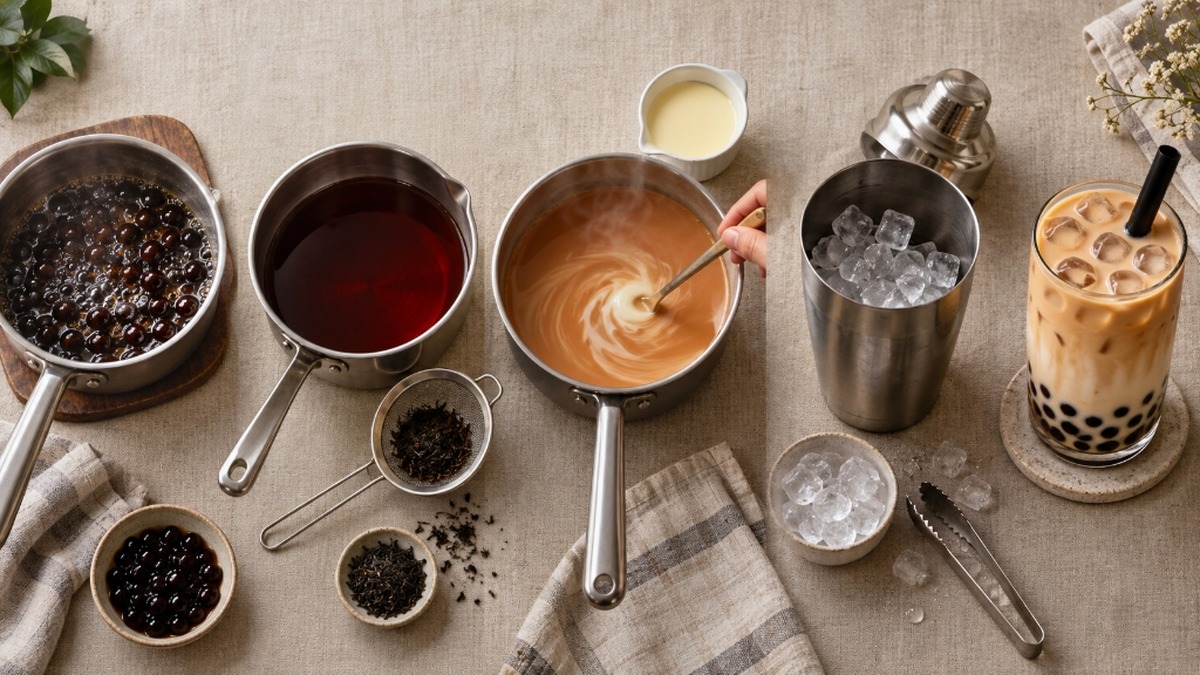
Equipment Needed
- Small saucepan and a larger pot for pearls
- Fine-mesh stainless steel sieve
- Cocktail shaker or heatproof mason jar
- 16 oz clear drinking glass
- 12mm wide boba straw
Ingredients
| Ingredient | Quantity |
|---|---|
| CTC Assam black tea (CTC grade or BOP) | 15 grams (about 2 heaping tablespoons) |
| Filtered water | 180 ml (for tea) + 600 ml (for pearls) |
| Chilled whole milk | 100 ml |
| Sweetened condensed milk | 20 ml (or 25 ml dark brown sugar syrup) |
| Raw black tapioca pearls | 50 grams |
| Dark muscovado or brown sugar syrup | 30 ml (for marinating pearls) |
| Ice cubes | 120 grams total (40g for shaker, 80g for glass) |
Step-by-Step Instructions
Step 1: Cook the Brown Sugar Boba Pearls (Start Here — Takes 45 Minutes)
- Bring 600 ml of water to a full rolling boil in a medium pot. Drop in 50 grams of raw black tapioca pearls.
- Stir for 60 seconds until the pearls float. Cover and reduce to a medium simmer for 25 minutes.
- Turn off the heat. Leave the pot covered and let pearls steam for 20 minutes—this finishes the cook without turning them mushy.
- Drain and rinse under lukewarm water for 15 seconds to stop surface sticking.
- Transfer warm pearls to a small bowl. Add 30 ml of dark brown sugar syrup and toss to coat. Let them absorb the syrup for 10 minutes.
Step 2: Brew the Assam Tea Concentrate (While Pearls Cook)
- Bring 180 ml of filtered water to a rolling boil (100°C / 212°F) in a small saucepan.
- Add 15 grams of CTC Assam black tea. Stir once to submerge all pellets.
- Drop heat to the lowest setting, cover tightly, and simmer for exactly 6 minutes. Do not exceed 8 minutes—bitterness increases sharply past that point.
- Remove from heat and strain through a fine-mesh sieve, pressing down firmly on the grounds. You should yield roughly 110 ml of dark, opaque red-brown concentrate.
Step 3: Emulsify the Sweetener into the Hot Concentrate
- While the tea concentrate is still steaming hot (above 75°C), add 20 ml of sweetened condensed milk directly into the cup.
- Whisk vigorously for 20 seconds. The heat dissolves the dense dairy sugars fully into the liquor, creating a glossy, caramel-colored base. If you wait until the tea cools, the condensed milk will streak rather than blend.
Step 4: Flash Chill the Sweetened Concentrate
- Add 40 grams of ice to a cocktail shaker.
- Pour the sweetened Assam concentrate over the ice. Seal and shake for 10 seconds. This drops the tea to near 0°C without excessive dilution, locking in the aromatic pyrazine compounds responsible for the malt aroma.
Step 5: Layer and Serve
- Spoon the warm brown sugar pearls into the bottom of a 16 oz glass. Swirl the glass to streak the lower interior walls with dark syrup.
- Fill the glass with 80 grams of fresh ice.
- Pour 100 ml of chilled whole milk directly over the ice.
- Slowly pour the chilled Assam concentrate over the top of the milk—the density difference creates a visible gradient.
- Insert the 12mm boba straw, stir once to combine the gradient, and serve immediately.
How to Store CTC Assam Tea Leaves
CTC pellets are denser than loose leaf teas but still absorb moisture and odors quickly. Store them in an airtight, opaque container—ceramic or metal tins work better than plastic bags. Keep the tin away from heat sources and direct light. Properly sealed at room temperature, a bag of CTC Assam stays fresh for 12 to 18 months. Once opened, use within 6 months for the best malt intensity. Refrigeration is not necessary and can introduce condensation, which accelerates staling.
Best Dairy and Sweetener Ratios for Assam Milk Tea
The right balance depends on how tea-forward or how dessert-like you want the drink. Here are four tested styles:
| Style | Dairy Choice | Sweetener | Flavor Profile |
|---|---|---|---|
| Traditional Taiwanese Café | Whole milk (100ml) + condensed milk (20ml) | Brown sugar syrup (30ml with boba) | Balanced malt, creamy, rich caramel |
| Hong Kong-Style | Evaporated milk (80ml) + whole milk (40ml) | Simple cane syrup (25ml) | Extra thick, toasted dairy, bold tannins |
| Plant-Based / Vegan | Barista oat milk (120ml) | Dark muscovado syrup (30ml) | Earthy, toasted grain, smooth sweetness |
| Classic Street-Vendor Style | Non-dairy creamer powder (25g dissolved in hot tea) | Fructose syrup (25ml) | Light, silky, nostalgic mouthfeel |
Whole Milk vs Condensed Milk vs Non-Dairy Creamer
Whole milk at 3.5% fat contains enough casein to fully bind Assam's free tannins. Condensed milk adds dairy fat and concentrated sugar in one step, which simplifies sweetening and gives the tea a glossy finish. Non-dairy powder creamer dissolves fast but carries minimal casein, so harsh edges from any over-steeping do not get neutralized as effectively.
Choosing the Right Sweetener: Muscovado, Brown Sugar, or Honey
Dark muscovado sugar has a pronounced molasses character that mirrors Assam's natural malt—the closest flavor match of any sweetener. Standard brown sugar syrup delivers a lighter caramel note that works well without competition. Honey adds floral sweetness but can clash with Assam's pyrazine compounds, especially in hot versions. If you use honey, add it after straining and keep the brew time short at around 5 minutes.
Best Toppings for Assam Milk Tea
Assam's heavy body pairs well with rich, substantial toppings. Light or thin toppings tend to disappear against its dark malt flavor—you want something with enough texture or flavor to register in every sip.
Dark Brown Sugar Tapioca Pearls
The caramelized molasses flavors of classic boba directly mirror Assam's natural malt and dark fruit notes. Each cassava starch black tapioca pearl absorbs the brown sugar syrup during marinating, carrying sweetness up the straw without extra syrup needed in the liquid.
Custard Egg Pudding
Soft custard egg pudding slides up the wide straw and provides a rich vanilla cream contrast against the malty black tea base.
Herbal Grass Jelly
Suits anyone who wants lower overall sweetness. Its cooling, earthy quality balances Assam's body without layering in excess sugar.
Sea Salt Cream Foam Crown
A 1-inch layer of salted cream cheese foam lets every sip of Assam tea pass through savory, airy cream. The salt reduces perceived bitterness and makes the malt notes land cleaner on the finish.
Assam Milk Tea Calories and Nutritional Profile
Calorie count varies significantly by what you add. The tea concentrate itself contributes almost nothing—all the calories come from dairy, sweetener, and pearls: For authentic cafe-strength milk tea ready whenever you are, check out our ready-to-drink canned milk tea.
| Variation (16 oz Serving) | Calories | Carbs (g) | Fat (g) | Protein (g) | Sugars (g) |
|---|---|---|---|---|---|
| Standard (whole milk + condensed milk + pearls) | 390 | 74 | 9 | 6 | 42 |
| Lower Sugar (oat milk + 50% boba + no condensed milk) | 240 | 48 | 4 | 3 | 18 |
| Plain (whole milk + 20ml syrup, no toppings) | 180 | 26 | 7 | 5 | 24 |
| Low-Carb (half-and-half + stevia + no boba) | 140 | 3 | 12 | 3 | 2 |
Nutritional note: Estimates are based on standard ingredient weights using USDA FoodData Central data. Actual values vary by brand, milk fat percentage, pearl batch size, and syrup quantity. These are planning guides, not medical nutrition advice.
Assam vs Other Black Teas for Milk Tea
| Feature | Assam (India) | Ceylon (Sri Lanka) | Darjeeling (W. Bengal) | Oolong (Taiwan) |
|---|---|---|---|---|
| Origin | Brahmaputra Valley, near sea level | Dimbula / Ruhuna elevations | Himalayan foothills | Nantou / Alishan highlands |
| Primary flavor | Toasted malt, cocoa, dark caramel | Citrus peel, floral honey, crisp tannin | Muscatel grape, delicate floral, woody | Roasted grain, orchid floral, honey |
| Body | Heavy, dense | Medium, brisk | Light, delicate | Medium, silky |
| Ice dilution resistance | Exceptionally high — best for iced boba | Moderate to high | Low — better served hot | High (especially roasted oolong) |
| Caffeine per 16 oz | 100 to 140 mg | 90 to 130 mg | 60 to 90 mg | 50 to 75 mg |
Barista Troubleshooting: How to Fix Watery or Bitter Assam Milk Tea
-
Problem: The milk tea tastes thin and fades within a few minutes of sitting.
Cause: Standard tea bags use only 2 grams of tea per bag and are calibrated for plain hot tea, not iced boba.
Fix: Use 15 grams of CTC Assam leaf brewed in just 180 ml of water. That ratio creates a total dissolved solids (TDS) extraction above 1.8%, giving the concentrate enough density to stay flavorful as ice melts into it. -
Problem: The tea tastes harsh and dries out the back of your throat.
Cause: Steep time exceeded 8 minutes, or not enough dairy fat was added to bind the tannins.
Fix: Keep steep time at exactly 6 minutes at 100°C. Use whole milk (3.5% fat) or condensed milk—both contain sufficient casein to complex with the free tannins and remove harshness. -
Problem: The sweetener sinks to the bottom in a thick, undissolved layer.
Cause: Adding cold or room-temperature sugar directly to an already-iced cup.
Fix: Dissolve your sweetener—condensed milk, brown sugar syrup, or honey—into the hot tea concentrate immediately after straining, before any ice touches it. Once dissolved in hot liquid, it stays evenly distributed throughout the drink. -
Problem: The pearls turn hard and chewy within 20 minutes of cooking.
Cause: Draining the pearls and leaving them dry without any syrup coating.
Fix: Toss warm pearls in brown sugar syrup within 5 minutes of draining. The syrup keeps the surface supple. Use pearls within 2 to 4 hours of cooking for the best texture—refrigerating cooked pearls makes them firm and rubbery.
The Bottom Line on Assam Milk Tea
Assam milk tea earned its status as the world's boba gold standard because it refuses to be diluted. By using fast-extracting CTC pellets, brewing a dense 15g to 180ml concentrate for 6 minutes, and emulsifying with dairy while steaming hot, you create a boba that cuts through ice and milk fat to deliver authentic Taiwanese teahouse malt in every sip.
Frequently Asked Questions
What makes Assam tea different from regular black tea?
Assam tea comes exclusively from Camellia sinensis var. assamica, a broad-leaf plant indigenous to northeastern India's Brahmaputra Valley. Most grocery store "black tea" is a multi-origin blend that mixes leaves from several countries to hit a price point. It lacks the distinct malt depth, coppery color, and structural body that single-origin CTC Assam delivers.
How much caffeine is in a 16 oz Assam milk tea?
A standard 16-ounce iced Assam milk tea brewed with a double-strength concentrate contains roughly 100 to 140 mg of caffeine. That puts it in the same range as a double-shot espresso or a regular 8 oz drip coffee. The caffeine effect also lasts longer because L-theanine in the tea smooths out the energy curve.
Why do bubble tea shops use CTC Assam tea instead of whole leaf?
CTC pellets have 100% cellular rupture, releasing thearubigins, caffeine, and malty compounds within 5 minutes at 100°C. Whole leaf teas need 10 to 15 minutes to fully extract and produce a lighter liquor that disappears under milk and ice in a tall iced drink. In a commercial café setting, CTC also guarantees rapid, highly consistent results across hundreds of drinks daily.
Can I make Assam milk tea without cow's milk?
Yes. Barista-edition oat milk and soy milk both work well because their natural toasted grain notes match Assam's malt flavor. Barista oat milk also has enough emulsifiers to create a smooth blend without curdling in the hot concentrate. Almond milk is generally too thin and watery to offset Assam's strong tannins—the drink will taste sharp at the finish.
Does Assam milk tea taste like chai?
Assam tea is the traditional black tea base in Indian Masala Chai, so the core tea character is identical. What separates them is that Assam milk tea contains no added warming spices—no cinnamon, cardamom, cloves, or ginger. You experience the pure malt, cocoa, and caramelized sugar notes of the leaf unmasked by spices.
What is the best sweetener for Assam milk tea?
Dark muscovado sugar is the closest flavor match—its deep molasses character mirrors Assam's natural malt directly. Standard brown sugar syrup gives a lighter caramel finish that works cleanly without competing with the tea. Sweetened condensed milk is the most practical choice if you want to handle sweetener and dairy in one step, lending the drink a glossy, dessert-quality finish.
Is Assam milk tea good for you?
The tea concentrate itself contributes antioxidants (theaflavins and thearubigins) and calming L-theanine, with near-zero calories. The calorie count comes from the dairy, sweetener, and pearls you add. A plain Assam milk tea with whole milk and a modest amount of syrup—no pearls—sits at about 180 calories. Adding condensed milk and a full boba pearl portion brings it to around 390 calories. Choosing oat milk and half a pearl portion keeps it under 240 calories without sacrificing the boba experience.
Sources and Editorial References
The Bobalicious beverage development team validates formulation benchmarks, dairy stability curves, and food safety standards against authoritative regulatory databases:
- Tea Board of India: Assam Tea Characteristics, Brahmaputra Valley Agro-Climatic Profile & CTC Processing Standards — https://www.teaboard.gov.in/
- Journal of Analytical Toxicology & PubMed: Caffeine Content of Brewed Teas and Extraction Dynamics (Chin JM et al., 2008; 32(8):702-4) — https://pubmed.ncbi.nlm.nih.gov/19007524/
- Food Chemistry & PubMed: Thearubigins and Theaflavins in Black Tea: Formation, Structure, and Biological Activity — https://pubmed.ncbi.nlm.nih.gov/22055263/
- Journal of Dairy Science: Interaction Mechanism Between Milk Casein Micelles and Tea Polyphenols — https://www.journalofdairyscience.org/
- USDA FoodData Central: Nutritional Composition of Brewed Black Teas, Fluid Whole Milk, and Tapioca Starch — https://fdc.nal.usda.gov/
- U.S. Food and Drug Administration (FDA): Safe Food Handling and Storage Guidelines for Perishable Beverages — https://www.fda.gov/food/buy-store-serve-safe-food/safe-food-handling


Comments