
What Is Popping Boba? Taste, Ingredients and Uses
Popping boba is one of the most fun toppings in bubble tea, but many people get confused by how it differs from traditional options. While it looks like small, colourful pearls, popping boba bursts with fruit juice instead of requiring constant chewing.
Quick answer: Popping boba is a juice-filled bubble tea topping made with a thin gel skin from sodium alginate and calcium salts. It bursts with liquid fruit juice when bitten, creating a sweet and refreshing pop of flavour that contrasts with chewy starch tapioca pearls.
This guide explains what popping boba is, what it is made of, how it pops, how to use it, and how it compares with tapioca pearls. For a full topping overview, read our bubble tea toppings guide. If you are looking for a perfect menu pairing, try mango popping boba with a refreshing cup of Bobalicious Mango Green Tea.
What Is Popping Boba?
Popping boba is a small liquid-filled pearl used in bubble tea, fruit tea, smoothies, slushies, frozen yogurt, and desserts. It has a thin gel shell on the outside and a sweet liquid centre inside. When you bite it, the shell breaks and the liquid pops in your mouth.
Popping boba is also called popping pearls, bursting boba, bursting pearls, juice balls, fruit pearls, or popping bubbles.
On menus, those names usually mean the same liquid-filled topping, not chewy tapioca pearls.
Traditional boba is usually made from tapioca starch. Popping boba is different because it uses a food process called spherification.
This process forms a soft gel layer around a liquid centre. Spherification uses sodium alginate and calcium ions to create a gel-like calcium alginate layer.
What Is Popping Boba Made Of?
Most popping boba has two parts:
- The liquid centre: It usually contains water, sugar or sweetener, fruit juice, syrup, flavouring, and sometimes food colour.
- The outer shell: This shell is usually made with sodium alginate and a calcium ingredient, such as calcium chloride or calcium lactate.
Sugar Intake Note: The sweet juice centre contains added sugars. Consuming large portions can add extra carbohydrates to your drink. Moderation is advised if you are watching your sugar intake.
Sodium alginate comes from alginic acid, which is found in certain brown algae. The eCFR lists sodium alginate as a food ingredient used as a texturizer, stabilizer, thickener, and related food function. Calcium lactate is also listed by the eCFR as a food ingredient used under current good manufacturing practice limits.
That is why many people say popping boba has a seaweed-based shell. This does not mean it tastes like seaweed.
It means one shell ingredient comes from brown algae. For a deeper ingredient guide, read our page on popping boba ingredients.
How Does Popping Boba Pop?
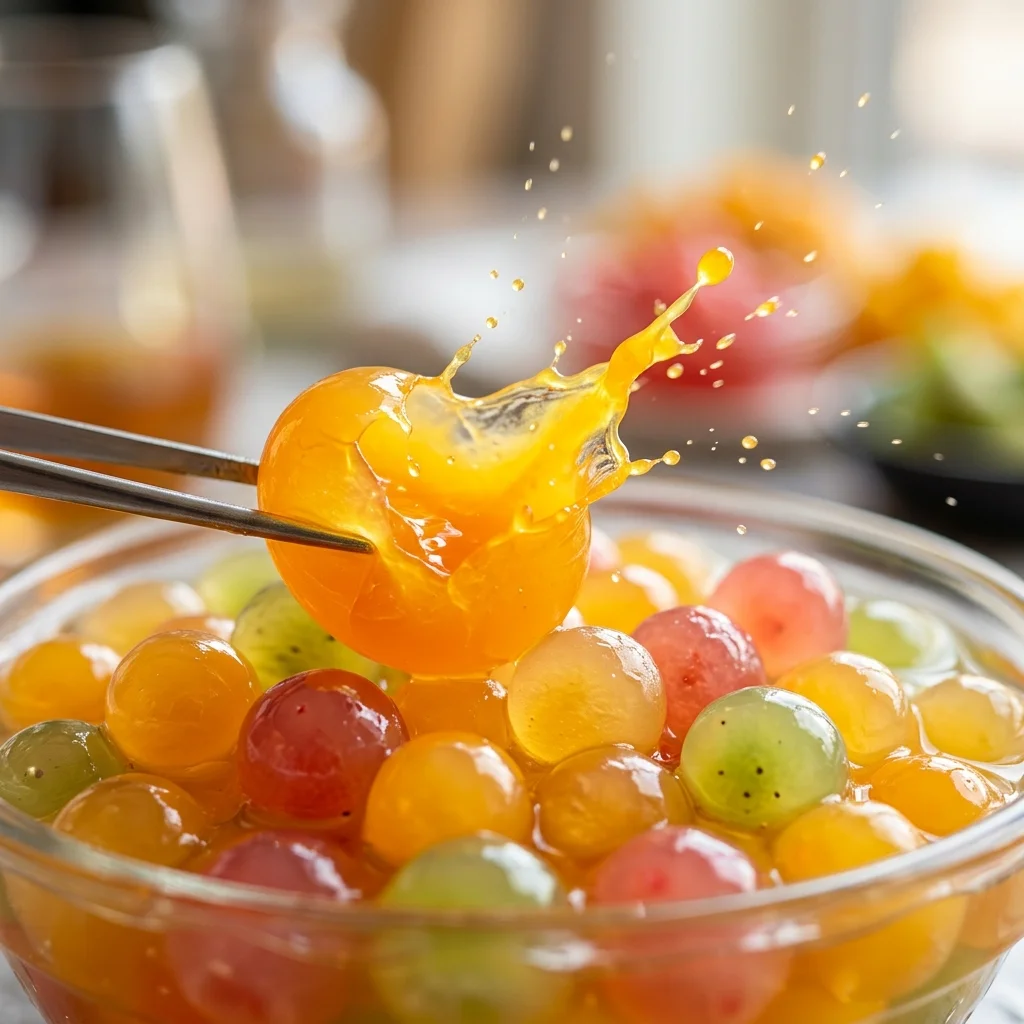
Popping boba pops because the outside shell is thin and soft, while the inside stays liquid.
Here is the simple version: a flavoured liquid is mixed with sodium alginate, then small drops go into a calcium solution. The outside of each drop reacts with calcium and forms a gel skin.
The middle stays liquid. When you bite the pearl, the gel skin breaks and the fruit liquid comes out.
Some liquids are harder to turn into pearls. Very acidic liquids may need pH adjustment before spherification works well. That is why homemade popping boba can be harder than it looks.
Where Did Popping Boba Come From?
Popping boba is part of modern bubble tea culture. Bubble tea started in Taiwan in the 1980s and became known for tea, milk or fruit flavours, sweetener, ice, and toppings like tapioca pearls.
Popping boba came later as a newer topping style. There is no clear primary source confirming one single inventor or exact invention year for popping boba.
The most accurate way to explain it is simple: popping boba is a modern bubble tea topping linked to Taiwanese bubble tea culture, but it is not the original tapioca pearl.
Why Is Popping Boba Popular?
Popping boba is popular because it adds flavour, colour, and texture in one topping. It also works well in drinks that many people already enjoy, such as iced tea, lemonade, fruit tea, smoothies, and slushies.
In the US, popping pearls have also appeared outside bubble tea shops. For example, Starbucks added boba-inspired popping pearls to US drinks in 2024.
Reports at the time made the same key point: these were popping pearls, not traditional chewy tapioca boba. This matters because more customers now see popping boba-style toppings on wider drink menus.
Popping Boba vs Tapioca Pearls
Popping boba and tapioca pearls are both used in bubble tea, but they are very different:
| Feature | Popping Boba | Tapioca Pearls |
|---|---|---|
| Texture | Juicy burst | Chewy bite |
| Main base | Flavoured liquid with gel shell | Tapioca starch |
| Common names | Popping pearls, bursting boba, fruit pearls | Boba, tapioca pearls, black pearls |
| Best drinks | Fruit tea, lemonade, smoothies, slushies | Milk tea, brown sugar milk tea, classic boba tea |
| Prep | Usually ready to use | Usually cooked before serving |
| Main appeal | Fruit burst | Chewy texture |
Tapioca pearls are starch-based. They come from tapioca, which comes from cassava root. Popping boba is liquid-filled and forms through spherification.
Choose popping boba if you want a sweet fruit burst. Choose tapioca pearls if you want the classic chewy boba texture. For a full side-by-side guide, read our popping boba vs tapioca pearls comparison.
What Does Popping Boba Taste Like?
Popping boba usually tastes sweet, fruity, and light. The flavour depends on the liquid inside the pearl.
The first bite gives a quick pop, then a splash of fruit liquid. It feels juicy rather than chewy, which is why it works so well in cold fruit tea, lemonade, slushies, and sparkling drinks.
Common popping boba flavours include:
- Mango
- Strawberry
- Lychee
- Passion fruit
- Blueberry
- Peach
- Green apple
- Kiwi
- Pineapple
- Pomegranate
- Raspberry
- Watermelon
- Coconut
Mango, strawberry, lychee, and passion fruit are good first choices. They pair well with many cold drinks.
Best Drinks for Popping Boba
Popping boba works best when the flavour matches the drink:
| Drink Base | Best Popping Boba Flavours |
|---|---|
| Green tea | Mango, lychee, passion fruit |
| Black tea | Peach, strawberry, blueberry |
| Lemonade | Strawberry, lychee, raspberry |
| Smoothies | Mango, pineapple, passion fruit |
| Slushies | Green apple, watermelon, kiwi |
| Coconut drinks | Mango, pineapple, coconut |
| Sparkling drinks | Lychee, passion fruit, pomegranate |
Fruit tea is usually the safest first choice. Milk tea can work, but not every fruit pearl fits a creamy drink. Strong sour flavours can clash with milk tea.
For more flavour ideas, read our fruit bubble tea combinations.
Can You Use Popping Boba Outside Bubble Tea?
Yes. Popping boba is not only for bubble tea. You can use it in:
- Iced tea
- Lemonade
- Smoothies
- Slushies
- Mocktails
- Frozen yogurt
- Ice cream
- Shaved ice
- Fruit bowls
- Panna cotta
- Dessert cups
Use popping boba when a drink or dessert needs extra fruit flavour and texture. For example, mango popping boba can make iced green tea taste brighter.
Lychee popping boba works well in lemonade. Strawberry popping boba fits frozen yogurt and ice cream.
Does Popping Boba Need Cooking?
No. Most ready-to-use popping boba does not need cooking. This is one major difference from tapioca pearls.
Tapioca pearls usually need boiling before serving. Popping boba is usually packed in syrup and served from the container after opening. Always check the label because serving and storage rules can change by brand.
If you need to keep opened popping boba, seal the container and refrigerate it according to the label. Recipes vary, so the label should always come before general advice.
It is usually better not to freeze popping boba unless the product label says it is freezer-safe. Freezing can split the gel skin, make the pearls leak, and leave the syrup watery after thawing.
Can You Freeze Popping Boba?
How Should You Store Popping Boba?
Follow the product label first. In general, unopened commercial popping boba should stay sealed in its original container. After opening, many products need refrigeration.
After opening, use a clean spoon or scoop each time. This helps keep the product clean and protects the syrup from extra crumbs, milk, or ice water.
How Much Popping Boba Should You Add?
Start with a small amount. Popping boba is sweet, so too much can make the drink taste heavy.
For a beginner drink, use one popping boba flavour first. Avoid mixing too many toppings in one cup.
A simple first order could be: Iced green tea with mango popping boba.
Another easy choice is: Lemonade with lychee popping boba.
Is Popping Boba Vegan?
Popping boba is often vegan, but you should still check the label. The shell is usually made with sodium alginate, which comes from brown algae. That means the shell is usually not gelatin-based.
But the full drink may not be vegan. Milk tea may contain dairy. Some syrups, colours, or flavourings may vary by supplier.
The correct answer is: popping boba can be vegan, but only the label can confirm it.
Is Popping Boba Halal?
Popping boba can be halal, but do not assume it. The shell is usually alginate-based, not gelatin-based.
Still, halal status depends on flavourings, colours, processing aids, and certification. If halal matters, ask for the product label or halal certificate.
Is Popping Boba Gluten Free?
Popping boba is often gluten free, but this depends on the product. The main shell ingredients, such as sodium alginate and calcium salts, are not wheat ingredients. But flavourings, colours, syrups, and factory handling can vary.
If you have celiac disease or a serious gluten concern, check the allergen statement and ask about cross-contact.
Does Popping Boba Have Gelatin?
Most popping boba does not use gelatin. The shell is usually made through alginate and calcium spherification, not animal gelatin.
Still, formulas vary. Check the ingredient list if you avoid animal-based ingredients.
Does Popping Boba Have Sugar?
Yes, most popping boba contains sugar or sweetener. The liquid centre usually contains fruit juice, syrup, or flavoured liquid. That means popping boba adds sweetness to your drink.
The exact sugar amount depends on the brand, flavour, and portion size. If you want less sugar, choose a less sweet drink base or ask for less syrup. You can also read our boba calories.
Is Popping Boba Healthy?
Popping boba can fit into an occasional drink, but it is a sweet topping, not a health food. It can make a drink more fun, but it can also add sugar.
The better question is what else is in the cup. A large milk tea with syrup, cream, and multiple toppings is different from a small iced tea with one scoop of fruit pearls. Use popping boba as a treat or topping, not as a nutrition source.
Children and Texture Note
Older kids may enjoy popping boba, but adults should be careful with young children. Small round foods can be a choking risk, especially for very young kids.
If serving popping boba to children, make sure they are seated, supervised, and able to chew and swallow this texture.
Can You Make Popping Boba at Home?
Yes, but it is more like a food science project than a normal recipe. You need:
- A flavoured liquid
- Sodium alginate
- A calcium solution
- Sodium citrate for some acidic liquids
- A dropper or syringe
- Careful measuring
The hard part is getting the texture right. If the liquid is too acidic or the mixture is not balanced, the pearls may not form well. For most people, ready-made popping boba is easier.
Where Can You Buy Popping Boba?
You can often find popping boba through bubble tea supply stores, Asian grocery stores, online retailers, restaurant supply sites, and some specialty drink shops. Search terms that may help include popping boba, popping pearls, bursting boba, fruit pearls, ready-to-use popping boba, and juice balls for bubble tea.
Before buying or checking a popping boba label, make sure to review:
- Flavour, sugar content, and main ingredients
- Allergen statement and celiac/gluten warnings
- Vegan or Halal status and certification if needed
- Storage rules after opening and best-before date
- Whether the product is ready to use or requires prep
Do not judge by colour alone. A bright fruit colour does not prove ingredient quality or diet status.
Common Mistakes to Avoid
- Thinking all boba is tapioca: Many menus use "boba" as a broad word. But popping boba and tapioca pearls are completely different toppings with different textures.
- Choosing the wrong drink base: Fruit pearls usually work best with fruit tea, lemonade, iced tea, smoothies, and slushies. Some fruit flavours can clash with creamy milk tea.
- Adding too many toppings: Too many toppings can make the drink hard to enjoy. Start with one topping.
- Assuming it is always vegan or halal: Popping boba is often alginate-based, but labels vary. Check the ingredients and certificates.
- Freezing it without checking the label: Freezing can damage the shell. Follow the storage instructions from the brand.
- Ignoring sugar: Popping boba usually adds sweetness. Adjust the drink base if you want a lighter cup.
Beginner Ordering Guide

If you are new to popping boba, start with a clean fruit drink. Good first orders include:
- Mango popping boba with iced green tea
- Lychee popping boba with lemonade
- Strawberry popping boba with black tea
- Passion fruit popping boba with tropical fruit tea
- Blueberry popping boba with iced tea
Avoid heavy add-ons on your first order. You want to taste the popping boba clearly.
Pros and Cons of Popping Boba
Pros
- Fun juicy burst texture
- Many fruit flavours available
- Works well in both drinks and desserts
- Usually ready to use out of the container
- Good visual appeal
- Lighter texture than tapioca pearls
Cons
- Usually contains added sugars
- Does not give the chewy texture of tapioca
- Some flavours can clash with milk tea bases
- Diet claims vary by brand
- Not ideal for very young children without supervision
- Can leak or lose texture if stored badly
Conclusion
Popping boba is a juice-filled bubble tea topping with a thin gel shell. It bursts when you bite it.
It is not the same as tapioca pearls. Tapioca pearls are chewy and starch-based. Popping boba is soft, juicy, and usually fruit-flavoured.
Choose popping boba for fruit tea, lemonade, smoothies, slushies, frozen yogurt, and desserts. Choose tapioca pearls when you want the classic chewy boba texture.
Check the label if vegan, halal, gluten, sugar, or storage details matter to you. Popping boba is simple to enjoy, but the best choice depends on the full ingredient list and the drink you pair it with.
Nutritional Disclaimer: The calorie and nutritional values mentioned in this article are approximate estimates based on general data from common recipes and standard serving sizes. Actual values may vary depending on brands, preparation methods, portion sizes, and individual ingredients used. This content is for general information only and is not a substitute for professional dietary or medical advice.
Frequently Asked Questions
What is popping boba?
Popping boba is a small liquid-filled pearl with a thin gel shell. It bursts when bitten and is often used in bubble tea, fruit tea, smoothies, frozen yogurt, and desserts.
What is popping boba made of?
Popping boba is usually made from a flavoured liquid centre and an outer shell formed with sodium alginate and a calcium ingredient such as calcium chloride or calcium lactate.
Is popping boba the same as tapioca boba?
No. Tapioca pearls are chewy and starch-based, while popping boba is liquid-filled and bursts when bitten.
Does popping boba need to be cooked?
Most ready-to-use popping boba does not need cooking. It is usually packed in syrup and served from the container after opening.
Is popping boba vegan?
Popping boba is often vegan because the shell is usually alginate-based, but the full ingredient list should be checked since flavourings, colours, and drink ingredients can vary.
Does popping boba have gelatin?
Most popping boba does not use gelatin. The shell is usually made through alginate and calcium spherification, but formulas can vary by supplier.
Can you freeze popping boba?
Freezing popping boba is usually not recommended unless the product label allows it. Freezing can damage the gel shell and affect texture.
What drinks go best with popping boba?
Popping boba usually works best with fruit tea, lemonade, iced tea, smoothies, slushies, and sparkling drinks.
Is popping boba healthy?
Popping boba is a sweet topping, so it is better to treat it as an occasional add-on rather than a health food. A small scoop in fruit tea is usually lighter than a large creamy drink with several toppings. Check sugar and portion size if you are tracking calories or carbs.
What does popping boba taste like?
It usually tastes sweet, fruity and juicy. The shell is thin and soft, so the main sensation is the quick burst of liquid rather than a long chew.
What is popping boba called?
It may be called popping pearls, bursting boba, bursting pearls, juice balls, fruit pearls or popping bubbles. These names usually describe the same liquid-filled topping.


 Badge-157x140.png)
Comments