

Orange boba is a chilled fruit tea made with fresh orange juice, brewed tea, sweetener, ice and a bubble tea topping. It tastes sweet, tart and fresh, with a light floral note when jasmine green tea is used as the brewing base. Fresh orange juice performs best in clear fruit tea because citric acid can readily curdle dairy milk and may cause certain plant drinks to separate. For a creamy orange drink, a stabilized barista plant drink, rich coconut cream or a separate cheese foam topping is the most reliable culinary choice.
Quick answer: Combine 120 ml strained orange juice with 100 ml chilled jasmine green tea, 15 to 30 ml citrus syrup and ice. Shake vigorously for 10 seconds and pour over crystal boba, honey tapioca, aloe vera jelly or orange popping boba. Wash whole oranges thoroughly before slicing, fine-strain out heavy pulp to prevent straw blockage, and serve immediately over fresh ice.
Notice & Allergen Warning: Unpasteurized freshly squeezed citrus juices can harbor foodborne microorganisms if outer rinds are not sanitized prior to slicing. High-risk individuals (pregnant people, infants, immunocompromised individuals, and the elderly) should choose commercially pasteurized juices. Citrus acid curdles whole dairy milk near pH 4.6; dairy foam toppings contain milk allergens.
Editorial Review: Tested across Valencia, Navel, Blood Orange, and Cara Cara cultivars with green, oolong, and black tea bases in the Bobalicious research kitchen. Oleo-saccharum peel extractions and dairy curdling thresholds were benchmarked experimentally.
Orange Boba at a Glance
| Question | Short Answer |
|---|---|
| What does it taste like? | Sweet, tart and citrusy, with floral or roasted notes from the tea |
| Best orange | Valencia for juice yield, blood orange for vivid color |
| Best tea base | Jasmine green tea or Four Seasons Spring oolong |
| Can it contain milk? | Citric acid curdles dairy; use coconut cream or cheese foam on top |
| Best toppings | Crystal boba, orange popping boba, aloe vera jelly or honey tapioca |
| Does it contain caffeine? | Yes, when brewed with green, black or oolong tea (25–50 mg) |
| Can bottled juice be used? | Yes. Choose 100% pasteurized juice without added sugar |
| Best serving time | Immediately after shaking for optimal freshness and texture |
What is Orange Boba Tea?
Orange boba tea is a refreshing citrus-forward bubble tea. Most authentic versions blend freshly squeezed or premium orange juice with a clear, fragrant tea base such as jasmine green tea or high-mountain oolong. Some cafes also prepare an orange creamsicle variation using coconut cream, a barista-grade plant beverage, or a thick salted cheese foam layered on top.
The term boba can refer to the overall beverage or its specific topping. Orange popping boba features a delicate alginate gel skin encasing liquid citrus juice that bursts upon biting, whereas classic tapioca pearls offer a dense, satisfying chew made from cassava root starch.
Orange fruit tea fits firmly into the celebrated Taiwanese fruit tea tradition known as guo cha. Depending on the shop, recipes utilize fresh fruit slices, whole-fruit purees, house oleo-saccharum peel syrups, or high-grade concentrates.
What Does Orange Boba Taste Like?
Fresh orange boba tea delivers a juicy, invigorating profile that harmoniously balances natural sweetness and brisk citric acidity. Jasmine green tea infuses a delicate floral fragrance that elevates the citrus high notes. Light oolong contributes gentle roasted, nutty undertones, while black tea introduces malt and structured tannins.
Blood orange variations deliver a deeper, berry-like complexity with subtle raspberry nuances. Cara Cara oranges produce a milder, low-acid, honeyed cup. Orange cream boba softens the tart citrus punch with velvety vanilla and rich coconut or dairy notes.
Best Oranges for Bubble Tea
The chosen orange cultivar dramatically influences juice yield, sugar-to-acid ratio, bitterness vulnerability, and visual aesthetics:
| Orange Variety | Main Qualities | Best Use in Boba |
|---|---|---|
| Valencia | High juice yield, balanced acidity, low limonin | Everyday fresh orange fruit tea and batch syrups |
| Navel | Sweet, seedless, fragrant flavedo; delayed bitterness risk | Fresh single servings made and consumed immediately |
| Blood Orange | Crimson flesh, rich anthocyanins, berry-like tartness | Layered visual drinks and vibrant iced fruit teas |
| Cara Cara | Pink lycopene flesh, low acidity, subtle berry notes | Mellow, delicate fruit teas with white or light green tea |
| Mandarin / Tangerine | Intensely sweet, floral aroma, thin peel | Blended citrus refreshers and citrus-passion fruit fusions |
Valencia Orange: Considered the global benchmark for juicing due to its high liquid content and balanced acidity. Valencia juice resists enzymatic bittering, making it the most dependable option for cafe service.
Navel Orange & Delayed Bitterness: Freshly squeezed navel orange juice contains limonoate A-ring lactone, a non-bitter precursor. Under acidic conditions following cell rupture, this compound slowly cyclizes into intensely bitter limonin. Always juice navels immediately prior to drink assembly rather than holding squeezed juice in advance.
Blood Orange: These botanical cultivars of Citrus sinensis synthesize water-soluble anthocyanin pigments that impart dazzling ruby-to-crimson hues. Pairing blood orange with clear herbal teas or light green tea showcases its dramatic layered coloration.
Cara Cara Orange: A pink-fleshed navel mutation whose color originates from carotenoids (predominantly lycopene) rather than anthocyanins. It offers low acidity and sweet, round citrus notes that blend effortlessly with Four Seasons oolong.
Why Orange Juice Can Curdle Milk
Cow's milk contains casein protein micelles held in stable colloidal suspension by electrostatic negative repulsion and steric stabilization provided by κ-casein hairs. Orange juice naturally contains significant concentrations of citric and malic acids.
When citrus juice is mixed into milk, free hydrogen ions (H+) neutralize the negative surface charges on the casein micelles. As the pH approaches the isoelectric point of casein (pH 4.6), repulsive forces collapse, causing the proteins to aggregate into visible, granular curds and separate whey. This ruins drink texture and gives the beverage an unappetizing, spoiled appearance.
Can Plant Milk Curdle in Orange Tea?
Yes. While plant-based milks lack dairy casein, their plant globulins and albumins (such as soy glycinin or oat proteins) are also susceptible to acid-induced aggregation and phase separation. Furthermore, high temperature dramatically accelerates separation.
Barista-edition oat milks, high-fat coconut cream, and commercial non-dairy bases formulate with hydrocolloids and dipotassium phosphate buffers that help resist acid curdling. Note that many standard commercial non-dairy creamers contain sodium caseinate, which is a milk-derived protein allergen.
Orange Cream Boba Without Obvious Curdling
- Ensure all liquids, purees and syrups are thoroughly pre-chilled to 4°C (40°F) before mixing. Cold temperatures retard protein unfolding.
- Blend 60 ml fresh strained orange juice with 15 ml rich vanilla cane syrup in a small glass.
- Measure 30 ml rich canned coconut cream or a buffered barista oat drink into a separate vessel.
- Slowly stream the sweetened orange juice into the cream while whisking constantly. Stop immediately if micro-granules appear.
- Pour the stabilized cream mixture over ice and boba, then top gently with chilled jasmine tea.
Alternatively, keep the iced orange tea crystal clear and float a dense layer of whipped salted cream cheese foam on top. The two distinct phases remain separate until sipped through the cup lid, completely preventing liquid curdling.
Orange Peel Flavor and Oleo-Saccharum
Citrus fruit peels consist of two anatomical layers, a key part of the botanical chemistry in our fruit bubble tea combinations guide: the colored exterior flavedo and the spongy white interior albedo. The flavedo houses specialized secretory oil glands rich in volatile monoterpenes—primarily d-limonene (which constitutes over 90% of the peel oil) and valencene. The white albedo contains bitter flavanone glycosides (such as hesperidin and naringin) and should be strictly avoided when making syrups.
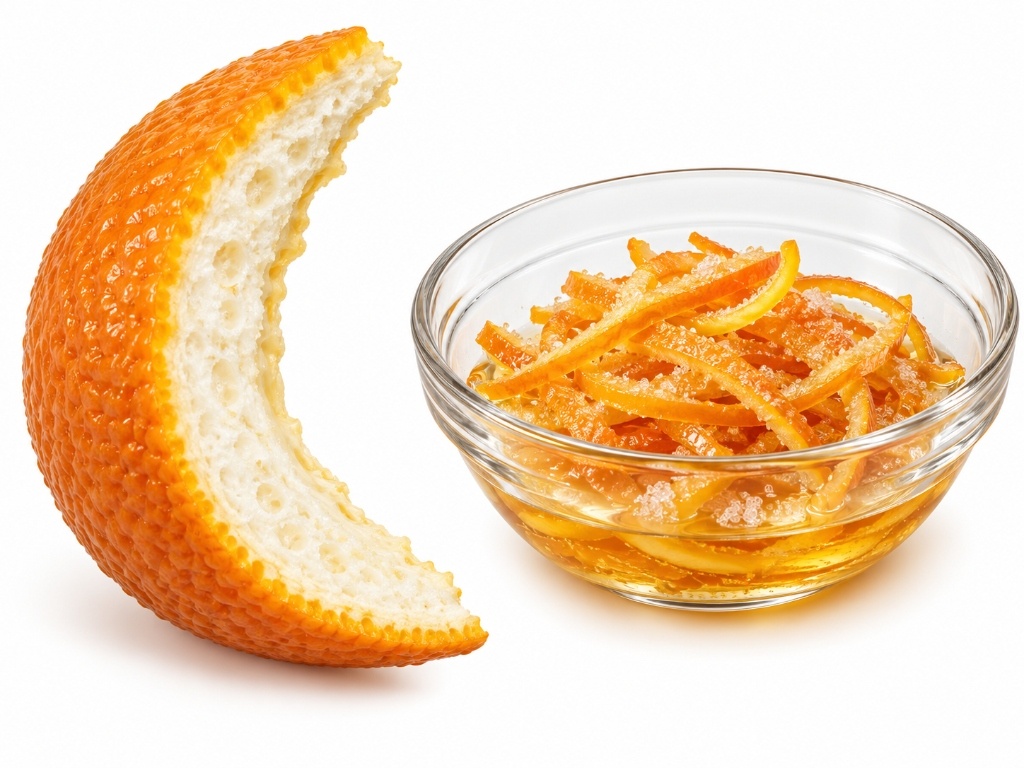
Orange Oleo-Saccharum Recipe
Oleo-saccharum (Latin for "oil-sugar") uses the osmotic pressure of dry sugar crystals to rupture citrus oil glands and dissolve aromatic essential oils without applying heat that could degrade fresh terpenes.
Ingredients
- Thinly peeled colored flavedo from 2 thoroughly washed, organic oranges (zero white albedo)
- 100 g granulated pure cane sugar
- 50 ml warm filtered water (to dissolve remaining sugar crystals)
Method
- Scrub oranges under warm running water and pat completely dry.
- Using a sharp Y-peeler, shave ribbons of colored zest, ensuring no white pith adheres to the back.
- Toss the peel strips with sugar in a glass bowl, muddle gently, cover, and let stand at room temperature for 1.5 to 2 hours until sugar is saturated with golden oil.
- Stir in 50 ml warm water until sugar fully dissolves. Strain out the spent peels.
- Store syrup in a sanitized, airtight bottle at 4°C (40°F) and use within 3 to 4 days.
Best Tea for Orange Boba
Jasmine Green Tea
The gold-standard base. Delicate night-blooming jasmine blossoms harmonize with citrus volatile esters. Steep 4 to 5 g of tea leaves per 150 ml water at 80°C (176°F) for 2 to 3 minutes, then chill rapidly.
Four Seasons Spring Oolong (Si Ji Chun)
Lightly roasted Taiwanese oolong offers floral orchid notes and a honeyed finish that anchors Valencia and Cara Cara orange juices.
Ceylon Black Tea
High-grown Ceylon tea provides brisk astringency and theaflavins that give the drink an amber hue and bold structure reminiscent of classic iced citrus black tea.
Rooibos and Hibiscus (Caffeine-Free)
Rooibos provides an earthy, naturally sweet herbal foundation. Hibiscus flower tisane adds brilliant natural crimson color and pleasant tartness that amplifies blood orange boba.
Fresh Orange Boba Tea Recipe
This recipe makes one refreshing 16-ounce iced fruit tea featuring fresh strained orange juice, jasmine green tea, and chewy boba toppings.
Signature Fresh Orange Jasmine Boba (16 oz)
Ingredients
- 120 ml freshly squeezed orange juice (strained through a fine sieve)
- 100 ml chilled jasmine green tea (brewed from 4-5 g leaves at 80°C for 2-3 min)
- 15 to 30 ml orange oleo-saccharum syrup or pure cane sugar syrup
- 50 g cooked honey tapioca pearls, crystal boba, or orange popping boba
- 140 g ice cubes (divided: 90 g for cocktail shaker, 50 g for serving glass)
- 1 thin fresh orange wheel (optional garnish)
Method
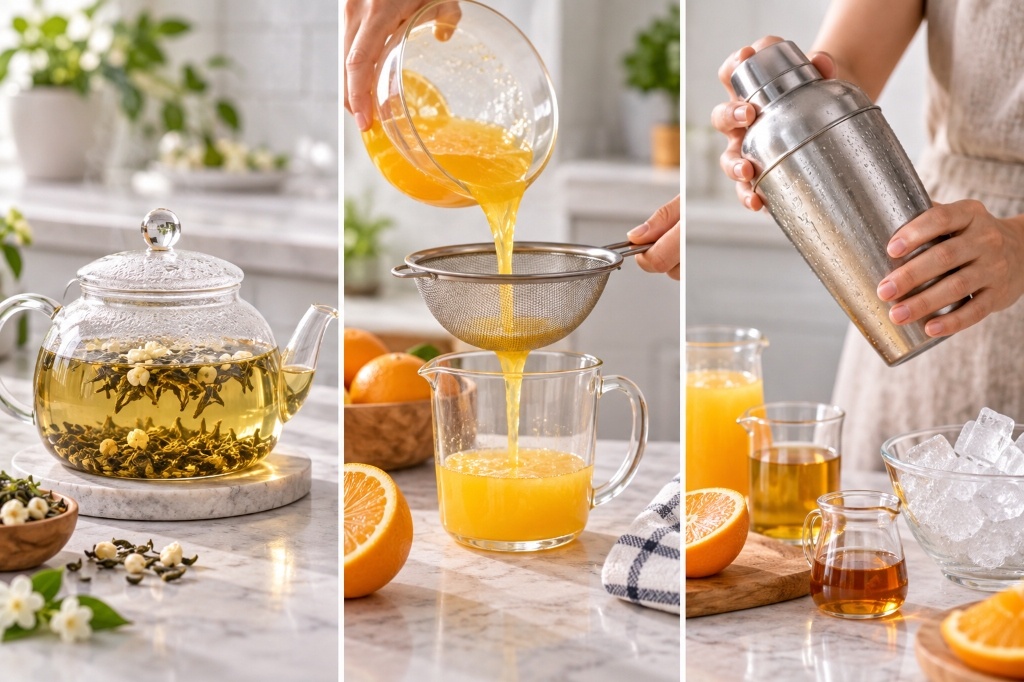
- Brew the Tea: Steep 4 to 5 g jasmine green tea leaves in 150 ml filtered water at 80°C for 2 to 3 minutes. Strain leaves and cool the tea concentrate rapidly in the refrigerator. Measure 100 ml for the drink.
- Juice & Fine-Strain: Wash whole oranges under running water before slicing. Squeeze to yield 120 ml juice. Pour through a fine-mesh sieve to catch seeds and coarse pulp particles that could clog a boba straw.
- Shake Over Ice: Combine chilled tea, strained orange juice, 15 to 30 ml syrup and 90 g ice in a cocktail shaker. Fasten lid securely and shake vigorously for 10 seconds until frosty and aerated.
- Assemble & Garnish: Place 50 g chosen boba topping into a 16 oz glass. Add 50 g fresh ice cubes. Pour the shaken citrus tea over top, press an orange wheel against the glass interior, and serve immediately with a wide 12 mm straw.
Orange Popping Boba
Orange popping boba consists of a translucent calcium alginate hydrogel membrane enclosing liquid citrus juice. Unlike chewy, starch-dense tapioca pearls, popping boba ruptures cleanly under light mastication to release a refreshing burst of liquid flavor.
The spherification chemistry relies on cross-linking between sodium alginate polymer chains and divalent calcium ions (calcium lactate gluconate). Because natural citrus acidity and calcium content can destabilize gel formation, commercial popping boba uses finely tuned buffers to maintain skin integrity.
Best Toppings for Orange Boba
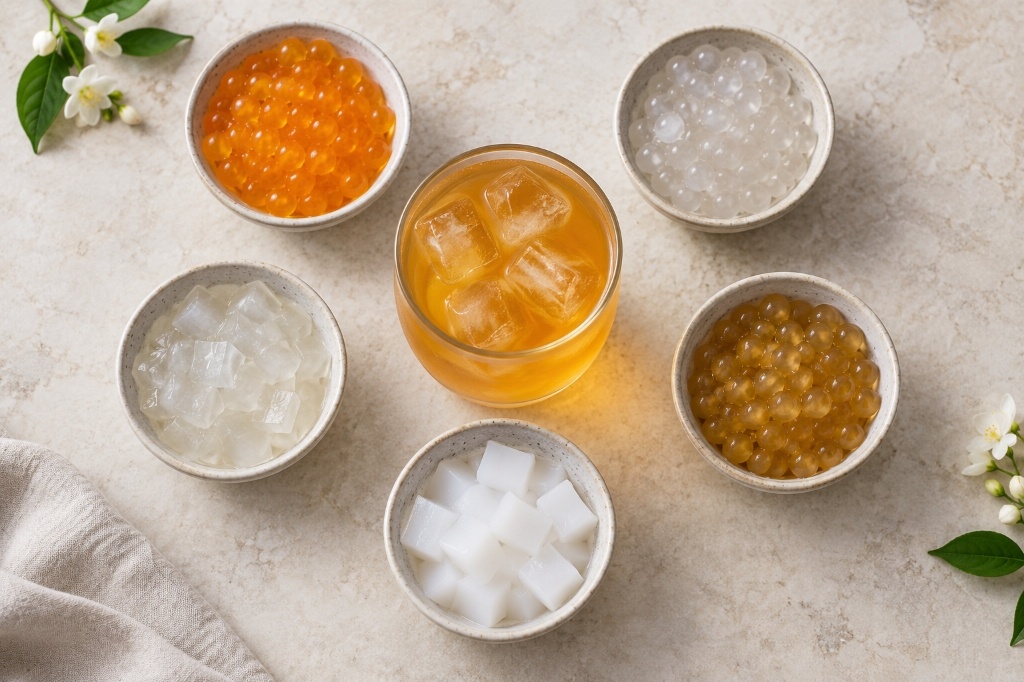
Crystal Boba (Agar / Konjac)
Translucent and subtly sweet with a snappy, jelly-like chew that lets the vibrant golden orange hue of the tea shine through.
Orange Popping Boba
Adds an invigorating second layer of tart citrus juice that explodes with every sip. For another citrus powerhouse, see our lemon boba tea guide.
Aloe Vera Jelly
Juicy, crisp cubes that deliver cooling crunch and clean botanical contrast to sweet-tart citrus.
Honey Tapioca Pearls
Warm chewy cassava pearls steeped in honey add classic bubble tea texture and round out sharp citrus acids.
Nata de Coco
Bacterially fermented coconut water cellulose providing a dense, bouncy texture that holds its structure in acidic tea.
Cheese Foam
Salted dairy cream foam floated as a distinct top layer provides a luxurious, creamy contrast without mixing into the acidic juice below.
Orange Boba Calories and Nutrition
Calorie content depends on juice volume, added oleo-saccharum syrup, portion size, and topping selections. A standard 16 oz fresh orange jasmine fruit tea with crystal boba typically ranges between 160 and 220 kcal. Choosing tapioca pearls or rich cheese foam increases total energy to 280 to 380+ kcal.
Fresh orange juice contributes natural Vitamin C (ascorbic acid), potassium, and citrus bioflavonoids, although adding refined syrups increases carbohydrate density.
Does Orange Boba Have Caffeine?
Pure orange juice, citrus peel syrup, and boba toppings contain zero caffeine. However, using green, black, or oolong tea bases introduces natural caffeine from Camellia sinensis leaves.
FDA reference data lists average caffeine levels of approximately 37 mg for green tea and 71 mg for black tea per 12 oz cup. For a completely caffeine-free beverage, brew with South African red rooibos or tart hibiscus tisane.
Is Orange Boba Vegan and Gluten-Free?
Clear orange fruit tea prepared with pure cane syrup and crystal boba or aloe jelly is naturally 100% vegan and gluten-free. Tapioca starch is derived from cassava root and contains no gluten proteins.
Avoid honey-soaked tapioca, dairy creamers containing sodium caseinate, and cheese foams if maintaining a strict vegan diet. Always confirm cross-contact safeguards at commercial cafes.
Fresh Juice Safety and Storage
Always wash and scrub citrus fruits under potable running water before cutting. Pathogens on outer rinds can easily transfer onto the blade and contaminate freshly squeezed juice.
FDA food safety guidance underscores that untreated fresh juice must be kept refrigerated at 4°C (40°F) or below. Consume fresh unpasteurized juice on the day of preparation. Homemade oleo-saccharum syrup should be refrigerated and used within 3 to 4 days.
How to Order Orange Boba at a Cafe
- Ask about juice type: Inquire whether the shop uses freshly squeezed juice, pasteurized juice, or concentrated syrup.
- Select your tea base: Choose jasmine green tea for crisp floral refreshment, Four Seasons oolong for roasted sweetness, or rooibos for caffeine-free sipping.
- Tune sweetness: If the cafe uses sweet Valencia oranges, ask for 50% or 30% sweetness to preserve natural citrus tartness.
- Choose light toppings: Opt for crystal boba or aloe vera jelly over heavy milk foam to keep the beverage refreshing.
Orange Boba Compared with Other Fruit Teas
| Drink | Main Flavor | Common Tea Base | Creamy Version | Good Topping |
|---|---|---|---|---|
| Orange Boba | Sweet-tart citrus | Jasmine green tea | Coconut cream or cheese foam | Crystal boba |
| Blood Orange Boba | Berry-like citrus | Green tea or hibiscus | Tested barista oat drink | Orange popping boba |
| Passion Fruit Tea | Sharp tropical fruit | Jasmine green tea | Uncommon | Aloe vera jelly |
| Mango Boba | Sweet tropical nectar | Oolong or green tea | Coconut milk | Mango popping boba |
| Peach Boba | Soft stone-fruit taste | Oolong or black tea | Dairy milk or cream | Peach popping pearls |
Common Problems and Fixes
| Problem | Likely Cause | Fix |
|---|---|---|
| Milk curdles | Citric acid brought dairy pH near 4.6 | Use clear tea or layer cheese foam on top |
| Plant milk separates | Acid destabilized plant proteins | Chill ingredients to 4°C and test a small portion |
| Bitter peel syrup | White albedo (pith) was peeled with zest | Shave only the thin colored flavedo layer |
| Juice turns bitter later | Limonin formed in navel orange juice | Juice navels right before serving or use Valencias |
| Tea tastes harsh | Excess tea leaf or over-steeping | Brew 4-5 g leaf per 150 ml at 80°C for 2-3 min |
| Straw clogs | Coarse pulp or seeds in the cup | Fine-strain juice and use a wide 12 mm boba straw |
| Drink is too sweet | Sweet fruit, syrup and toppings compounded | Start with 15 ml syrup and adjust after tasting |
| Weak orange aroma | Juice lacked volatile peel monoterpenes | Add 15 ml cold-extracted oleo-saccharum syrup |
The Bottom Line on Orange Boba
Orange boba tea is a radiant, crisp fruit tea that shines brightest when made with freshly strained citrus juice, fragrant chilled jasmine green tea, and translucent crystal pearls. Avoid curdling by skipping whole dairy milk, and unlock intense citrus perfume by extracting fresh flavedo oils into a simple oleo-saccharum syrup.
Frequently Asked Questions About Orange Boba
What is orange boba tea?
Orange boba tea is a cold drink made with fresh orange juice or syrup, brewed tea, ice and bubble tea toppings such as crystal boba or popping pearls.
What does orange boba taste like?
It tastes sweet, tart and intensely citrusy. For refreshing on-the-go fruit teas, try our ready-to-drink fruit boba cups. Jasmine tea adds a floral aroma, oolong brings light roasted notes, and black tea offers a brisk, malty finish.
Can I add milk to orange boba tea?
Citric acid can curdle dairy milk and split plant milks near pH 4.6. Use a clear tea base, or top with a separate cold layer of salted cheese foam or coconut cream.
Is orange boba made with real orange juice or syrup?
It can use freshly squeezed juice, bottled 100% juice, peel-infused oleo-saccharum syrup or commercial concentrate. Ask your cafe barista how they prepare their base.
Can I use store-bought bottled orange juice?
Yes. Opt for 100% pure juice with no added sugar. Pasteurized bottled juice is recommended for vulnerable individuals at higher risk from foodborne illness.
Is orange boba healthy?
Fresh juice provides Vitamin C and potassium, but total sugar and calories depend heavily on added sweeteners and boba toppings. Treat it as an occasional sweet beverage.
Does orange boba taste sour?
It has a bright, pleasant tartness that is balanced by cane syrup and ripe citrus sugars. Blood oranges and early-season fruit will taste noticeably sharper.
What is blood orange boba?
Blood orange boba uses pigmented red-fleshed oranges. Its rich anthocyanins produce a dramatic ruby color and a complex berry-citrus flavor.
What is orange cream boba?
Orange cream boba combines citrus juice with rich vanilla syrup and chilled coconut cream or a floating layer of salted cheese foam to mimic an orange creamsicle.
What is orange popping boba?
Orange popping boba is a sphere with a thin calcium alginate shell filled with sweet orange juice that bursts upon chewing.
How much caffeine is in orange boba?
It contains 25 to 35 mg of caffeine when brewed with jasmine green tea and 40 to 60 mg with black tea. A rooibos or hibiscus base is 100% caffeine-free.
How many calories are in orange boba?
A typical 16 oz drink ranges from 160 to 220 calories with crystal boba, or up to 350+ calories with brown sugar tapioca or cheese foam.
Why did my orange tea turn bitter?
Bitterness results from over-steeped tea leaves, white peel pith (albedo) entering your syrup, or delayed limonin development in squeezed navel oranges.
What toppings go best with orange boba?
Crystal boba, orange popping pearls, succulent aloe vera jelly, honey tapioca and nata de coco all provide complementary bites.
How long does fresh orange boba last?
Consume immediately after mixing. Keep fresh juice and brewed tea chilled in sealed containers, and discard homemade peel syrup after 3 to 4 days.
Sources and Editorial Review
The Bobalicious beverage development team validates formulation benchmarks, food safety standards, and commercial processing parameters against authoritative regulatory and academic databases:
- U.S. Food and Drug Administration (FDA): Safe Food Handling and Juice Sanitation Guidelines
- USDA FoodData Central: Nutritional Profiles for Fresh Orange Juice, Citrus Flavedo, and Brewed Tea
- U.S. Food and Drug Administration (FDA): Caffeine Intake and Beverage Concentration Benchmarks
- Critical Reviews in Food Science and Nutrition & PubMed: Casein Acid-Induced Coagulation and Dairy-Citrus Emulsion Stability
- Journal of Agricultural and Food Chemistry & PubMed: Limonin Formation and Delayed Bitterness Kinetics in Citrus Juices
- Food Chemistry & PubMed: Volatile Aroma Compounds in Sweet Orange Peel: D-Limonene and Valencene Identification


Comments