
Oolong Milk Tea Recipe: Ratios, Tea Types and Boba

Oolong Milk Tea Recipe: Ratios, Tea Types and Boba
This oolong milk tea recipe uses a strong tea concentrate, so the flavour stays clear after you add milk and ice. Roasted oolong gives the drink toasted, nutty and woody notes. Lighter oolong makes a softer, more floral cup. The recipe makes 1 large drink. You can use whole milk or oat drink, add warm tapioca pearls, and change the sweetness without changing the tea strength.
Quick oolong milk tea recipe:
- Steep 10 g roasted oolong in 250 ml water at 90°C for 6 minutes.
- Strain the tea and stir in 25 ml brown sugar syrup while it is hot.
- Add 100 ml cold whole milk or barista oat drink.
- Pour the drink over ice and 50 g warm cooked tapioca pearls in a 16 oz glass.
This 1:25 leaf-to-water ratio makes a concentrated brew that keeps its rich tea depth once milk and ice melt into the cup.
For tea enthusiasts exploring regional variations, compare roasted oolong with our Hokkaido milk tea guide, Okinawa milk tea recipe, brown sugar milk tea, and learn what is boba.
What is oolong milk tea?
Oolong milk tea combines brewed oolong tea, milk and sweetener. Bubble tea shops may serve it hot or iced, with tapioca pearls or another topping.
Oolong comes from the tea plant, Camellia sinensis. Producers wither, bruise, oxidise, heat and dry the leaves. The exact process changes with the tea style and producer.
Oolong sits between green and black tea in its processing, though a fixed oxidation percentage does not define every oolong. Some styles taste floral and fresh. Others taste roasted, woody, fruity or nutty.
What does oolong milk tea taste like?
The taste depends on the oolong. A roasted oolong milk tea can taste of baked grain, toasted nuts, honey, wood or cocoa. Milk softens the dry edge of the tea and gives the drink a fuller texture.
A lightly oxidised, lightly roasted oolong may taste floral, creamy or fresh. Heavy milk and dark syrup can cover those softer aromas. Use less milk and sugar with delicate tea.
Brown sugar syrup adds caramel and molasses notes. Tapioca pearls add sweetness and a chewy texture, though they are optional.
Why strong tea matters
Standard tea instructions often use about 2 to 3 g of leaf for 200 to 250 ml water. That strength can taste weak once milk and ice enter the glass.
The recipe here uses 10 g leaf in 250 ml water, a 1:25 ratio. This is a practical cafe-style concentrate rather than a universal rule. Leaf shape, roast, age and personal taste can all change the best amount.
Start with the stated ratio. Use 8 g next time if the drink tastes too strong. Use 12 g if milk still hides the tea.
How oxidation and roasting change oolong
Tea makers bruise oolong leaves to expose plant compounds to oxygen and enzymes, including polyphenol oxidase. This changes catechins and other compounds that affect colour, aroma and astringency.
Oxidation is one part of production. Cultivar, growing place, harvest, rolling, heating and storage also affect the finished tea.
Catechins include epigallocatechin gallate, often shortened to EGCG. As oxidation proceeds, some catechins react and form compounds that include theaflavins and thearubigins. These compounds affect colour and taste, though their amounts vary widely between teas. They are more strongly linked with black tea than with every oolong style.
Some lightly processed oolongs contain floral aroma compounds such as nerolidol. The cultivar and production method decide how much reaches the cup, so a light roast does not guarantee a jasmine-like scent.
Roasting changes the aroma again. Tea roasting is sometimes called hongpei. Heat can produce alkylpyrazines and other aroma compounds linked with roasted, nutty and baked notes. This family includes trimethylpyrazines, though the exact mixture depends on the tea and roast. A 2022 study of Qingxin oolong found clear changes in aroma compounds at different roasting levels.
Roasted does not always mean charcoal-roasted. Many producers use electric roasting equipment. Check the seller's description if the fuel or process matters to you.
Milk proteins can interact with tea polyphenols. This can change astringency and aroma release. The effect depends on the tea, milk, temperature and recipe. Cold milk does not create a guaranteed chemical reaction that fixes every bitter brew.
Best oolong tea for milk tea
Medium or dark roasted oolong usually holds up well in milk. The right choice still depends on the taste you want:
| Oolong style | Common character | Milk tea result | Best pairing |
|---|---|---|---|
| Dong Ding | Toasted grain, honey, nuts and ripe fruit; roast varies | Balanced and tea-forward | Whole milk or oat drink |
| Da Hong Pao or Wuyi rock tea | Mineral, woody, cocoa-like and roasted | Darker and firmer | Brown sugar or condensed milk |
| Tieguanyin | Floral to roasted, depending on production | Floral with a light roast; fruity and toasted with a darker roast | Fresh milk and moderate sugar |
| Four Seasons Spring | Floral, fresh and lightly creamy | Soft and fragrant | Less milk and 0% to 30% sweetness |
Dong Ding oolong
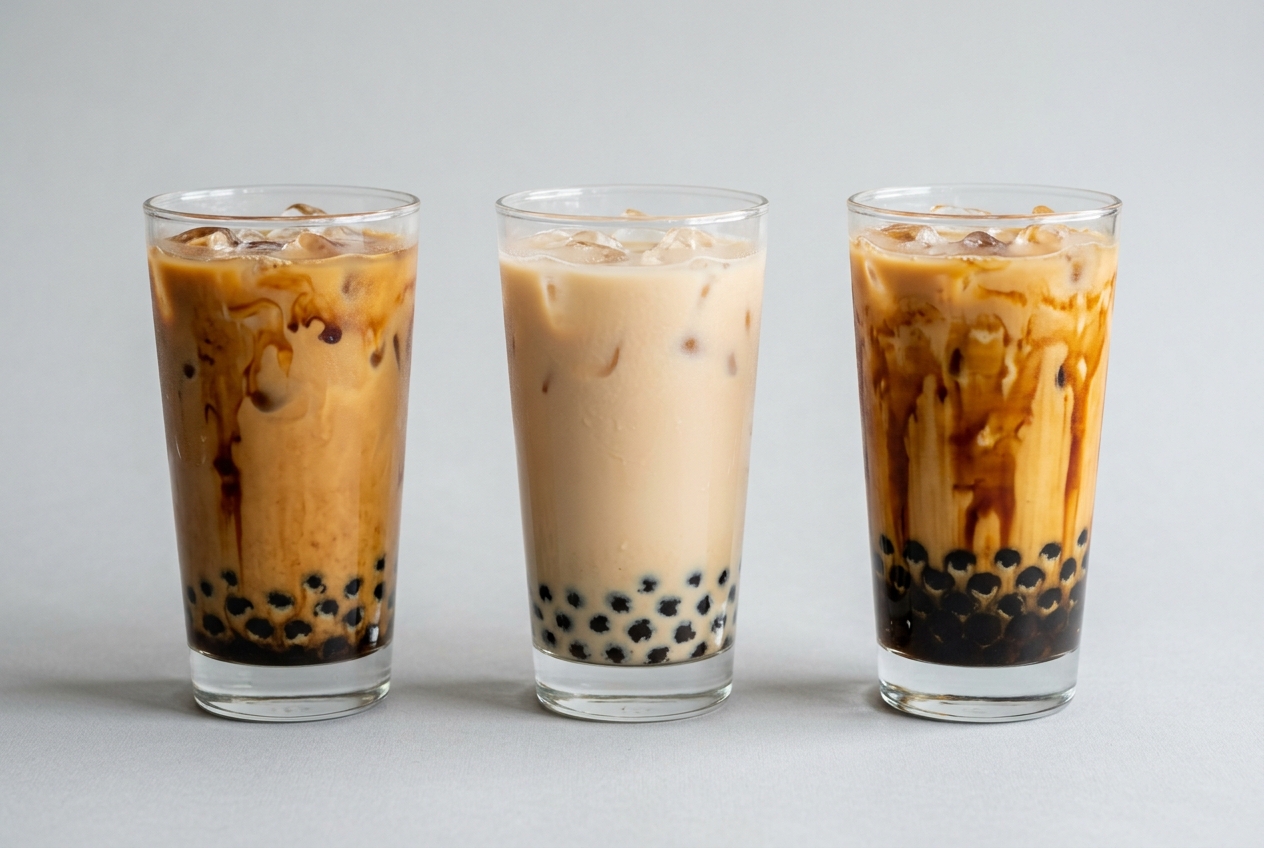
Dong Ding, also translated as Frozen Summit, is a good starting choice because many versions have enough roast and body for milk tea. The name is linked with a Taiwanese tea style and production area, but products sold under the name can differ in cultivar, origin and roast.
Choose a medium-roasted loose-leaf tea with a clear date and brewing instructions. Avoid assuming that every Dong Ding is charcoal-roasted.
Da Hong Pao
Da Hong Pao is a Wuyi rock tea style from China. It can give milk tea mineral, woody and cocoa-like notes. Its stronger taste suits brown sugar syrup. Use a little less syrup at first. The tea and sugar can both taste dark and intense.
Tieguanyin
Tieguanyin ranges from green and floral to roasted and fruity. Check the roast description before buying it for milk tea. A greener version suits a fresh milk tea with less sugar. A roasted version works better with boba and brown sugar.
Four Seasons Spring
Four Seasons Spring, also called Si Ji Chun, often has a floral scent. It can make a light milk tea, though a large amount of cream or syrup may hide its aroma. Use 70 to 90 ml milk instead of 100 ml when the tea tastes delicate.
Oolong milk tea compared with other tea bases
Roasted oolong has a toasted and woody taste that remains clear with milk. Jasmine green tea is lighter and more floral, so it usually needs less milk and syrup. Pair lighter fruit flavours with Bobalicious Jasmine Green Tea.
Thai tea commonly uses a strong black tea blend with sugar and evaporated or condensed milk. It is usually sweeter and richer than this oolong recipe. Compare variations in our Thai tea calories guide.
Choose roasted oolong when you want tea depth without the spice or heavy sweetness found in some other milk teas.
Oolong milk tea recipe
This recipe makes 1 iced 16 oz drink. Preparation takes about 15 minutes if the tapioca is already cooked.
Ingredients
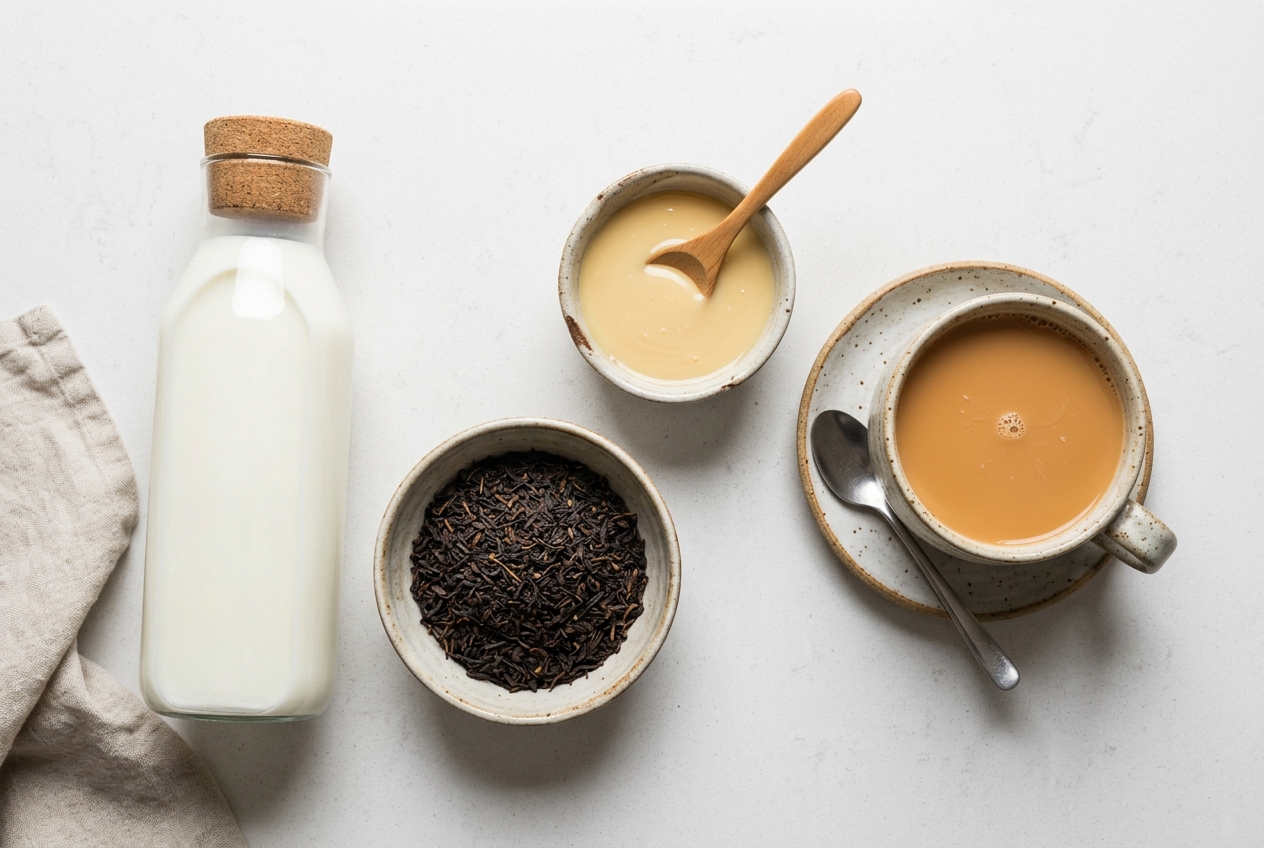
- 10 g loose-leaf roasted Dong Ding oolong, or another medium-roasted oolong
- 250 ml filtered water
- 25 ml brown sugar syrup
- 100 ml whole milk or barista oat drink
- 50 g warm cooked tapioca pearls
- About 1 cup ice
Equipment
- Kettle with temperature control, or a thermometer
- Teapot or heat-safe jug with a lid
- Fine tea strainer
- Measuring jug or kitchen scale
- 16 oz glass
- Wide straw if using boba
Step-by-Step Instructions
- Heat the water: Heat 250 ml water to about 90°C. Water from 85°C to 95°C can work, depending on the tea. Use the lower end for a lighter oolong. Use the higher end for tightly rolled or dark roasted leaves. Boiling water is not always harmful, but it can make some teas taste rough when paired with a long steep.
- Brew the concentrate: Put 10 g oolong in a covered teapot or jug. Add the hot water and steep for 6 minutes. Strain the tea fully. Do not press or squeeze the leaves. Taste a small spoonful. It should taste stronger than plain tea because milk and ice will dilute it.
- Add the syrup: Stir 25 ml brown sugar syrup into the hot tea. Warm tea dissolves thick syrup more easily than a cold drink. Start with 15 ml if you prefer light sweetness. You can add more after mixing in the milk.
- Add the milk: Pour in 100 ml cold whole milk or barista oat drink. Stir until the colour looks even. Taste the mixture before adding ice. The flavour will become softer as the ice melts.
- Assemble the drink: Put 50 g warm cooked tapioca pearls in a 16 oz glass. Fill the glass with ice, then pour in the milk tea. Stir and serve at once. Tapioca pearls become firm if they sit in a cold drink for too long.
How to make brown sugar syrup
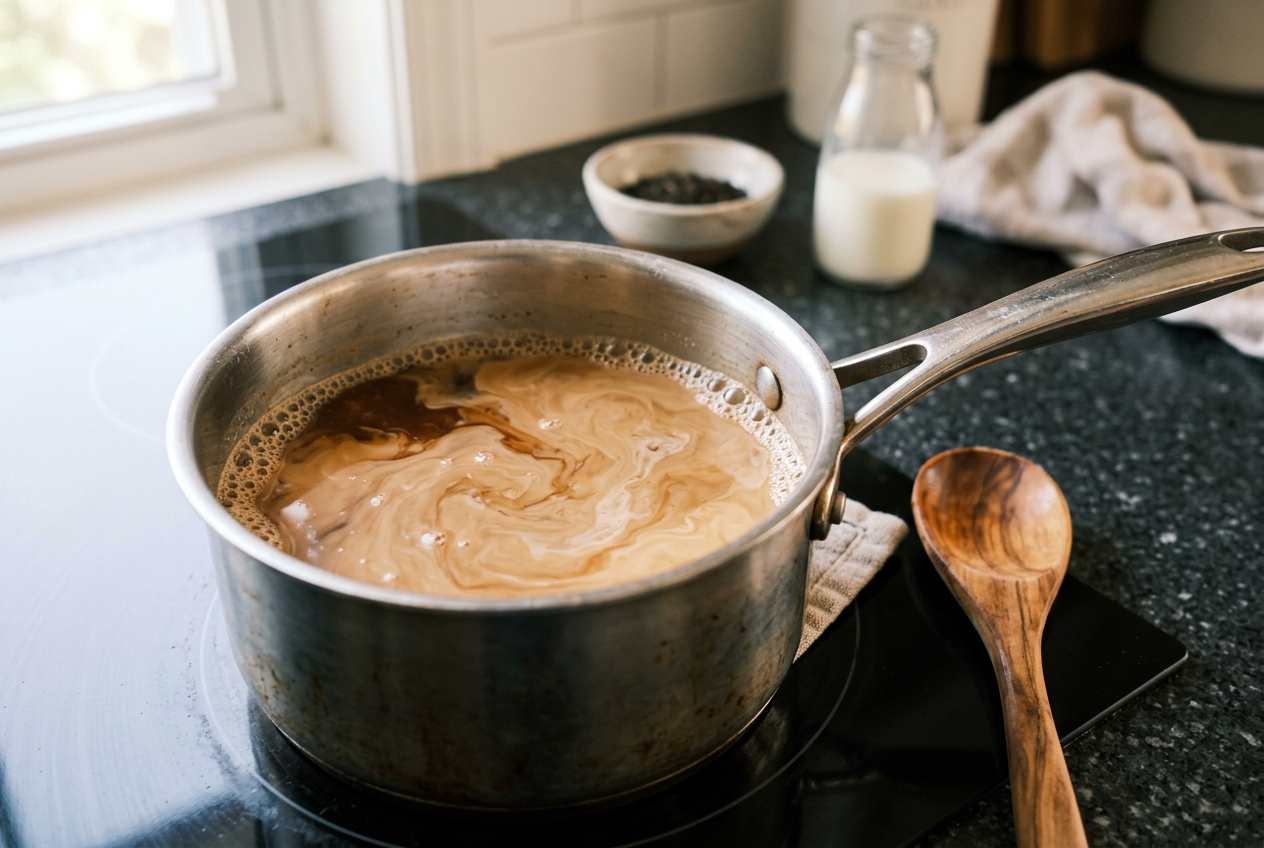
Put 50 g dark brown sugar or muscovado and 40 ml water in a small saucepan. Heat gently and stir until the sugar dissolves. Simmer for 2 to 3 minutes. Remove the pan before the syrup becomes very thick because it will thicken as it cools. Store extra syrup in a clean covered container in the fridge.
Hot oolong milk tea
Leave out the ice and pearls, or serve the pearls in a heat-safe cup. Brew the tea as written, then add the syrup. Warm the milk separately until steaming. Do not boil it. Mix it with the tea and serve after checking the temperature.
Dairy-free oolong milk tea
Barista oat drink gives a creamy result and usually mixes well with strong tea. Soy drink can also work, though its flavour is easier to notice. Check the label for added sugar. Sweetened plant drinks may need less syrup. Let the tea cool for 1 to 2 minutes before adding the milk, and stir gently.
Oolong boba tea calories
Calories depend on the milk, syrup, pearls and portion. The supplied report gives these planning estimates for a 16 oz or 500 ml drink:
| Drink | Sweetness | Estimated calories | Carbohydrate | Estimated caffeine |
|---|---|---|---|---|
| Oolong milk tea with tapioca | 100% | 315 kcal | 65 g | 42 mg |
| Oolong milk tea with tapioca | 50% | 235 kcal | 47 g | 42 mg |
| Oat oolong milk tea | 30% | 185 kcal | 36 g | 42 mg |
| Unsweetened fresh-milk oolong tea | No added sugar | 125 kcal | 9 g | 42 mg |
For an accurate home total, add the label values for measured milk, syrup and cooked pearls. Brewed tea adds very few calories on its own. For broader topping comparisons, explore our boba calories hub.
Does oolong milk tea contain caffeine?
Yes. Oolong tea naturally contains caffeine. The final amount changes with the leaf, dose, water temperature, steep time and serving size. The report estimates 42 mg for a 16 oz serving. L-theanine also occurs in tea, but the amount varies.
How to order oolong milk tea
Start with 30% or 50% sweetness if you want to taste the tea. A dark roasted oolong may still taste clear with brown sugar and boba. Choose regular ice for the shop's intended balance. Less ice can mean a stronger drink, though some shops fill the extra space with more prepared milk tea.
Tapioca pearls suit roasted oolong. Grass jelly gives a softer herbal taste. Adding several toppings raises the sugar and carbohydrate total. Ask which oolong the shop uses—Dong Ding, Tieguanyin and generic oolong powder taste very different.
Common problems and fixes
- Why is my oolong milk tea watery? The brewed tea may be too weak for the milk and ice. Use the 1:25 concentrate, reduce the milk, or chill the tea before assembly so less ice melts.
- The tea tastes bitter: Lower the water temperature to 85°C or shorten the steep to 4 or 5 minutes. Do not squeeze the leaves after brewing.
- The drink tastes flat: Use fresh tea and filtered water. Increase the leaf dose before making the steep much longer.
- The milk hides the oolong: Cut the milk to 70 or 80 ml. Choose a medium or dark roasted tea, or lower the syrup amount.
- The oat drink separates: Let the tea cool briefly before adding the oat drink. Use a barista product and stir gently.
- The boba turns hard: Cook pearls according to the package and keep them warm in syrup. Add them just before serving.
Storage and safety
Storage Guidelines: Keep milk and plant drinks refrigerated. Follow use-by dates and discard a finished drink that has sat at room temperature for an unsafe period. Freshly cooked tapioca is best within a few hours.
Safety Notice: Boba can cause choking, especially in young children. Serve it only to people who can chew and swallow it safely. Check tea powders, creamers, syrups and toppings for allergens.
Frequently Asked Questions
What does oolong milk tea taste like?
Roasted oolong milk tea can taste of toasted grain, nuts, honey, wood or cocoa. Lighter oolong gives a more floral drink. Milk makes either style softer and creamier.
Why is my homemade oolong milk tea watery?
The tea was probably brewed at normal drinking strength. Use 10 g leaf in 250 ml water to make a concentrate, then add the milk and ice.
Which oolong tea is best for milk tea?
A medium-roasted Dong Ding is a useful starting choice. Da Hong Pao and roasted Tieguanyin also work. Choose by roast and taste, not the name alone.
Does oolong milk tea have caffeine?
Yes. The amount varies with the leaf, dose, water temperature and steep time. The report estimates 42 mg for its recipe, but that is not a fixed value for every drink.
Can I use tea bags?
Yes. Use enough bags to make a strong concentrate and check the leaf weight on the box. Small tea particles may become bitter faster, so taste after 4 minutes.
Can I make oolong milk tea without boba?
Yes. Tapioca pearls are optional. Tea, milk and sweetener make the base drink.
Is oolong milk tea healthy?
It can fit into a varied diet. Sweetened versions with boba can contain a large amount of sugar and carbohydrate. Check the full recipe or label.
Is oolong milk tea gluten-free?
Plain tea, milk and sugar do not usually contain gluten. Check flavoured powders, creamers, syrups and toppings for cross-contact.
Sources and Scientific References
- Food Bioscience: Aroma compounds in Qingxin oolong at different roasting levels.
- Food Chemistry: Interactions between tea polyphenols and milk caseins.
- Journal of Agricultural and Food Chemistry: Volatile terpenes and alkylpyrazines during tea roasting.
- US Food and Drug Administration (FDA): Caffeine content and dietary guidance in brewed tea.


 Badge-157x140.png)
Comments