
Okinawa Milk Tea: Kokuto Black Sugar, Taste and Recipe
Okinawa milk tea gets its main flavour from kokuto, a dark cane sugar with caramel, roasted and lightly bitter notes. The name appears on bubble tea menus around the world. Recipes differ by shop, so the tea may use black tea, roasted oolong, fresh milk, creamer, tapioca pearls or no topping at all. This guide explains kokuto, taste, calories, tea choices and an Okinawa milk tea recipe for home use.
Quick answer: Okinawa milk tea combines tea, milk and kokuto, a non-centrifugal cane sugar linked with Okinawa. The sugar gives the drink roasted, caramel-like and lightly bitter notes. It may be served hot or iced, with tapioca pearls as an optional topping. The drink should not be confused with buku-buku tea, a traditional Okinawan foamed drink made with roasted-rice water and tea. Okinawa milk tea is a bubble tea menu style.
For the authentic cafe-style brew, pair strong Assam black tea or roasted oolong with dark kokuto syrup and classic chewy tapioca pearls. Discover our complete guide to what is boba, and compare regional Japanese styles with our Hokkaido milk tea guide and brown sugar milk tea recipe.
What is Okinawa milk tea?
Okinawa milk tea is a modern milk tea style flavoured with Okinawan kokuto or a similar dark cane sugar. Most versions combine strong black tea, milk and sugar. Bubble tea shops may add tapioca pearls and ice.
Kokuto gives the drink its dark caramel taste. Producers make this non-centrifugal cane sugar by pressing fresh sugarcane and boiling down the juice without separating the molasses by centrifuge.
What is kokuto black sugar?
Kokuto is a dark non-centrifugal cane sugar. In Japanese, kokuto is written kokuto and means black sugar. Japan's Ministry of Agriculture, Forestry and Fisheries lists Okinawa Kokuto as geographical indication Registration No. 172. The official description says producers press fresh Okinawan sugarcane and boil down the extracted juice as it is.
The registered product comes from Okinawa Prefecture. The Okinawa brown sugar cooperative links current production for wider shipment with 8 islands:
- Iheya
- Ie
- Aguni
- Tarama
- Kohama
- Iriomote
- Hateruma
- Yonaguni
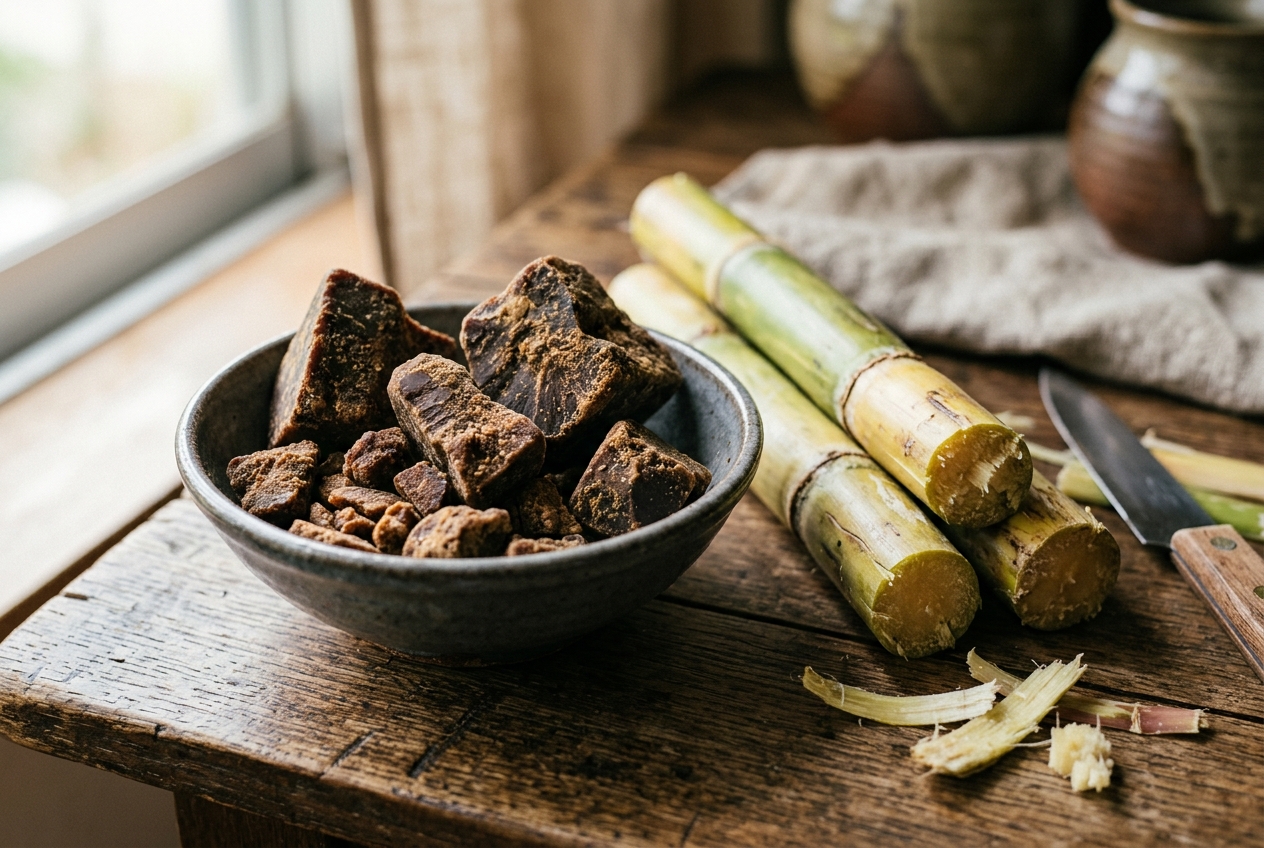
Soil, weather, cane and factory method can change the colour, aroma, hardness and taste. Kokuto from one island may taste different from another. Kokuto has about 400 years of recorded sugar-making history in Okinawa. The official geographical indication record traces production to 1623, when a Ryukyu Kingdom mission brought sugar-making knowledge from Ming China.
A kokuto black sugar milk tea should get its main sweetness from kokuto. Check the ingredient list or ask the shop because the menu name alone does not confirm the sugar source.
Kokuto, brown sugar and muscovado
These sugars may look similar, but their production and taste can differ:
| Sugar | Basic production | Typical taste | Use in milk tea |
|---|---|---|---|
| Okinawa kokuto | Fresh cane juice boiled down without centrifuging | Deep cane, caramel, roasted and lightly bitter | Closest match for Okinawa milk tea |
| Muscovado | Dark, minimally refined or unrefined cane sugar with molasses | Strong molasses and toffee | Useful substitute |
| Commercial brown sugar | Often refined sugar mixed with molasses, though methods vary | Familiar caramel sweetness | Easy substitute with a simpler taste |
| White sugar | Highly refined sucrose | Clean sweetness | Sweetens without kokuto's darker flavour |
Brown sugar has no single production method. Some manufacturers mix refined sugar with molasses. Others retain part of the cane molasses during processing. Product standards also differ by country.
Read the ingredient list. A product labelled Okinawa-style brown sugar may contain refined sugar, molasses or imported cane sugar. Look for Okinawa Kokuto when origin matters.
What does Okinawa milk tea taste like?
Okinawa milk tea taste depends on the sugar, tea and milk. A well-balanced cup tastes malty, creamy and darkly sweet. Kokuto can add roasted grain, caramel, molasses and slight bitterness. Some drinkers describe the combined taste as smoky or similar to malted caramel.
Assam black tea adds malt and tannin. Roasted oolong adds toasted or woody notes. Whole milk softens bitterness and gives the drink more body. A full-sugar cafe version can taste mostly of syrup. Lower sweetness lets the tea and cane flavours remain easier to notice.
Kokuto may also have a faint savoury or mineral note. The official Okinawa Kokuto description mentions umami, minerals, polyphenols and slight bitterness. These details describe taste and composition. They do not make a sugary drink suitable as a mineral supplement.
Why kokuto tastes roasted and caramel-like
Heat removes water from sugarcane juice and changes its aroma. The Maillard reaction can occur between amino compounds and reducing sugars, including simple hexose sugars, during later heating stages.
Research on non-centrifugal cane sugar found pyrazines, furans and other aroma compounds. Longer high-temperature heating produced more Maillard reaction products. Alkylpyrazines can smell nutty, toasted or roasted. Some furans and furanones can add caramel, bready, earthy or fruity notes.
The research report also names maltol and isomaltol. Their amounts will depend on the cane and production method. A product label cannot tell you the exact aroma mixture. Heating drives several reactions as the juice loses water. These include dehydration, Maillard reactions and some heat-driven breakdown of sugar compounds.
Minerals in kokuto
Kokuto keeps more of the non-sugar material from cane juice than highly refined white sugar. This can include potassium, calcium, magnesium and iron. The supplied research report gives these figures per 100 g:
| Nutrient | Okinawa kokuto | Commercial brown sugar | White sugar |
|---|---|---|---|
| Potassium | 1,100 mg | 140 mg | 2 mg |
| Calcium | 240 mg | 83 mg | 1 mg |
| Magnesium | 31 mg | 9 mg | 0 mg |
| Iron | 4.7 mg | 0.7 mg | 0.05 mg |
| Sucrose | 80% to 85% | 93% to 95% | About 99.9% |
These are report figures, not a universal profile for every brand. Research comparing Japanese and Southeast Asian non-centrifugal sugars found clear differences in minerals and aroma compounds between products. A drink recipe uses far less than 100 g of sugar. The recipe below starts with 30 g kokuto, and some syrup remains for the glass. Check the package when you need product-level nutrition. Kokuto still supplies sugar and calories. Its mineral content does not cancel those amounts.
Okinawa, Hokkaido and brown sugar milk tea
Menu names are not always fixed recipes. Ask the shop what it uses if an ingredient matters to you:
| Drink style | Main menu idea | Common taste | Usual appearance |
|---|---|---|---|
| Okinawa milk tea | Tea and milk sweetened with kokuto or dark cane sugar | Roasted, malty and dark caramel | Amber brown |
| Hokkaido milk tea | Rich milk tea linked with Hokkaido dairy or a creamy flavour style | Creamy, milky, custard-like and sometimes vanilla or butterscotch | Pale beige |
| Brown sugar milk tea | Milk or milk tea with dark brown sugar syrup | Sweet molasses or caramel | Beige with syrup streaks |
| Classic Taiwanese milk tea | Black tea, milk or creamer and sweetener | Tea-forward, creamy and sweet | Light brown |
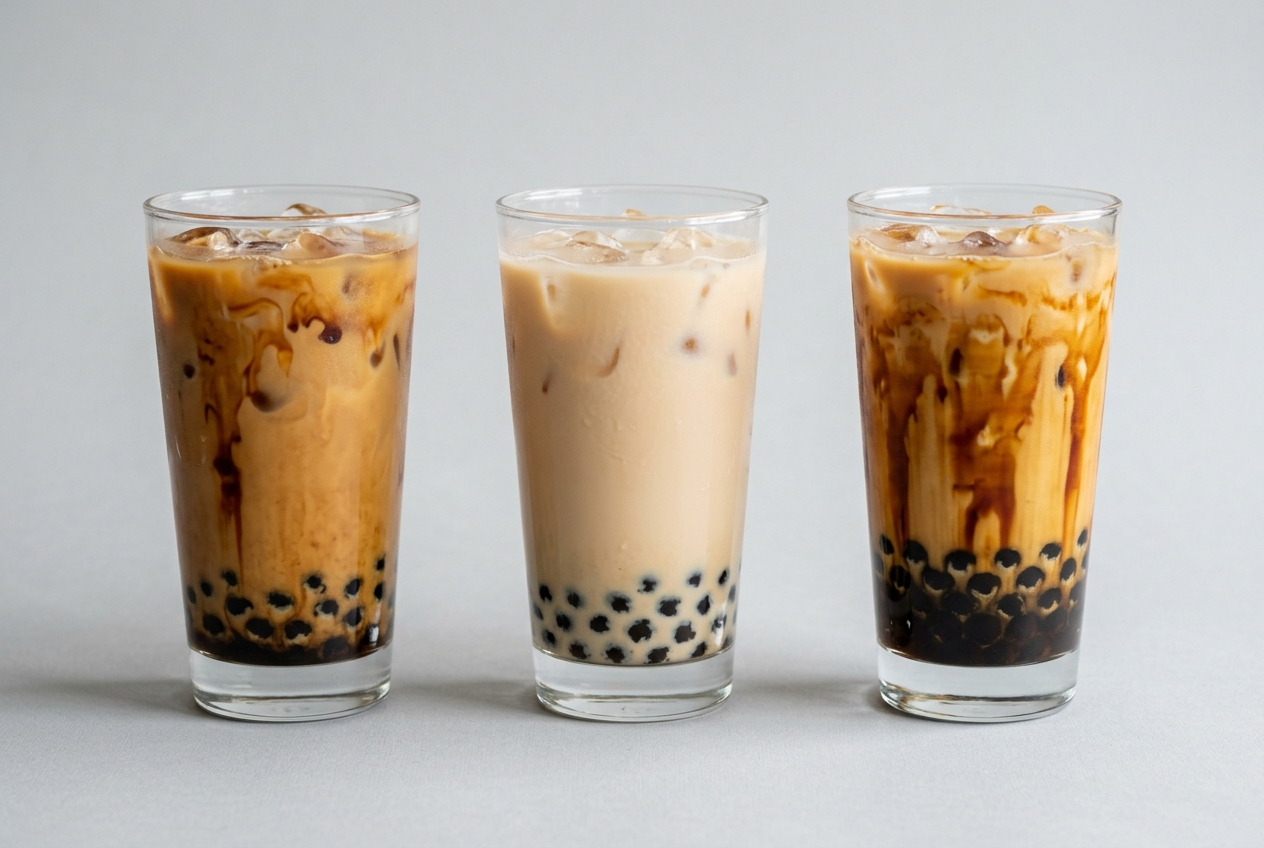
Brown sugar milk tea may contain tea or may use only milk, syrup and pearls. The recipe depends on the seller. Learn more in our Hokkaido milk tea guide and brown sugar milk tea recipe.
Okinawa milk tea recipe
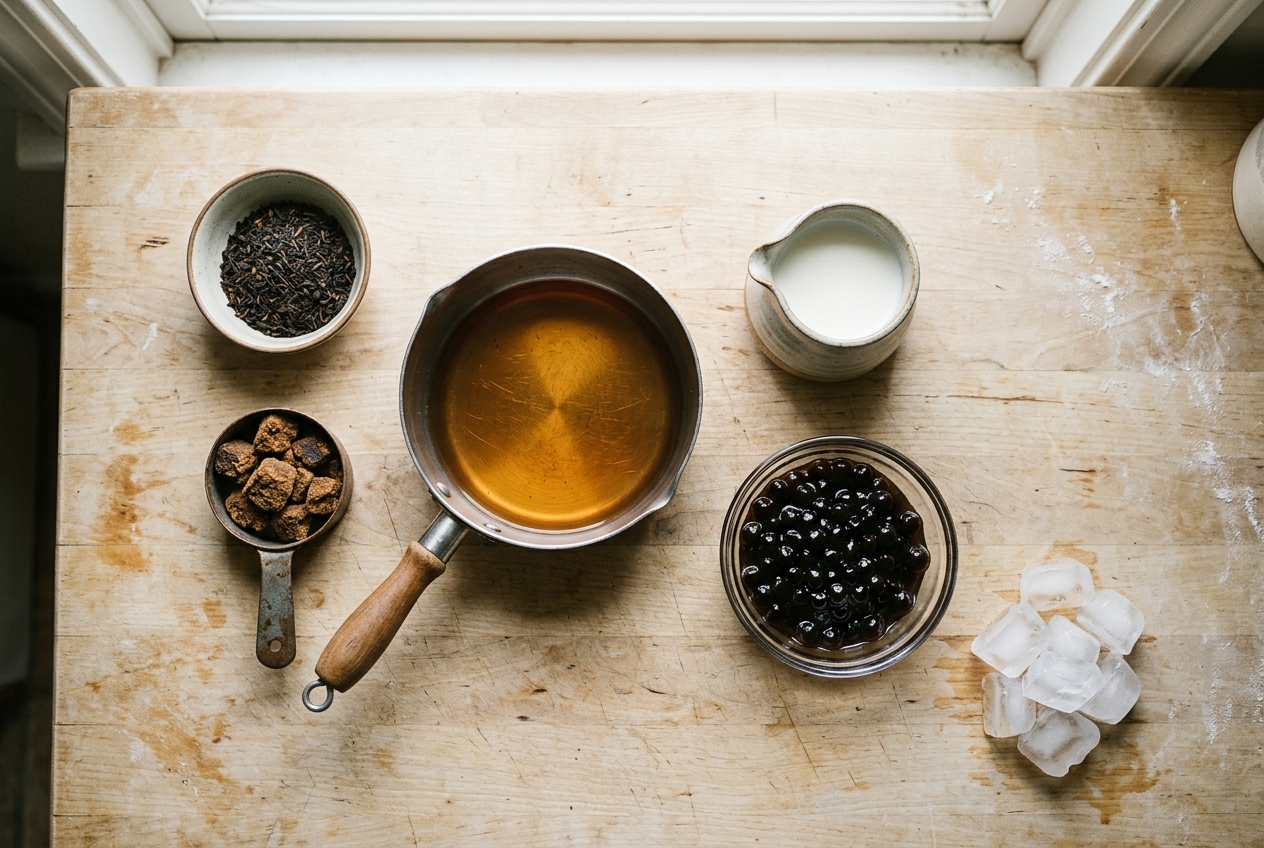
This Okinawa milk tea recipe makes 1 large iced drink. It uses Assam for a strong tea base and kokuto for the syrup.
Ingredients
- 7 g loose Assam black tea, or roasted oolong
- 150 ml filtered water for tea
- 30 g crushed kokuto
- 20 ml water for syrup
- 120 ml whole milk or oat drink
- 50 g warm cooked tapioca pearls
- Ice
Step-by-Step Instructions
- Make the kokuto syrup: Put 30 g crushed kokuto and 20 ml water in a small saucepan. Heat gently until the sugar dissolves. Simmer for about 3 minutes. Stir and watch the pan because a small batch can burn quickly. Remove it when the syrup looks glossy and slightly thicker.
- Brew the tea: Heat 150 ml water to about 95°C. Add 7 g Assam tea and steep for 4 minutes. Strain the leaves. Avoid pressing them hard because this can push more bitter compounds into the cup.
- Add the syrup and milk: Stir about 25 ml warm kokuto syrup into the hot tea. Add 120 ml milk and mix. Taste the drink before using the remaining syrup. Kokuto brands differ in bitterness and strength.
- Assemble the drink: Put warm tapioca pearls in a 16 oz glass. Drizzle a small amount of syrup around the inside of the glass if you want visible streaks. Fill the glass with ice. Pour in the milk tea and serve with a wide straw. Drink it soon. Cooked tapioca becomes firm as it cools and sits.
Hot Okinawa milk tea
Leave out the ice and warm the milk gently. Do not boil the milk after adding it to the tea. Serve the pearls separately or use a heat-safe cup and wide straw. Check the drink temperature before serving.
Oat milk version
Use 120 ml oat drink in place of whole milk. A barista product may give a thicker texture. Oat drinks differ in added sugar and oil. Check the label and reduce the kokuto syrup when the milk is already sweetened.
Assam or roasted oolong
Assam is the simplest choice for a strong cafe-style cup. Its malty taste can stand up to milk and dark sugar. Black tea develops dark compounds called thearubigins during oxidation. They contribute colour, body and part of the brisk taste associated with strong black tea.
Roasted oolong gives a softer tannin level with toasted notes. Tieguanyin refers to a tea cultivar and style, but not every Tieguanyin is heavily roasted. Check the seller's roast description. For lighter floral pairings, consider green tea bubble tea.
Blended tea option
A blend can soften a very strong Assam base. Try 4 g Assam, 1 g Ceylon and 1 g lightly roasted oolong in place of the 7 g Assam. Steep the blend for 4 minutes at about 95°C, then taste it with milk before changing the leaf amount.
Okinawa milk tea powder
Powder mixes give a quick and consistent drink. They may already contain sugar, creamer, milk powder, flavouring or tea extract. Read the label before adding milk or syrup. A 3-in-1 powder may need only water and ice, while a flavour powder may still need brewed tea and creamer. Powder does not prove that the drink contains Okinawa Kokuto. Check the ingredient list and origin statement when that matters.
Okinawa milk tea calories
Calories depend on milk, syrup, pearls and portion size. The report gives these estimates for a 16 oz or 500 ml drink:
| Drink | Estimated calories | Carbs | Sugars | Fat | Potassium |
|---|---|---|---|---|---|
| Unsweetened base | 140 kcal | 10 g | 9 g | 7.5 g | 180 mg |
| With boba, 50% sweet | 315 kcal | 54 g | 28 g | 8 g | 260 mg |
| With boba, full sweet | 410 kcal | 76 g | 48 g | 8.5 g | 380 mg |
| Oat drink, 30% sweet | 245 kcal | 42 g | 18 g | 4 g | 220 mg |
These values are planning estimates. For a home calculation, add the values for measured milk, kokuto and cooked pearls. Plain brewed tea adds very few calories. Most calories come from milk, syrup and toppings.
Is Okinawa milk tea healthy?
Okinawa milk tea can contain more minerals than a version made with refined white sugar. The difference does not turn it into a low-sugar drink. A full-sweet drink with boba can contain a large amount of added sugar. Choose a smaller size, less syrup or no pearls if you want to reduce it.
People managing diabetes or another medical condition should use the measured carbohydrate value for the actual recipe or product.
How to order it
Start with 30% or 50% sweetness. Kokuto has a strong taste, so a lower syrup level can still give a clear flavour. Choose less ice only if you prefer it. Less ice does not always mean fewer calories because some shops add more prepared drink.
Tapioca pearls suit the dark sugar profile. Grass jelly adds a cool herbal taste and a softer sweetness. Ordering both increases the topping portion. Ask whether the shop uses Okinawa Kokuto, muscovado, brown sugar syrup or powder. This answer explains more than the menu name alone.
Common problems
- The drink tastes too sweet: Use less syrup and add more unsweetened tea. Reduce or skip sweetened pearls.
- The tea tastes bitter: Shorten the steep or use slightly less leaf. Strain the tea after 4 minutes.
- The sugar syrup burned: Use low heat, a small heavy pan and constant attention. Add a little water before reheating a syrup that has become too thick.
- The syrup sinks to the bottom: Stir it into hot tea before adding cold milk and ice. Thick decorative streaks will still settle over time.
- The milk tea tastes weak: Use more tea leaf rather than steeping for much longer. Long steeping can raise bitterness without giving the clean tea flavour you want.
Storage and safety
Storage Guidelines: Make only the syrup you need, or cool extra syrup quickly and refrigerate it in a clean covered container. Discard it if it grows mould, ferments or develops an unusual smell. Keep milk refrigerated and follow its use-by date. Do not leave a finished milk tea at room temperature for long periods.
Safety Notice: Boba can be a choking risk, especially for young children. Serve it only to people who can chew and swallow safely. Check milk, creamer, tea powders, syrups and toppings for allergens.
Frequently Asked Questions
What makes Okinawa milk tea different from regular milk tea?
It uses kokuto or a similar dark cane sugar for roasted, caramel-like and lightly bitter notes. Regular milk tea can use white sugar or simple syrup.
Is Okinawa milk tea healthier than white-sugar bubble tea?
Kokuto can contain more minerals than refined sugar, but it still supplies sugar and calories. Compare the full recipe, serving size and toppings.
Is Okinawa milk tea the same as brown sugar milk tea?
The names can overlap. Okinawa milk tea points to kokuto flavour, while brown sugar milk tea can use several dark syrups and may contain tea or only milk.
What can I substitute for kokuto?
Dark muscovado is a useful substitute. Dark brown sugar also works, though its taste may be simpler and less bitter.
Does Okinawa milk tea contain caffeine?
It contains caffeine when made with black tea or oolong. The amount depends on the tea and brewing method.
What does Okinawa milk tea taste like?
It tastes creamy, malty and darkly sweet, with roasted cane, caramel and slight molasses or bitter notes.
Is Okinawa milk tea from Okinawa?
Its key sugar is linked with Okinawa, but the milk tea itself is best treated as a modern bubble tea menu style. A fixed traditional origin story is not well documented.
Can I make Okinawa milk tea without boba?
Yes. Tapioca pearls are optional. Tea, milk and kokuto make the base drink.
Sources and Scientific References
- Ministry of Agriculture, Forestry and Fisheries (Japan): Registered Okinawa Kokuto Geographical Indication (No. 172).
- Okinawa Prefecture Brown Sugar Cooperative Association: Production standards and mineral profiles across the 8 sugar-producing islands.
- Journal of Agricultural and Food Chemistry: Volatile aroma compound analysis and Maillard reaction products in non-centrifugal cane sugar.
- US Food and Drug Administration (FDA): Dietary guidance and mineral analysis in unrefined vs refined cane sugars.


 Badge-157x140.png)
Comments