
Lychee Boba: Taste, Toppings, Calories and Recipe
Walking into a bubble tea cafe and seeing "lychee boba" on the menu can be surprisingly confusing: one shop serves it as an iced jasmine green tea with chewy black tapioca pearls, another serves plain fruit tea topped with bursting lychee popping boba, and a third offers creamy lychee milk tea with coconut jelly. Knowing exactly how these drinks and toppings differ makes it easy to order your ideal cup or brew an authentic cafe-quality drink at home.
Quick answer: Lychee boba is a refreshing iced fruit tea flavoured with lychee fruit, puree, or syrup and paired with boba toppings such as chewy tapioca pearls, juice-filled lychee popping boba, or nata de coco coconut jelly. It delivers a sweet, floral, and juicy flavour with delicate rose-grape undertones. Green tea and oolong versions provide gentle natural caffeine (25–45 mg per 16 oz cup), while herbal tea or sparkling water versions are completely caffeine-free.
For the signature Bobalicious fruit tea profile, Bobalicious Jasmine Green Tea provides the ideal floral and slightly dry foundation to balance sweet lychee nectar, while a splash of Bobalicious Mango Green Tea introduces a complementary tropical accent. This complete guide breaks down the flavour profiles, topping differences, calorie counts, dairy curdling chemistry, and an easy step-by-step home recipe.
Read next: Learn about the culinary science behind popping boba ingredients and compare popping boba vs tapioca pearls.
What Is Lychee Boba?
Lychee boba is an iced fruit tea beverage infused with the fragrant essence of lychee (Litchi chinensis) and served over ice with bite-sized boba toppings. Because lychee has a naturally perfumed, sweet-tart taste, delicate tea bases like jasmine green tea, light four-seasons oolong, or white tea are traditionally used to enhance its floral character without overpowering it.
The drink can be prepared using four different fruit formats depending on sweetness and texture preferences:
- Fresh Lychee: Provides a soft, clean sweetness and fresh fruit pulp with minimal added sugars.
- Canned Lychee in Syrup: Available year-round; the fruit brings a gentle cooked note, while the packing syrup acts as an aromatic sweetener.
- Lychee Fruit Syrup: Delivers the most vibrant, punchy cafe-style flavour with consistent sweetness.
- Smooth Lychee Puree: Adds natural fruit body and cloudiness, perfect for shaken iced teas.
Because menu terminology varies widely, "lychee boba" may refer to the fruit tea base itself, the drink with tapioca pearls, or a fruit tea finished with lychee-flavoured popping pearls. Checking the cafe menu description ensures you get your preferred topping.
Lychee Bubble Tea, Popping Boba and Jelly Compared
While all four items share the same fragrant fruit theme, their ingredients, physical structures, and mouthfeel are distinctly different:
| Name | Main Ingredients | Texture & Mouthfeel | Common Usage |
|---|---|---|---|
| Lychee Fruit Tea | Brewed green/oolong tea, lychee puree or syrup, ice | Light, crisp, and liquid | Base beverage |
| Lychee Popping Boba | Lychee juice centre inside a calcium alginate seaweed gel skin | Thin outer skin with an instant juicy liquid burst | Cold fruit tea & dessert topping |
| Lychee Coconut Jelly | Sweetened nata de coco (fermented coconut water cellulose) | Firm, springy, chewy geometric cubes | Fruit tea & slush topping |
| Traditional Tapioca Boba | Cassava root starch, water, and brown sugar | Dense, springy, and chewy ("QQ" texture) | Milk tea & fruit tea topping |
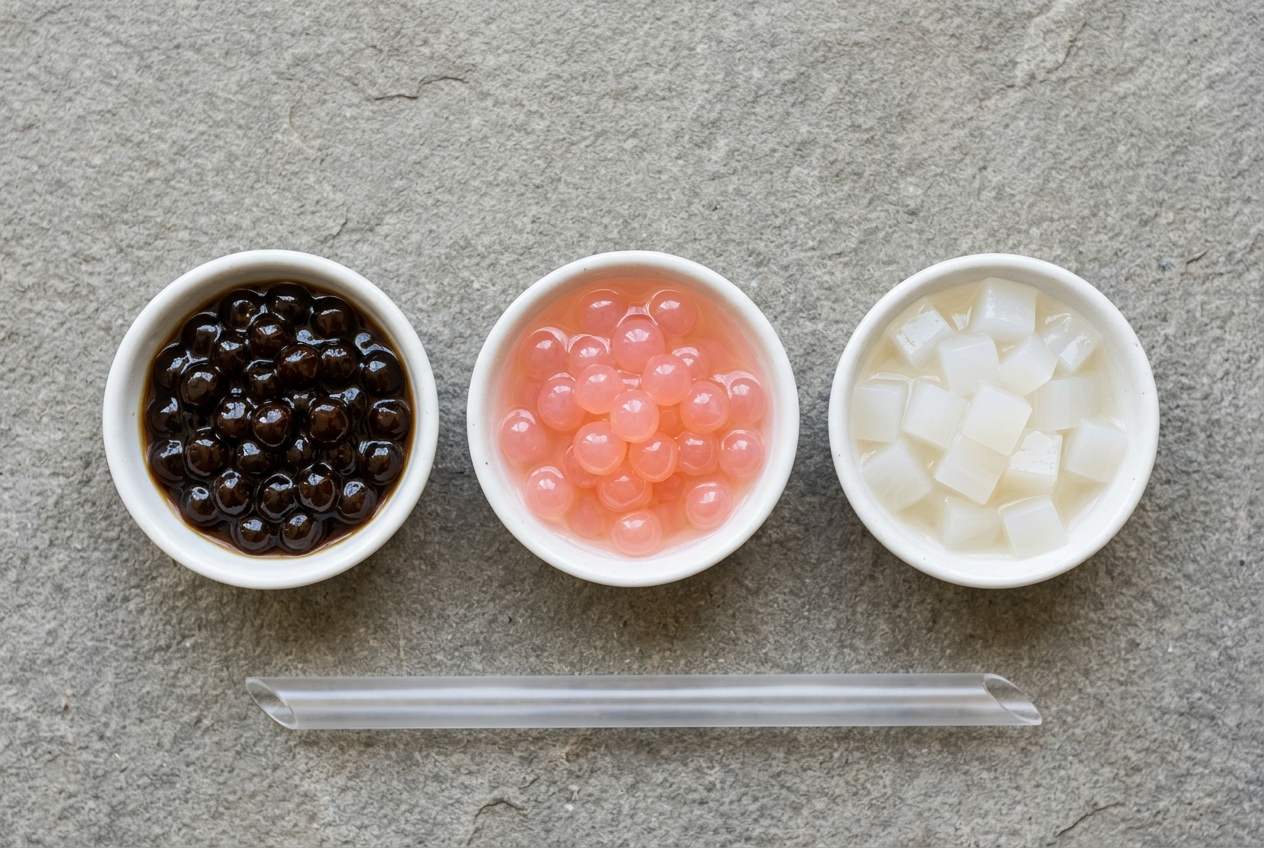
Tapioca pearls are famous for their "QQ" texture—a Taiwanese culinary term for a satisfying, springy chew. Popping boba bursts instantly without chewing, while coconut jelly requires steady, firm biting. Discover more add-ins in our complete guide to bubble tea toppings and compare jelly boba vs popping boba.
What Does Lychee Boba Taste Like?
Lychee boba tastes sweet, bright, and intensely floral with notes that evoke juicy white pear, Muscat grapes, wild honey, and fragrant rose petals. A subtle citrusy tang at the end prevents the drink from feeling cloying.
The choice of tea base shapes the finished flavour profile:
- Jasmine Green Tea: The gold standard pairing. Jasmine blossoms mirror lychee's floral notes, while green tea tannins provide a crisp, dry finish.
- Plain Sencha Green Tea: Offers a grassier, fresher cup where pure lychee sweetness takes centre stage.
- Four Seasons Oolong: Adds a creamy, roasted floral body with greater depth and lingering sweetness.
- Black Tea: Robust malt notes can easily overshadow delicate lychee flavours unless brewed lightly.
Why Lychee Smells Floral: The Aroma Chemistry
Lychee fruit originates from the subtropical evergreen tree Litchi chinensis (soapberry family, Sapindaceae). Its signature perfumed aroma is driven by a complex profile of volatile organic compounds:
- cis-Rose Oxide: Imparts distinctive fresh rose petal and sweet green top-notes.
- Linalool & Geraniol: Terpene alcohols that contribute lavender, citrus blossom, and sweet floral nuances.
- beta-Damascenone: Provides complex cooked apple, plum, and honeyed undertones.
- Citronellol: Adds crisp, lemony-rose aromatics.
Because jasmine green tea (scented with fresh Jasminum sambac blossoms) shares many of these exact floral terpenes, pairing lychee with jasmine tea creates a synergistic aromatic harmony that makes the beverage taste naturally vibrant rather than artificially flavoured.
How to Keep Fresh Lychee from Browning
Freshly peeled and pureed lychee flesh contains natural polyphenol oxidase (PPO) enzymes. When exposed to oxygen, PPO catalyzes the oxidation of phenolic compounds into brown melanoidin pigments. Scientific storage trials demonstrate that combining 0.1% food-grade ascorbic acid (vitamin C) with cool refrigeration dramatically inhibits PPO activity and preserves lychee's pearlescent white colour.
For home preparation, blend only the amount needed immediately, keep the puree tightly covered in the refrigerator, and add a small squeeze of fresh lime juice (5 ml per 200 ml) to lower the pH and slow enzymatic oxidation.
Lychee Boba Recipe with Jasmine Green Tea
This cafe-style recipe makes one generous 16 oz (500 ml) iced lychee fruit tea.
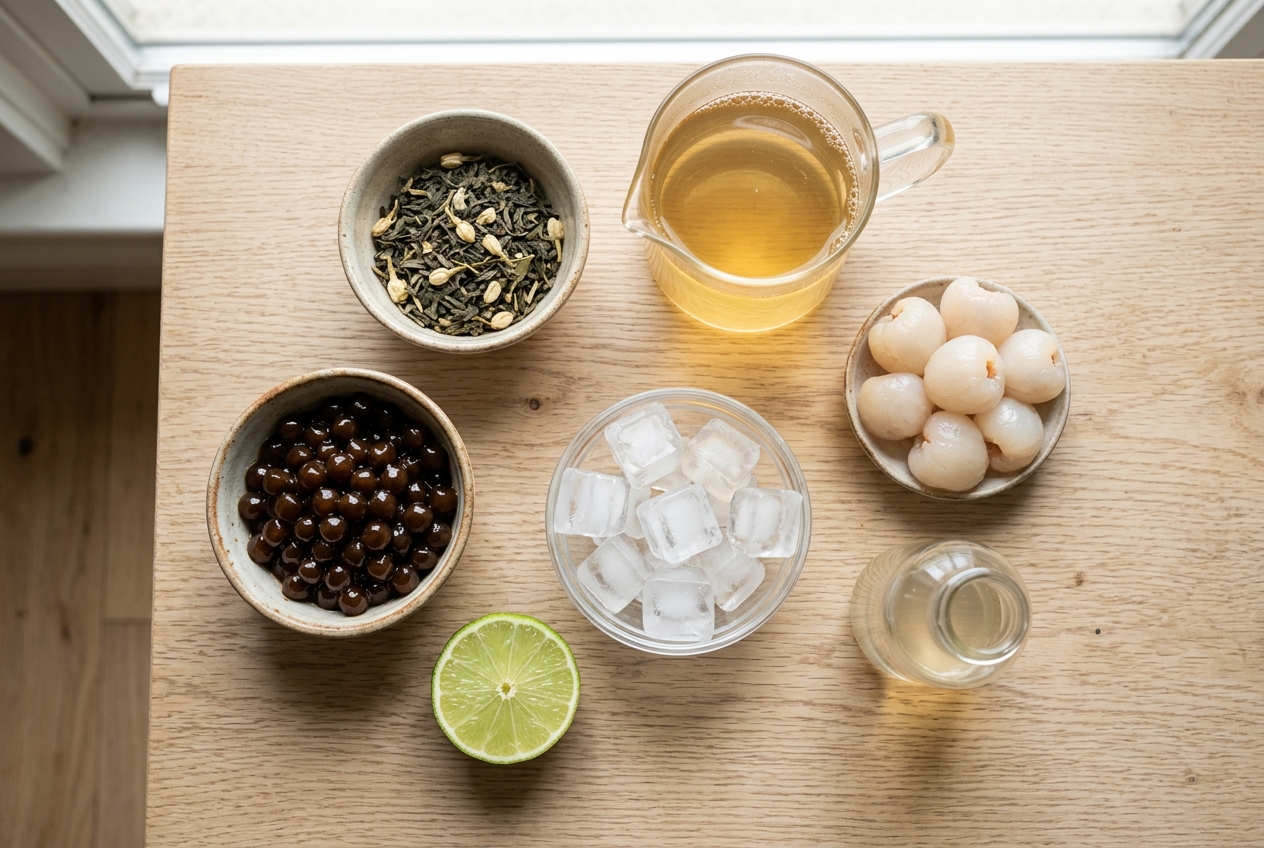
Ingredients:
- 5 g high-grade loose jasmine green tea (or 1 teabag)
- 220 ml hot filtered water at 80°C (176°F)
- 40 ml premium lychee syrup (or 60 ml smooth lychee puree + 15 ml syrup)
- 5 ml fresh lime juice (about 1 teaspoon, for brightness)
- 50 g boba topping (cooked tapioca pearls, lychee popping boba, or coconut jelly)
- 1 cup solid ice cubes
Step-by-Step Instructions:
- Brew the tea: Steep 5 g jasmine green tea in 220 ml water at 80°C for exactly 3 minutes. Strain immediately. Water hotter than 85°C will over-extract tannins and create unpleasant bitterness.
- Chill completely: Place the brewed tea in the refrigerator or over an ice-water bath until thoroughly cold. Shaking warm tea melts excessive ice and dilutes the delicate fruit profile.
- Prepare the serving glass: Spoon 50 g of your chosen boba topping into the bottom of a 16 oz glass.
- Shake: Add 200 ml chilled tea, 40 ml lychee syrup, 5 ml lime juice, and 1 cup of ice to a cocktail shaker. Seal tightly and shake vigorously for 12 to 15 seconds to chill, aerate, and create a light frothy head.
- Pour and serve: Strain the iced tea mixture over the prepared topping. Serve with a wide boba straw. Always chew toppings thoroughly before swallowing.
Cold-Brew Variation:
For an exceptionally smooth, low-tannin tea base with zero bitterness, combine 5 g jasmine green tea with 250 ml cold water in a covered bottle. Refrigerate for 6 to 8 hours. Strain and mix with lychee syrup and lime juice as directed above.
Lychee Milk Tea and Dairy Curdling Science
Many boba lovers wonder why adding fresh lychee to creamy milk tea sometimes causes unsightly curdling. The explanation lies in dairy protein biochemistry:
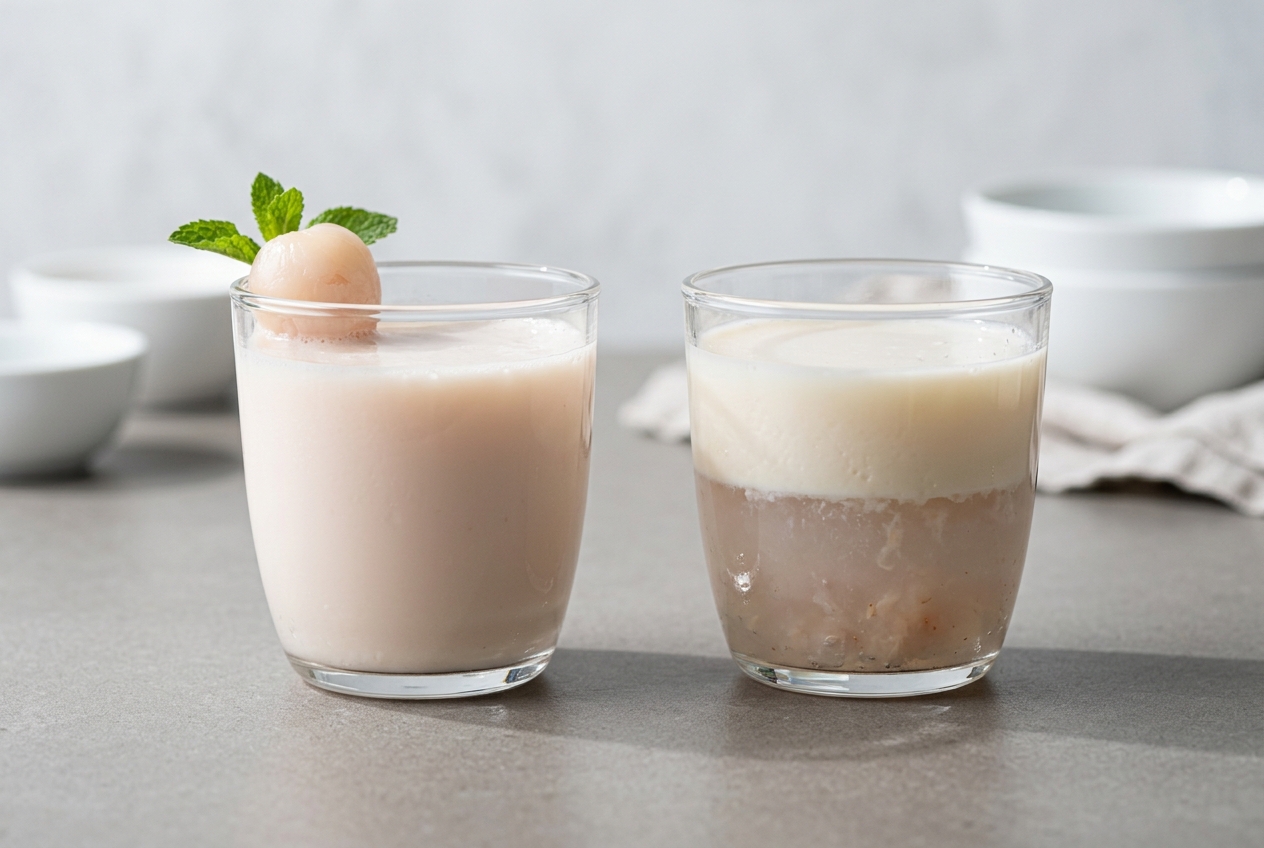
Fresh lychees naturally contain organic acids (malic and citric acids) with a pH ranging from 4.5 to 5.2. Cow's milk is stabilized by casein protein micelles held in suspension by negatively charged kappa-casein hairs. When fruit acid lowers the beverage pH toward casein's isoelectric point (pH 4.6), the electrical charge is neutralized, allowing casein proteins to bind together into curd-like clumps.
Rules for a silky, uncurdled lychee milk tea:
- Use pH-neutral lychee syrup rather than high-acid fresh fruit puree.
- Omit fresh lime or lemon juice entirely from milk-based drinks.
- Ensure all tea, milk, and syrup ingredients are ice-cold before mixing.
- Use barista-edition oat milk or non-dairy creamer, which contain buffering dipotassium phosphate to resist acid coagulation. Learn more in our non-dairy creamer milk tea guide.
Lychee Boba Calories & Nutrition Breakdown
The total calorie count of lychee boba depends primarily on the chosen sweetener level and topping type. Unsweetened brewed tea contributes less than 5 calories per cup.
| Drink Combination (16 oz / 500 ml) | Sweetness Level | Estimated Calories | Carbohydrates | Estimated Sugars |
|---|---|---|---|---|
| Lychee Green Tea with Tapioca Pearls | 100% (Full Sugar) | 285 kcal | 68 g | 48 g |
| Lychee Green Tea with Tapioca Pearls | 50% (Half Sugar) | 210 kcal | 50 g | 30 g |
| Lychee Green Tea with Lychee Popping Boba | 50% (Half Sugar) | 165 kcal | 39 g | 34 g |
| Lychee Green Tea with Coconut Jelly | 30% (Light Sugar) | 140 kcal | 34 g | 26 g |
| Lychee Green Tea with Aloe Vera | 0% (No Added Syrup) | 85 kcal | 21 g | 18 g |
Tips for ordering a lighter cup:
- Request 30% or 50% sugar at the counter—lychee syrup and toppings supply substantial natural sweetness.
- Stick to a single topping portion; multi-topping drinks quickly double the added sugar.
- For more macro comparisons, explore our boba calories guide and bubble tea sugar level guide.
Does Lychee Boba Have Caffeine?
Lychee boba made with real green, oolong, or black tea contains natural caffeine from the Camellia sinensis tea plant. According to data from the US Food and Drug Administration (FDA):
- Jasmine Green Tea: Typically provides 25 to 45 mg of caffeine per 16 oz serving.
- Black Tea: Contains approximately 50 to 70 mg per serving.
- Caffeine-Free Options: Lychee drinks crafted with herbal hibiscus tea, coconut water, or sparkling water contain 0 mg caffeine.
The "Triple Q" Topping Order
For the ultimate texture adventure, adventurous boba fans often order a "Triple Q" cup combining three distinct textures: chewy brown sugar tapioca pearls, bursting lychee popping boba, and firm coconut jelly cubes. When ordering Triple Q, always ask for 30% sweetness and request split topping portions so the drink remains balanced rather than overly sugary.
Troubleshooting Common Homemade Lychee Tea Mistakes
| Issue | Root Cause | Solution |
|---|---|---|
| Tea tastes like perfume or soap | Too much artificial lychee syrup used | Reduce syrup to 25–30 ml and dilute with freshly brewed unsweetened jasmine green tea |
| Astringent, bitter green tea | Water was boiling (100°C) or steeped longer than 3 minutes | Cool water to 80°C (176°F), steep for 3 minutes maximum, or use cold-brew extraction |
| Fresh lychee puree turned brown | PPO enzyme oxidation from air exposure | Blend immediately before assembly; add 0.1% ascorbic acid or 5 ml fresh lime juice |
| Milk separated into curds | Acidic fruit puree or citrus lowered pH below 4.6 | Use buffered lychee syrup, eliminate lime juice, and use cold barista oat drink |
| Drink is overly cloying | Packaged toppings syrup mixed with full syrup dose | Drain canned fruit and boba toppings thoroughly before adding to the cup |
Child Safety Warning: Tapioca pearls, popping boba, and coconut jelly are small, slippery gelatinous spheres that can pose a choking hazard for young children under 4 years old. Always supervise children and serve boba only to individuals who can chew and swallow textured foods safely.
Frequently Asked Questions
Does lychee boba hae caffeine?
Yes, lychee boba made with green tea, oolong, or black tea contains natural caffeine (typically 25 to 45 mg for green tea per 16 oz cup). Drinks made with caffeine-free herbal tea, coconut water, or sparkling water contain no caffeine.
What does lychee boba taste like?
It has a sweet, floral, and juicy flavour profile with tasting notes of ripe pear, Muscat grape, rose water, and subtle citrus. Jasmine green tea provides a clean, dry floral finish that balances the sweetness.
Why does lychee milk tea curdle?
Natural organic acids in fresh lychee fruit and added citrus lower the beverage pH toward casein's isoelectric point (pH 4.6), causing dairy proteins to clump together. To prevent curdling, use pH-neutral lychee syrup, omit lime juice, and mix with cold barista oat milk or non-dairy creamer.
Is lychee popping boba egan?
Yes, lychee popping boba skins are made with plant-based sodium alginate from brown seaweed and mineral calcium lactate salts. They contain zero animal gelatin.
Is lychee boba dairyfree?
Standard clear lychee fruit tea is naturally 100% dairy-free. However, milk tea versions or drinks topped with cheese foam contain dairy unless explicitly prepared with plant-based milks.
Is lychee boba glutenfree?
Yes, pure brewed tea, lychee fruit, cassava-based tapioca pearls, popping boba, and coconut jelly are naturally gluten-free. Always check commercial syrup labels for certified allergen declarations.
Can I make lychee boba with canned fruit?
Yes, canned lychees are an excellent year-round option. Blend the strained fruit into a smooth puree and use 1 to 2 tablespoons of the packing syrup as a natural sweetener in place of plain simple syrup.
Which topping is best with lychee fruit tea?
Lychee popping boba provides a juicy fruit burst, lychee coconut jelly offers a firm refreshing chew, and traditional tapioca pearls deliver a classic sweet "QQ" springiness. Pairing all three creates the popular "Triple Q" drink.
Sources and Scientific References
- Journal of Agricultural and Food Chemistry: Identification of key volatile aroma compounds in Litchi chinensis.
- Postharvest Biology and Technology: Inhibition of polyphenol oxidase (PPO) and enzymatic browning in harvested lychee fruit.
- US Food and Drug Administration (FDA): Caffeine content in green and black tea beverages.
- NHS Health A-Z: Choking hazard prevention for gelatinous and round foods in young children.


 Badge-157x140.png)
Comments