

Blueberry boba is a cold fruit tea made with blueberry syrup, brewed tea, ice and a bubble tea topping. It tastes sweet and tart, with a mild floral note when jasmine green tea is used. Real berries can give the drink a purple, red-purple or deep blue-purple color. The exact shade depends on the fruit, tea, acidity, milk and lighting.
The recipe below uses a cooked and strained blueberry syrup. Straining removes berry skins and seeds that can collect in a wide straw. You can finish the drink with blueberry popping boba, tapioca pearls, crystal boba, aloe jelly or cream cheese foam.
Quick answer: Blueberry boba tea combines strained blueberry syrup, chilled tea, ice and a boba topping. Jasmine green tea gives a light floral base. Simmering softens the fruit, while fine straining gives a smoother drink. A little lemon can deepen the berry color in fruit tea. Keep lemon away from dairy milk because acid can cause curdling.
Notice & Food Safety Warning: Homemade cooked blueberry syrup must be transferred to a clean, covered container and refrigerated below 4°C (40°F) within two hours. Consume within 3 to 4 days per USDA refrigeration guidelines, or freeze in portions. Never add lemon juice or acidic citrus to blueberry milk tea recipes, as natural fruit acids will cause dairy milk proteins to curdle and separate.
Editorial Review: Tested across fresh and frozen wild lowbush (Vaccinium angustifolium) and cultivated highbush (Vaccinium corymbosum) berries by the Bobalicious kitchen. Simmering times, mesh filtration, and pH-driven anthocyanin color stability were calibrated with chilled jasmine green tea to prevent straw blockage while preserving vibrant royal purple hues.
Key Points
- Blueberry boba can mean a blueberry-flavored drink or a drink topped with blueberry popping boba.
- Real blueberry syrup tastes fresh and complex compared to artificial blue raspberry or powdered mixes.
- Fresh and frozen berries both work reliably for syrup making.
- Fine-mesh straining removes seeds and skins to guarantee smooth boba straw flow.
- Lemon enhances fruit tea tartness and color, but should never be added to dairy milk tea.
- Calories, sugar, and caffeine depend strictly on the tea base, sweetener volume, and toppings selected.
- Homemade blueberry syrup requires refrigeration and must be consumed within 3 to 4 days.
Blueberry Boba at a Glance
| Question | Short Answer |
|---|---|
| What does it taste like? | Sweet, tart and fruity, with a mild floral note from jasmine tea |
| Best tea base | Jasmine green tea |
| Can frozen berries be used? | Yes. Thawing and cooking release abundant juice and vivid purple color |
| Best topping | Blueberry popping boba for fruit tea, or tapioca pearls for milk tea |
| Why strain the syrup? | To remove tough skins, seeds and pulp fragments that block boba straws |
| Why can the color change? | Blueberry anthocyanins shift hue in response to beverage pH, heat, and milk |
| Is it caffeinated? | Contains caffeine when prepared with green, black, or oolong tea bases |
| Storage | Refrigerate homemade syrup below 4°C (40°F) and use within 3 to 4 days |
What is Blueberry Boba?
The phrase blueberry boba describes several drink preparations across commercial bubble tea menus. A shop may use it for blueberry fruit tea, blueberry milk tea, a blended smoothie with tapioca, or any drink topped with blueberry popping pearls.
The beverage base typically relies on one of these core blueberry ingredients: cooked real fruit syrup, whole berry puree, clarified juice concentrate, commercial fruit powder, or artisanal cafe syrups. When ordering, clarify whether "blueberry boba" refers to the flavored tea base, the popping pearl topping, or both.
Blueberry Fruit Tea vs Blueberry Milk Tea
Blueberry Fruit Tea: Combines freshly steeped tea (such as jasmine green tea or light Four Seasons oolong) with real blueberry syrup and ice. It showcases vibrant fruit acidity and displays a vivid purple or ruby-violet tone.
Blueberry Milk Tea: Blends blueberry syrup with whole dairy milk, evaporated milk, or barista plant milk. It offers a softer, dessert-like profile reminiscent of blueberry cheesecake. However, berry acids can curdle dairy proteins if mixed incorrectly. Always prepare milk tea using cooled syrup without added citrus juice, and stir continuously while pouring.
Blueberry Popping Boba
Blueberry popping boba features a delicate seaweed-derived calcium alginate skin holding blueberry juice. When pierced by straw or teeth, it bursts with instant fruit sweetness, creating a fun textural contrast unlike the dense, chewy bite of traditional starch-based tapioca pearls.
What Does Blueberry Boba Taste Like?
A well-balanced blueberry boba tastes sweet, bright, and pleasantly tart, standing out as one of our recommended berry fruit bubble tea combinations. Green tea adds crisp floral jasmine high notes, while oolong adds gentle roasted warmth. Botanically, blueberries are true berries (not stone fruits like peaches or plums) belonging to the heath family, Ericaceae.
Highbush vs Wild Lowbush Blueberries
| Berry Type | Common Scientific Name | Typical Market Form | Recipe Effect |
|---|---|---|---|
| Cultivated Highbush | Vaccinium corymbosum | Larger fresh berries in grocery produce aisles | Mild, pleasant sweetness; highly accessible |
| Wild Lowbush | Vaccinium angustifolium | Smaller berries, predominantly sold frozen | Intense anthocyanin pigmentation and concentrated tart-berry depth |
Fresh vs. Frozen: Frozen blueberries are frozen at peak ripeness. The ice crystallization gently fractures plant cell walls, allowing juice and natural anthocyanin pigments to extract faster upon heating without requiring lengthy simmering.
Why Blueberry Tea Changes Color (Anthocyanin Chemistry)
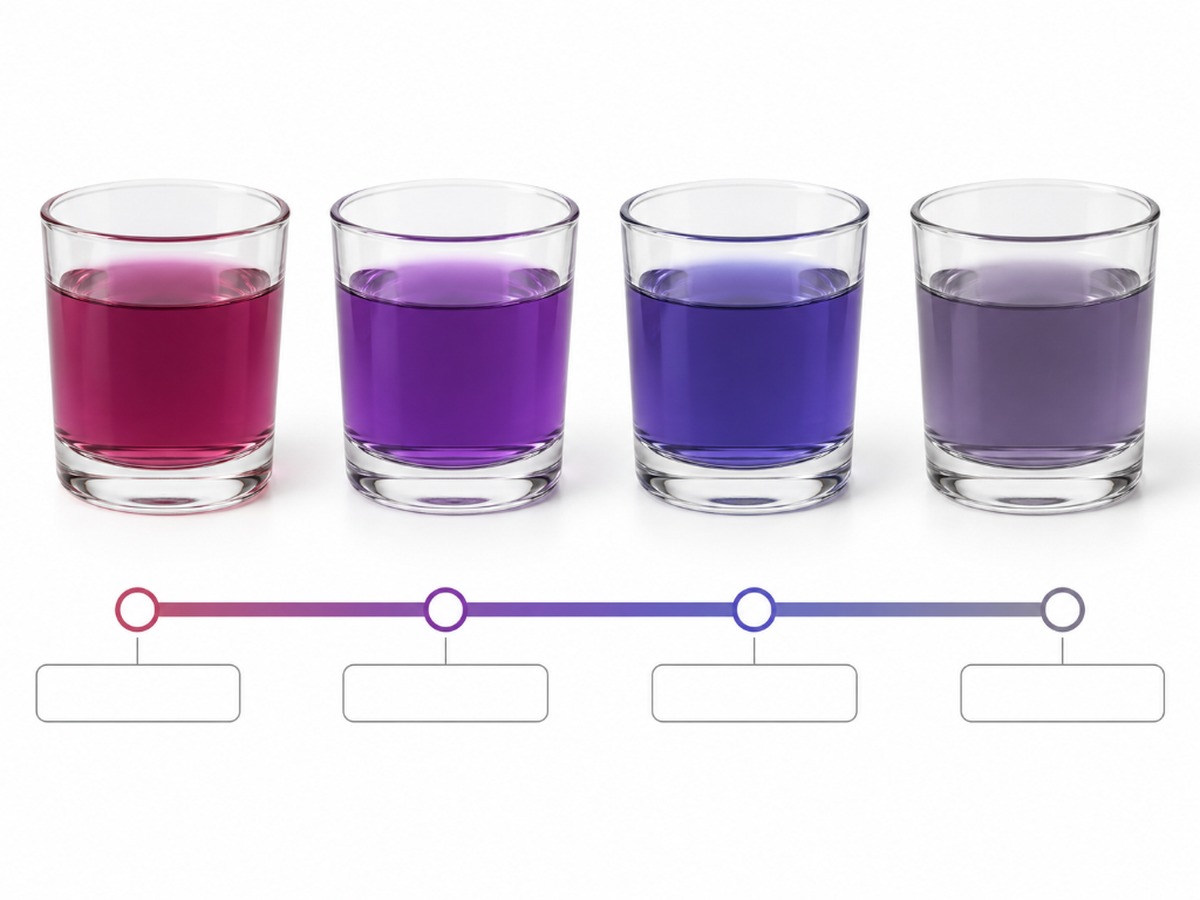
Blueberries owe their rich pigmentation to polyphenolic flavonoids called anthocyanins, primarily delphinidin and malvidin glycosides. Anthocyanin molecular structures are naturally pH-responsive: under acidic conditions (pH 2.5 to 3.5), the pigment exists primarily as the red-tinted flavylium cation, giving drinks a bright magenta or ruby-purple glow. As pH increases toward neutral, the molecule converts into a purple or blue quinonoidal base.
How to Keep a Vibrant Berry Color:
- Brew with light-colored teas such as jasmine green or white tea rather than dark black tea.
- Add fresh lemon juice drop by drop to acidify fruit tea bases into a radiant purple-violet.
- Cool both syrup and brewed tea completely before combining.
- Store prepared syrup refrigerated away from direct light exposure to prevent oxidative browning.
How to Prevent Berry Pulp from Blocking the Straw
Standard wide 12 mm boba straws easily handle gelatinous toppings and round pearls, but coarse berry skins and fibrous pulp collect inside the tube, interrupting smooth drinking. Pureeing raw blueberries in a high-speed blender shreds skins into sharp flecks that do not dissolve.
The solution is gentle thermal extraction: simmering berries with water and sugar softens fruit pectin and cell walls, allowing juice and soluble color to release freely. Passing the warm mixture through a stainless steel fine-mesh sieve retains seeds and skins while yielding a silky, pourable syrup that blends effortlessly.
Best Tea for Blueberry Boba
| Tea Base | Brewing Starting Point | Taste with Blueberry | Best Use |
|---|---|---|---|
| Jasmine green tea | 175°F (80°C) for 3 minutes | Light, crisp and aromatic floral balance | Main fruit-tea recipe standard |
| Four Seasons oolong | 190°F (88°C) for 4 minutes | Floral with a soft roasted grain undertone | Honey blueberry fruit tea |
| White tea (Silver Needle / Pai Mu Tan) | 175°F (80°C) for 4 minutes | Mild, gentle honey sweetness; zero astringency | Delicate peach-blueberry blends |
| Assam black tea | 200°F (95°C) for 3 to 4 minutes | Robust, malty; stands up to rich dairy fats | Blueberry milk tea creations |
| Butterfly pea flower | Boiling water for 5 minutes | Earthy botanical flavor with vivid blue-purple color shifts | Layered gradient mocktails |
| Hibiscus flower infusion | 200°F (95°C) for 5 minutes | Vibrant ruby-red tartness; cranberry-like | Caffeine-free berry refreshers |
Blueberry Bubble Tea Recipe (16 oz / 475 ml)
This recipe makes one 16 oz iced fruit tea with fresh or frozen berries and loose jasmine green tea.
Equipment Needed
- Small saucepan
- Wooden spoon or potato masher
- Fine-mesh stainless steel sieve
- Heat-safe glass bowl
- Cocktail shaker with secure lid
- 16 oz clear serving glass
- Wide 12 mm boba straw
Ingredients
| Component | Ingredient | Quantity |
|---|---|---|
| Blueberry Syrup | Fresh or frozen blueberries | 100 g |
| Sweetener | Pure cane sugar | 30 g |
| Syrup Water | Filtered water | 30 ml |
| Acid Brightener | Fresh lemon juice (fruit tea only) | Up to 1 teaspoon |
| Tea Base | Loose jasmine green tea | 4 to 6 g (in 180 ml water at 175°F) |
| Topping | Blueberry popping boba or cooked tapioca | 50 g |
| Ice | Clean ice cubes (for shaker and glass) | 100 to 140 g |
Step-by-Step Instructions
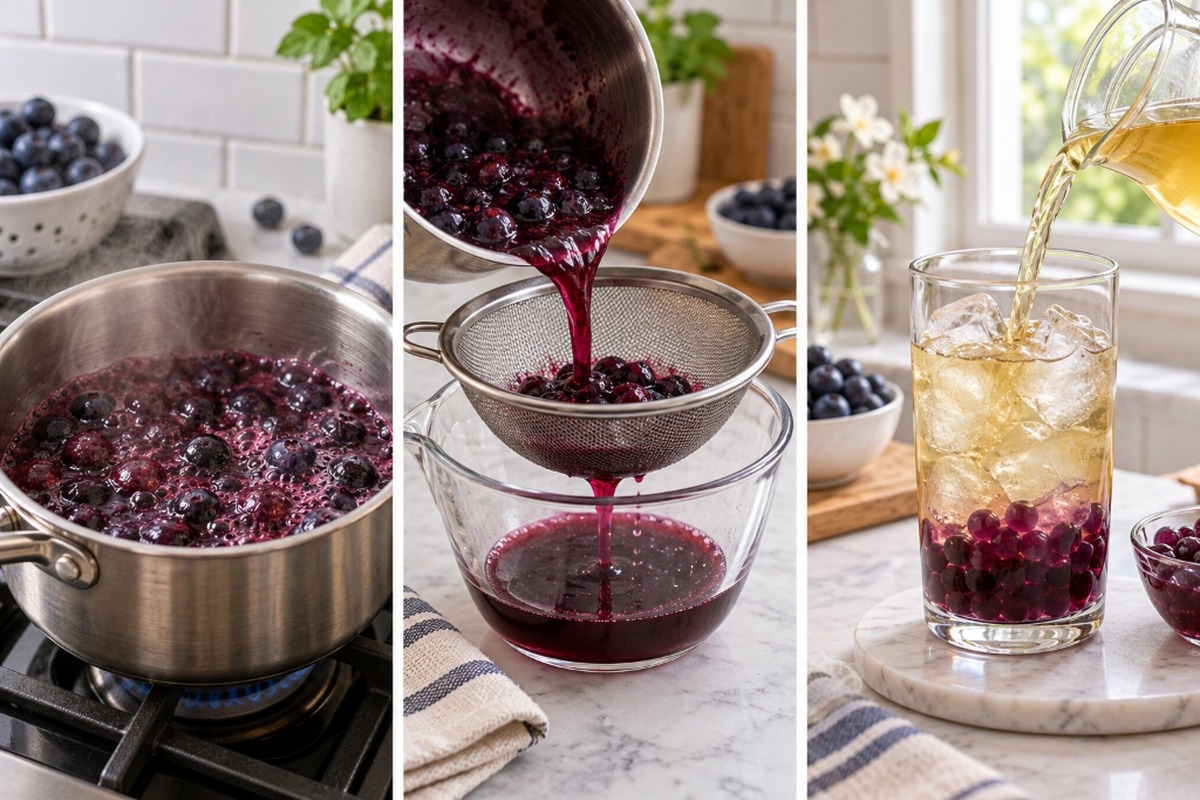
- Cook the blueberry syrup: Combine 100 g blueberries, 30 g cane sugar, and 30 ml water in a small saucepan. Heat gently to a simmer, mash berries with a spoon, and simmer for 5 to 8 minutes until softened and juices release. Stir in lemon juice for the fruit tea version.
- Strain and cool: Pour warm syrup through a fine-mesh sieve into a heat-safe bowl, pressing gently to extract rich purple juice while leaving seeds and skins behind. Chill syrup thoroughly in an ice bath or refrigerator.
- Brew jasmine green tea: Steep 4 to 6 g loose jasmine tea in 180 ml water at 175°F (80°C) for 3 minutes. Strain leaves and chill tea liquid completely.
- Prepare topping: Spoon 50 g blueberry popping boba (or warm cooked tapioca pearls) into the bottom of your 16 oz glass.
- Shake and assemble: Combine 100 to 120 ml chilled jasmine tea, 60 ml blueberry syrup, and 90 g ice into a cocktail shaker. Shake vigorously for 8 to 10 seconds. Pour into the prepared glass over fresh ice and enjoy with a 12 mm boba straw.
Blueberry Milk Tea Variation
To prepare creamy blueberry milk tea without dairy curdling:
- Cook blueberry syrup completely without lemon juice or citric acid.
- Combine 100 ml chilled Assam black tea with 80 ml cold whole milk or barista oat milk.
- Stir in 30 to 45 ml chilled lemon-free blueberry syrup gradually while stirring.
- Serve over warm brown sugar tapioca pearls and ice.
Best Toppings for Blueberry Boba Tea
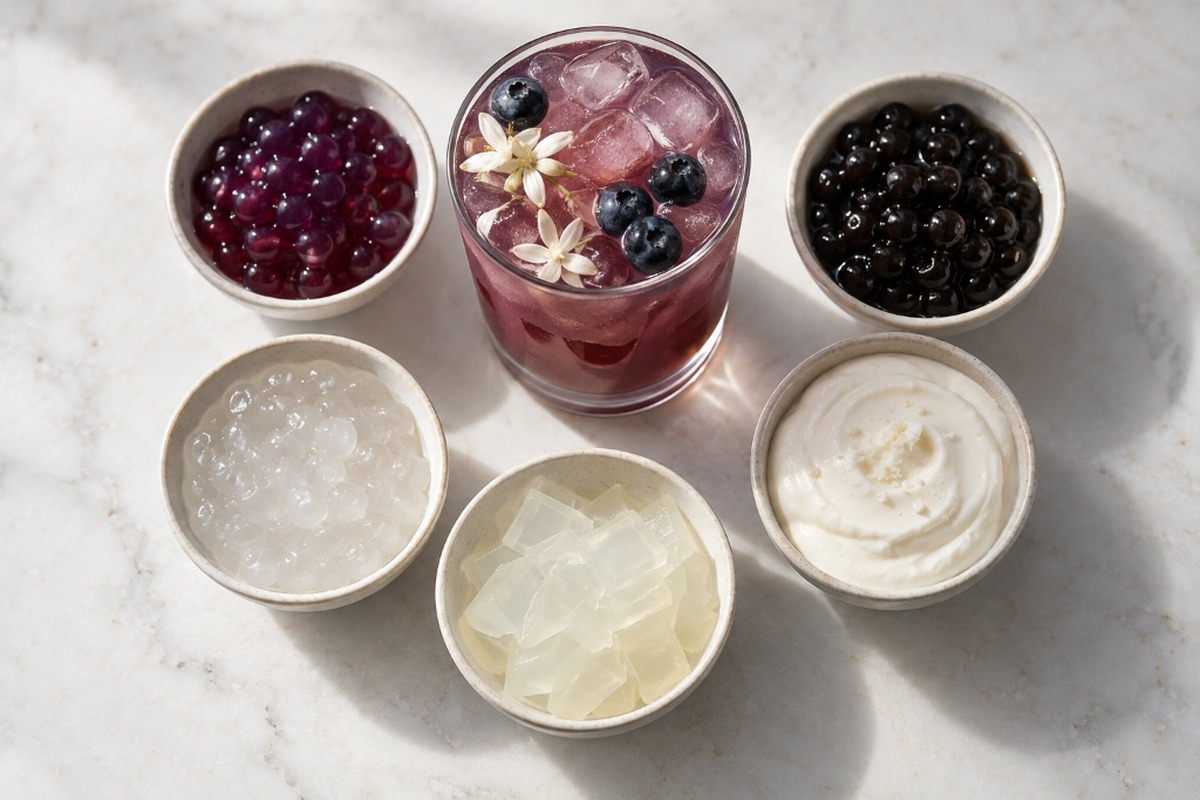
Blueberry Popping Boba
Delivers an explosive burst of fruit juice upon chewing, doubling down on vibrant berry flavor in chilled fruit tea.
Brown Sugar Tapioca Pearls
Adds warm molasses chewiness that transforms blueberry milk tea into a decadent, bakery-inspired dessert beverage.
Crystal Boba (Agar / Konjac)
Translucent, springy plant-based jelly pearls that offer satisfying gelatinous chew without heavy carbohydrates.
Aloe Vera Jelly
Cooling, succulent aloe cubes add crisp texture and moisture that complement sweet-tart berry infusions.
Salted Cream Cheese Foam
A velvety salted cream cap recreates the luxurious taste of fresh blueberry cheesecake on your palate.
Blueberry Boba Compared with Other Fruit Teas
| Drink | Common Tea Base | Main Fruit Flavor | Usual Color | Common Topping |
|---|---|---|---|---|
| Blueberry Fruit Tea | Jasmine green tea | Sweet and mildly tart | Purple to red-purple | Blueberry popping boba |
| Blueberry Milk Tea | Assam or jasmine tea | Creamy berry dessert | Pale purple | Tapioca pearls |
| Strawberry Green Tea | Jasmine green tea | Sweet and bright red berry | Red to pink | Tapioca or strawberry popping boba |
| Peach Oolong | Four Seasons oolong | Soft, floral stone fruit | Pale amber or peach | Peach popping boba / aloe |
| Mango Green Tea | Green tea | Ripe tropical fruit | Golden yellow-orange | Mango popping boba |
Blueberry Boba Calories and Storage
Plain brewed tea contributes negligible calories (under 5 kcal). Total beverage calories depend on syrup concentration, dairy, and toppings selected:
Calorie Formulation:
Total Drink Calories = Berry Syrup + Tea + Milk/Plant Milk + Toppings + Cream Foam
Estimates: A 16 oz blueberry fruit tea with popping boba typically ranges from 180 to 220 kcal, while a blueberry milk tea with whole milk and brown sugar pearls ranges between 320 to 390 kcal.
Safe Storage: Refrigerate homemade blueberry syrup in a clean, airtight glass container at or below 4°C (40°F) within two hours of preparation. Consume within 3 to 4 days per USDA Food Safety and Inspection Service standards for cooked fruit leftovers. Freeze extra syrup in ice cube trays for long-term storage.
The Bottom Line on Blueberry Boba
Blueberry boba tea combines refreshing berry tartness with fragrant floral tea. For a creamier berry experience, check out our strawberry milk tea recipe. By simmering real berries into a fine-strained syrup to protect straw flow, cooling all ingredients prior to assembly, and pairing with juicy popping boba or chewy tapioca, you achieve an authentic cafe-quality boba with vibrant royal purple hues and zero artificial aftertaste.
Frequently Asked Questions
Can I use frozen blueberries to make boba syrup?
Yes. Frozen blueberries are ideal because ice crystals fracture cell walls, releasing juice and deep purple anthocyanin pigments rapidly during gentle simmering.
What does blueberry boba taste like?
It tastes sweet, lightly tart, and distinctly fruity. When brewed with jasmine green tea, it carries an aromatic floral finish; when prepared with dairy, it tastes creamy and dessert-like.
Does blueberry boba taste like candy?
Real fruit syrup tastes authentic, rich, and botanical. However, commercial artificial syrups and blueberry popping boba utilize concentrated flavorings and high fructose corn syrup that can taste sweeter and more candy-like.
What is blueberry popping boba?
It is a spherified juice pearl made with a micro-thin calcium alginate gel membrane, featured inside our portable ready-to-drink fruit boba cups. Unlike chewy tapioca pearls, popping boba bursts open instantly under bite pressure.
Why did my blueberry tea turn grey?
Blueberry anthocyanins shift from vibrant purple-red to blue-grey as pH becomes more alkaline or when diluted by opaque dairy casein proteins. Using fruit tea and acidifying slightly with lemon prevents dull grey tones.
Can I add lemon to blueberry milk tea?
No. Adding lemon juice or citrus acids to dairy milk lowers the pH past milk casein's isoelectric point (pH 4.6), causing immediate coagulation, curdling, and separation.
How many calories are in blueberry boba?
A 16 oz fruit tea with popping boba averages 180 to 220 calories, whereas a blueberry milk tea made with whole milk and brown sugar tapioca pearls averages 320 to 390 calories.
How much caffeine is in blueberry boba tea?
Brewed with jasmine green tea, an 8 oz tea base contains roughly 30 to 50 mg of caffeine according to FDA averages. Drinks crafted with pure hibiscus or herbal bases are naturally caffeine-free.
How long does homemade blueberry syrup last?
Keep homemade syrup stored in an airtight glass container refrigerated below 4°C (40°F) for up to 3 to 4 days. Freeze extra syrup in single-serving cubes for up to 3 months.
What tea goes best with blueberry boba?
Jasmine green tea is the premier pairing due to its delicate floral aroma. Four Seasons oolong, white tea, and hibiscus also pair exceptionally well.
Is blueberry boba vegan?
Fruit-tea variations prepared with fresh berries, tea, cane sugar, and popping boba are vegan. Milk teas require plant-based oat or soy milk and avoiding honey or cheese foam.
Is blueberry boba gluten-free?
Blueberries, green tea, cane sugar, and pure cassava tapioca pearls are gluten-free. Always confirm packaged popping boba labels to verify no wheat-based thickeners were utilized.
Sources and Editorial References
The Bobalicious beverage development team validates formulation benchmarks, dairy stability curves, and food safety standards against authoritative regulatory databases:
- USDA Food Safety and Inspection Service (FSIS): Safe Refrigeration and Food Handling Standards for Cooked Leftovers — https://www.fsis.usda.gov/food-safety/safe-food-handling-and-preparation/food-safety-basics/refrigeration
- U.S. Food and Drug Administration (FDA): Spilling the Beans — How Much Caffeine is Too Much? — https://www.fda.gov/consumers/consumer-updates/spilling-beans-how-much-caffeine-too-much
- U.S. Food and Drug Administration (FDA): Color Additive Status and Ingredient Labeling Requirements (FD&C Blue No. 1) — https://www.fda.gov/industry/color-additive-inventories/summary-color-additives-use-united-states-foods-drugs-cosmetics-and-medical-devices
- USDA Natural Resources Conservation Service (NRCS): Highbush Blueberry (Vaccinium corymbosum) Botanical Plant Guide — https://plants.usda.gov/
- Food Chemistry & PubMed: Anthocyanin Composition, Thermal Degradation Kinetics, and Color Retention in Blueberry Juice and Concentrates — https://pubmed.ncbi.nlm.nih.gov/29329864/
- USDA FoodData Central: Nutritional Profiles of Raw Blueberries, Cane Sugar, Fluid Milk, and Tapioca Starch — https://fdc.nal.usda.gov/


Comments